
Pertamina Hulu Indonesia Records Oil Production 120 Percent Above Target
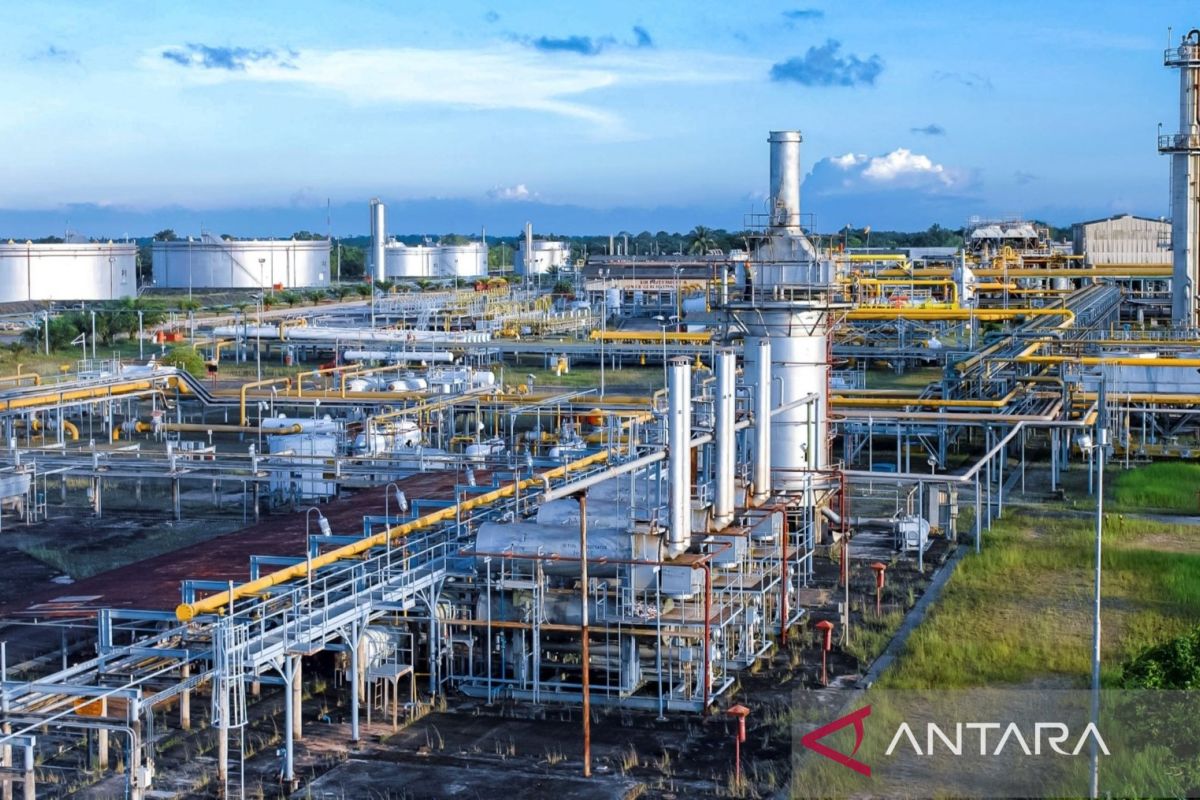
Penajam Paser Utara (ANTARA) - PT Pertamina Hulu Indonesia (PHI), a subsidiary of PT Pertamina (Persero), produced 60,440 barrels of oil per day (mbopd) and 619 million standard cubic feet of gas per day (mmscfd) in the first quarter of 2026, exceeding its annual production targets by 120 percent and 105 percent, respectively.
“At PHI, we continue to invest in exploration and exploitation activities to ensure sustainable oil and gas production, supporting the achievement of national production targets and Indonesia’s energy security,” said PHI’s President Director, Sunaryanto, in a written statement received by ANTARA in Penajam, East Kalimantan, on Saturday.
According to Sunaryanto, the company’s success in promoting innovation and reliability of facilities is a key element in increasing production.
“The implementation of innovation and technology is a strategic step in slowing down the rate of production decline, increasing recovery rates, and maintaining the production levels of mature oil and gas fields in the Kalimantan region,” he explained.
Furthermore, Sunaryanto said that PHI also carries out maintenance, repair, and reactivation of wells to increase productivity and extend the life of wells and oil and gas fields.
“Thanks to innovation, cross-functional collaboration, and the synergy that has been formed, PHI’s major projects in the 2026 work plan have achieved the expected results,” he added.
One of the innovations implemented by PHI’s subsidiary is the application of the High Pour Point Oil (HPPO) method at the Handil Field, managed by PHI’s subsidiary, PT Pertamina Hulu Mahakam (PHM), and the Mutiara and Pamaguan Fields, managed by another PHI subsidiary, PT Pertamina Hulu Sanga Sanga (PHSS).
The method is used to overcome the challenges of oil types that have high wax or paraffin content with a pour point higher than the operating temperature of the pipeline. The use of special solvents helps keep the oil liquid (not frozen) so that production flow is optimal and sustainable. In addition, other technological breakthroughs at PHM have also succeeded in optimizing production from emulsion wells at the Tunu Field.
Meanwhile, PHSS implemented the Permanent Coiled Tubing Gas Lift (PCTGL) innovation on workover wells at the Louise, Samboja, and Mutiara Fields. This gas lift technology is carried out by injecting pressurized gas into the wellbore to help the oil rise to the surface more easily. This innovation has succeeded in increasing well productivity and supporting the achievement of production targets in the first quarter of 2026.
The acceleration of oil production was also contributed by PHI’s subsidiary, PT Pertamina Hulu Kalimantan Timur (PHKT), from the Kerindingan and Sapi Fields, as well as new infill wells offshore East Kalimantan.
The efforts to maintain and increase production are not only through the implementation of innovation and technology, but also through maintenance, repair, and reactivation of wells. At PHM, for example, the Handil Rejuvenation Program was implemented at the Handil Field, which successfully increased production by five percent compared to before the program was implemented.
Meanwhile, the achievement of gas production targets was supported by the successful onstream of the second and third platforms of the Sisi Nubi AOI Project managed by PHM at the end of February and March 2026. Positive gas production was also supported by the smooth implementation of well service activities at the Tunu Field (PHM), workover wells at the Santan Field (PHKT), and the Nilam and Mutiara Fields (PHSS).
In addition to generating excellent oil and gas production performance, Sunaryanto said that PHI was also able to maintain safety performance with zero fatalities, achieving 57.36 million safe working hours, and achieving zero Lost Time Incidents (LTI).
PHI manages upstream oil and gas operations in Regional-3 Kalimantan, including Zones 8, 9, and 10, through subsidiaries and affiliates that work in collaboration with the Special Task Force for Upstream Oil and Gas Business Activities (SKK Migas).