
Pertamina Geothermal (PGEO) Plans to Venture into Data Centre Business
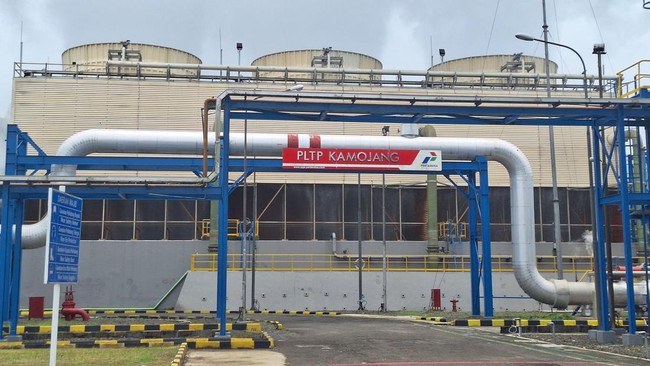
PT Pertamina Geothermal Energy Tbk (PGEO) plans to add business activities in the data centre sector. These activities encompass data processing, storage, and management. Additionally, they include providing computing infrastructure, hosting, and data centre support services, encompassing the operation of servers, networks, and other support systems.
Management states that this addition of business activities is linked to PGEO’s main operations in geothermal energy, where electricity generated from geothermal sources will support data centre operations and foster the integrated development of a clean energy ecosystem and digital infrastructure.
“This plan is part of the company’s efforts to diversify its business while optimising the utilisation of geothermal energy,” management wrote in a disclosure to the Indonesia Stock Exchange (BEI) on Tuesday (21/4/2026).
In connection with this plan, PGEO intends to seek shareholder approval at the Annual General Meeting of Shareholders (AGMS) today, 21 April 2026.
Management assures that, regarding this plan to add business activities, there are no objections from relevant parties that could affect the plan up to this point.
Management views the Indonesian data centre market as experiencing rapid expansion, particularly in 2025, due to high cloud uptake, growth in Artificial Intelligence (AI) workloads, regulatory support, and increasing investor interest in the digital economy in Southeast Asia.
Furthermore, Indonesia’s position as a regional data hub is strengthening with the construction of submarine cable systems connecting Indonesia to several countries, thereby increasing international bandwidth capacity.
“The Tier III segment dominates more than 61.59% of the data centre market share in Indonesia in 2025. During the projection period, the Tier I and Tier II segments are increasingly losing relevance in Indonesia because they no longer meet the uptime, redundancy, and security required by the current digital economy,” management stated.
Subsequently, the expansion of digital services in sectors such as banking, fintech, e-commerce, telecommunications, cloud platforms, and government systems has significantly driven customer preferences towards Tier III and Tier IV data centres.
Additionally, during the 2024-2031 period, the Indonesian data centre market, particularly in the retail and wholesale colocation segments, is experiencing significant growth. In 2025, retail colocation capacity reaches 388.11 MW.
By 2031, retail colocation capacity is projected to increase to 1,623.91 MW, while wholesale colocation is estimated to reach 1,275.93 MW.
The rapid growth of retail colocation is driven by the increasing digitalisation of small and medium enterprises (SMEs), startups, and cloud-native businesses. This group tends to prefer flexible, scalable, and cost-efficient hosting solutions.
Management further reveals that during the 2024-2031 period, colocation revenue value in Indonesia shows a growth trend. In 2024, colocation revenue was recorded at USD 4,784.92 million, then increasing to USD 5,890.44 million in 2025.
“Overall, the data centre market conditions in Indonesia are assessed to have sustainability and strong growth potential, with wide-open market opportunities in line with the increasing need for digital infrastructure in various industrial sectors,” it stated.
PGEO plans to establish a data centre located on Jalan Kamojang - Samarang Garut, Laksana Village, Ibun Subdistrict, Bandung Regency, with plans to develop a data centre spanning 5,133 m². The development of this data centre will be accompanied by the construction of a Geothermal Power Plant (PLTP) with a capacity of 5 MW that will produce dedicated electricity for the data centre.
The data centre is recommended to be directly connected to at least two telecommunications network providers. Some data centres may be carrier-specific (specific network providers), but generally, carrier-neutral (multiple providers) is more preferred. The development location is traversed by two telecommunications networks, namely Telkom and PLN Icon Plus.
Based on the business development plan, the additional manpower requirement is estimated at 38 people, focused on operational activities.
Based on the feasibility study report prepared by an independent appraiser, this plan is deemed feasible to implement, considering market, technical, operational, and financial aspects.
The company will ensure compliance with all required standards before the data centre facility is operated commercially.
This addition of business activities is expected to provide added value to shareholders through diversification of revenue sources, strengthening of business performance, and enhancement of the company’s sustainable growth potential.
The services to be provided by the company are targeted at corporate customers, including technology companies, digital service providers, and institutions requiring data centre infrastructure services.
Before implementing the business activities, PGEO has total assets of approximately USD 3.03 billion, dominated by fixed assets, but the plan to add these business activities will significantly increase fixed assets due to investment.