
Pertamina Focuses on Green Refinery Beyond B50 Biodiesel
PT Pertamina Patra Niaga is supporting the government’s push to strengthen national energy security through the development of green refinery projects and the implementation of B50 biodiesel, a blend of 50 per cent palm oil-based biofuel with diesel fuel.
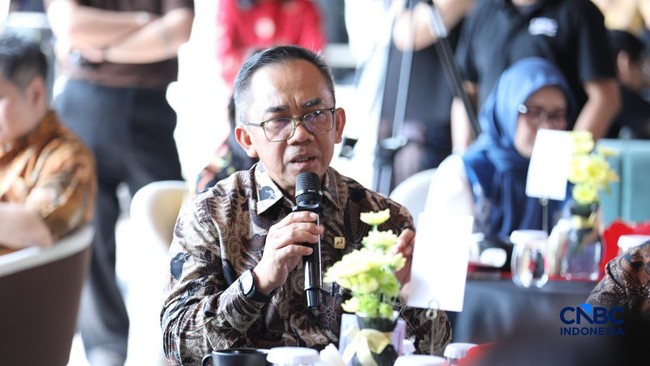
Deputy CEO of Pertamina Patra Niaga Taufik Aditiyawarman explained that current investments are focused on producing renewable energy at the company’s various refineries. The goal is to reduce dependence on imported raw materials by utilising domestic resources.
“It is not just B50, but we are also now investing in bio or green refineries to produce HVO and sustainable aviation fuel in Cilacap,” Taufik said during a CNBC Indonesia Coffee Morning event, quoted on Saturday.
The green refinery project is focused on producing environmentally friendly products such as Hydrotreated Vegetable Oil and sustainable aviation fuel. Additionally, the company is exploring co-processing technology at the Cilacap and Balongan refineries to produce bio-gasoline to help cover the national petrol deficit.
“So even though it is small, we can reduce dependence on imported raw materials. That is our effort to increase our energy resilience capacity in Indonesia,” he said.
According to company records, 82 per cent of petrol stations across Indonesia were already supplying B50 blended diesel as of July 2026. Pertamina is targeting 100 per cent availability of B50 nationwide by September, following the transition period from B40.
“So, God willing, the infrastructure for B50 is ready, and by September we will be 100 per cent B50,” he stated.
From an operational perspective, the company ensures that all products from its refineries prioritise quality and safety standards for vehicle engines. Pertamina implements oversight through 14 parameter tests in its internal laboratories before products are distributed to its network of petrol stations.
“It is the same, not just for B50, but especially for products we produce from our refineries, we have our own laboratory. So there are fourteen parameters that we test, and these are also regularly verified by colleagues from Lemigas,” he stressed.
President Prabowo Subianto officially launched the B50 mandate on Thursday, 9 July 2026. The launch of the B50 mandate is a strategic government agenda to reduce dependence on imported diesel fuel, enhance the value of national natural resources, and maintain economic resilience and energy sovereignty.
In his remarks, Prabowo stated that with the launch of the B50 programme, Indonesia officially became the first country in the world to implement a B50 biodiesel mandate.
“Indonesia has officially become the first country in the world to implement a B50 biodiesel mandate. This is not just a technological achievement; it is proof that Indonesia can utilise its natural wealth for the benefit of its people,” Prabowo said during the launch in Karawang. “This is an important milestone in the journey towards energy independence,” he added.
The legal basis for the B50 Mandatory Biodiesel Programme is Minister of Energy and Mineral Resources Regulation Number 4 of 2025 concerning the Business and Utilisation of Biofuels, and Ministerial Decree Number 257.K/EK.01/MEM.E/2026 of 2026 concerning the Obligation to Blend 50 per cent Biodiesel with Diesel Fuel under the Financing Framework by the Plantation Fund Management Agency.
The policy mandates a 50 per cent biodiesel blend for all diesel fuel types. In its implementation, biofuel business entities, fuel business entities, and distributing business entities are required to apply standards and quality according to established specifications.
The Ministry of Energy and Mineral Resources has calculated the impact of implementing B50, including foreign exchange savings projected to reach Rp 170 trillion per year. The added value for the crude palm oil industry is calculated at Rp 23.49 trillion per year, with employment absorption reaching 2.1 million people. The demand for biodiesel is estimated at 16.7 million to 18 million kilolitres per year, while the requirement for crude palm oil is projected at 15.2 million to 16.3 million tonnes per year. Emission reductions are calculated to reach 44.46 million tonnes per year.