
Pertamina Drives Indonesia to Become Regional CCS Hub, Asri Basin Prepared
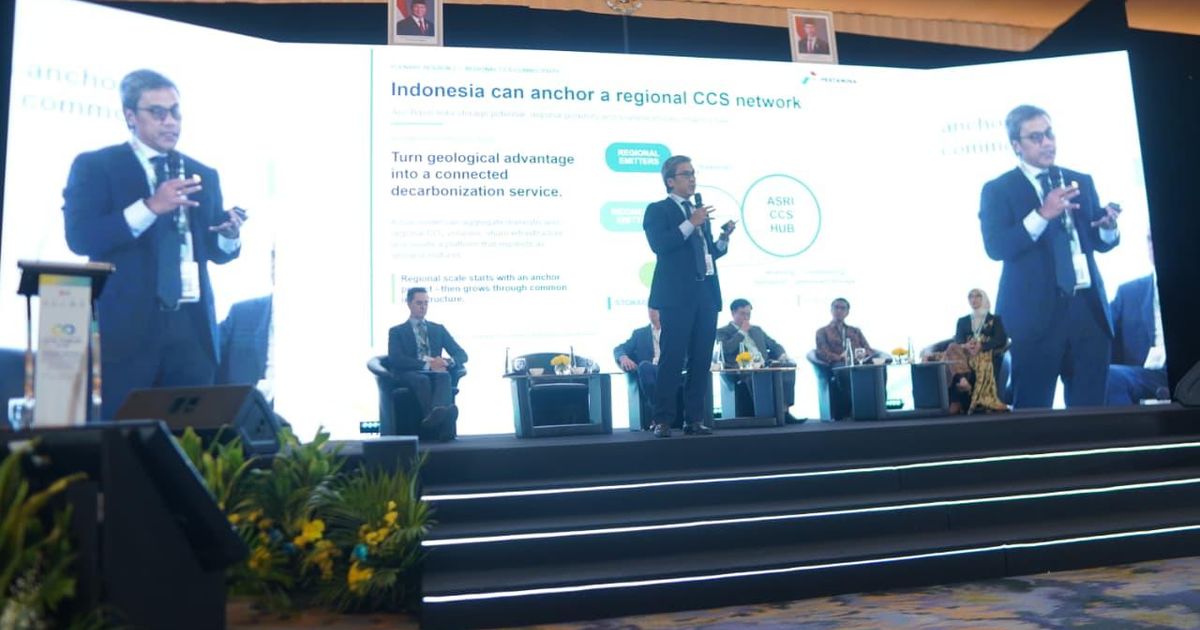
PT Pertamina Hulu Energi (PHE), the Upstream Subholding of Pertamina, continues to drive the development of Carbon Capture and Storage (CCS) in Indonesia to strengthen the country’s position as a driver of cross-border CCS networks in the Southeast Asian region.
PHE Director of Investment and Business Development Dannif Danusaputro conveyed this at the International Indonesia CCS Forum (IICCS Forum) 2026 in Jakarta, held from 26 to 27 August 2026.
Dannif sees Indonesia as having a strategic opportunity to become an anchor for regional CCS connectivity due to its geological potential, proximity to neighbouring countries, and opportunities to build infrastructure jointly. One potential area is the Asri Basin, a sedimentary basin offshore in the Java Sea, which could be developed as a CCS hub to consolidate carbon dioxide (CO₂) volumes from domestic and regional sources.
“Indonesia can become an anchor for the formation of a regional CCS network. Development on a regional scale can begin with one anchor project, which then expands through the utilisation of shared infrastructure,” said Dannif, quoted on Thursday (26/8/2026).
According to him, cross-border CCS development requires regulatory alignment as well as certainty regarding demand, commercial schemes, integration of the entire value chain, and safety standards. This alignment covers licensing processes, CO₂ volume accounting, Monitoring, Reporting and Verification (MRV), data access, and long-term responsibility sharing.
“The entire value chain must be planned in an integrated manner, from capture, transportation, terminals, pipeline networks, to CO₂ storage,” said Dannif.
To strengthen CCS development readiness, PHE is carrying out technical development, supporting frameworks, and the establishment of CCS markets and ecosystems in parallel. From a technical perspective, the company is integrating the design of CO₂ transportation systems, terminals, pipeline networks, wells, and storage facilities.
PHE is also preparing a scope of work that can enter the front-end engineering design (FEED) stage, the technical design phase before a project moves to implementation. This preparation includes conducting hazard identification (Hazid) to identify potential hazards, geomechanical studies, and planning for Monitoring, Measurement, and Verification (MMV) to ensure the carbon storage process can be monitored and verified.
On the commercial side, PHE is aligning its business structure with CCS regulations in Indonesia. The company also supports intergovernmental cooperation regarding MRV and data exchange, while expanding collaboration with CO₂-emitting industries, service providers, the shipping sector, engineering companies, and strategic investors.
Going forward, PHE will continue a number of development stages, including the completion of bilateral frameworks and strengthening commitments from CO₂-emitting industries. The company will also continue appraisal to ensure storage characteristics and capacity, then proceed to the FEED stage before moving towards an investment decision.
Cross-border CCS development also requires certainty regarding rules governing the transfer of CO₂ between countries. This includes recognition of captured and stored carbon volumes, reporting mechanisms, data exchange, and arrangements for responsibility should changes or issues arise after CO₂ is stored over the long term.
Source: jawawa.id (https://jawawa.id/newsitem/pertamina-drives-indonesia-to-become-regional-ccs-hub-asri-basin-prepared-1787849412)
Originally published by investortrust.id (https://investortrust.id/business/114315/pertamina-dorong-indonesia-jadi-hub-ccs-regional-asri-basin-disiapkan), translated from Indonesian