
Pertamina Deploys Smart Vessel Employing AI to Tackle Waterway Waste
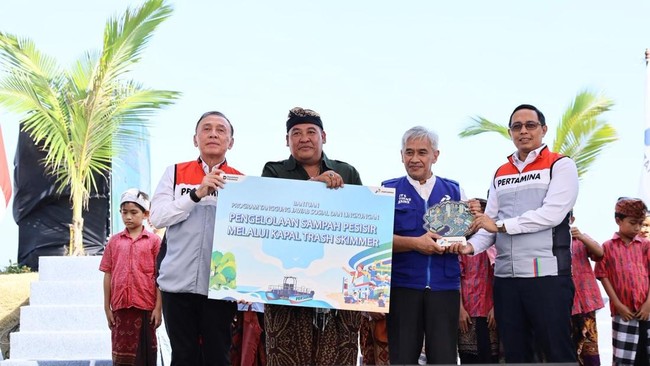
State-owned PT Pertamina (Persero), in collaboration with the Sepuluh Nopember Institute of Technology (ITS), has launched and conducted an operational simulation of the Autonomous Trash Skimmer, an automated waste-collecting vessel, at Sekeh Beach, Badung, Bali. The vessel, an intelligent water robot, integrates artificial intelligence (AI), an autonomous navigation system, and hybrid energy to hunt for waste both independently and via manual control. The launch coincided with the World Environment Day commemorations and was led by Pertamina’s President Commissioner, Mochamad Iriawan, as a commitment to environmental conservation, technological innovation, and community empowerment in more modern, effective, and sustainable waterway waste management. President Commissioner Iriawan stated that waterway waste poses a serious threat to marine ecosystems, health, and the beauty of aquatic tourism. He noted that the waste problem not only disrupts beach aesthetics but also threatens environmental sustainability and Bali’s economy through the tourism sector, which is the backbone of the island’s economy. He added that for industries, including Pertamina, marine debris is an operational risk as it can interfere with ship propellers, clog cooling systems of equipment and machinery, thus potentially disrupting the smooth distribution of energy. Iriawan stressed that waste management can no longer rely solely on conventional methods, requiring collaboration, education, and technological innovation for more effective environmental efforts. As an initial implementation step, Pertamina selected the Patra Bali Resort and Villas area in Badung Regency as the pilot project location, chosen due to high coastal tourism activity requiring sustainable waste management. In its initial phase, Pertamina targets reducing coastal waste around the Patra Bali Resort and Villas and AFT Ngurah Rai operations by approximately 1 tonne per year. Meanwhile, for the TBBM Kotabaru operational area in Kalimantan, the programme aims to help reduce coastal waste accumulation by up to 20 tonnes per year. The vessel measures 8 metres in length with a catamaran hull design and is equipped with ultrasonic sensors, cameras, GPS, AI, and a real-time monitoring system to efficiently detect and collect waste. It uses an electric motor supported by a hybrid system and solar panels as a renewable energy source, upholding low-emission and environmentally friendly operating principles. Other features include a waste collection net system in the centre, a plastic shredder to support recycling, and a 500-kilogram capacity electric pulley. Iriawan concluded that the programme is expected to become a technology-based waterway waste management model replicable across various Pertamina coastal operational areas, with potential development sites including integrated and fuel terminals in Cilacap, Balongan, Maos, Ternate, Wayame, Parepare, Masohi, and Labuan Bajo.