
Pertamina deploys 350 tankers to distribute national energy
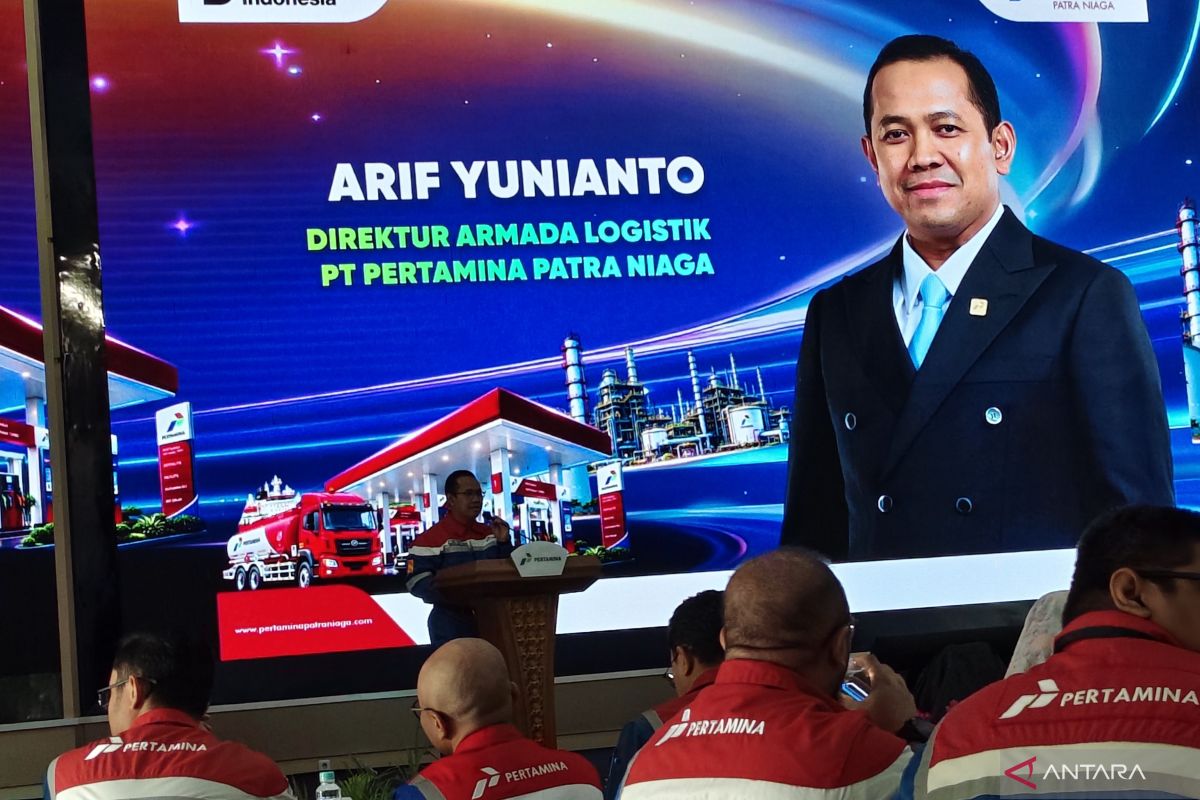
Yogyakarta (ANTARA) - Pertamina Patra Niaga has deployed 350 tankers to ensure the supply and distribution of national energy requirements.
“No less and no more than 350 tanker fleets, including crude oil, products, and LPG carriers, are being operated by us,” said the Director of Logistics Fleet at Pertamina Patra Niaga, Arif Yunianto, during a national media briefing in Yogyakarta on Friday.
He explained that 72 tankers are owned by the state-owned oil and gas company, accounting for 20.6 per cent, while the remaining 278 units are chartered tankers, representing 79.4 per cent of the fleet.
The total number of vessel trips managed reaches 11,508 voyages per year, transporting approximately 152.87 million kilolitres of cargo annually to secure supplies across around 150 network points.
These hundreds of network points, he noted, serve supply needs at crude oil terminals, Pertamina refineries, and more than 100 fuel oil depots (TBBM).
There are eight refineries in Indonesia, including the Cilacap Refinery Unit IV in Central Java, which is one of the largest in the country. This refinery has a production capacity of up to 348,000 barrels per day (BPSD), or 31 per cent of the national total.
Arif added that coordination is key to every vessel’s journey, involving cargo readiness, terminal availability, scheduling, safety standards, and the condition of the tankers.
This is because oil and gas logistics play a vital role in guaranteeing energy supplies given Indonesia’s geography as one of the largest archipelagic nations in the world.
He emphasised that the objective of the logistics fleet is not merely to move tankers but also to maintain the availability and sustainability of public services, including product quality, thereby supporting national energy security. Consequently, energy logistics activities are carried out through an integrated system rather than as standalone operations.
“The challenge we face is that we must provide a fleet that is reliable, safe, efficient, and sustainable,” he said.