
Pertamina Commences First B50 Fuel Shipments from Sumatra and Papua Refineries
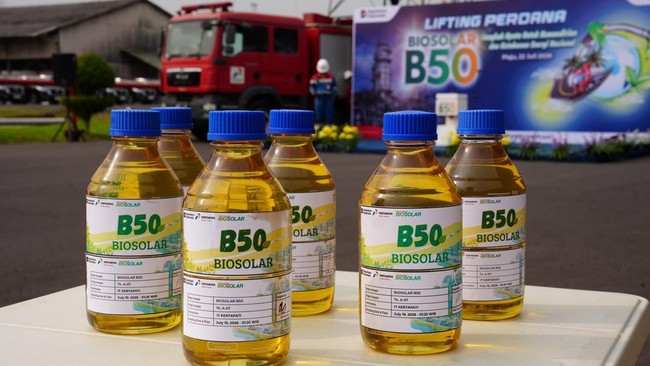
PT Pertamina Patra Niaga has carried out the inaugural shipment, or lifting, of fuel blended with 50 per cent biodiesel (B50) from the Kasim Refinery in Sorong Regency, Southwest Papua Province, and the Plaju Refinery in South Sumatra. This follows President Prabowo Subianto’s official launch of the B50 programme on 9 July 2026. VP Corporate Communication of Pertamina Patra Niaga, Kitty Andhora, detailed the initial distribution conducted in the two strategic regions. She stated that this shipment represents a significant milestone for the company in supporting Indonesia’s energy independence through an increased palm oil blend. “The inaugural B50 lifting by the Kasim and Plaju refineries is an important milestone that marks Pertamina Patra Niaga’s concrete step in strengthening national energy independence, security, and sovereignty, particularly through the implementation of the government-mandated B50,” Kitty explained in an official statement on Thursday (23/7/2026). The first shipment was dispatched from the Kasim Refinery on 18 July 2026, delivering 4,600 kilolitres of B50 to the MT Krasak. Subsequently, the Plaju Refinery followed with a lifting of 8,230 kilolitres of B50 to the Integrated Terminal Palembang on 22 July 2026 for distribution to Western and Eastern Indonesia. Prior to shipment, the company ensured that the blending process between 50 per cent Fatty Acid Methyl Ester and 50 per cent diesel met the required specification standards. The blended product had to pass laboratory quality tests in accordance with Ministry of Energy and Mineral Resources regulations before being distributed to fuel stations. The inaugural shipment is viewed as a tangible manifestation of the company’s commitment to supporting President Prabowo Subianto’s Asta Cita programme to achieve energy self-sufficiency in Indonesia. “This programme is also expected to contribute to reducing greenhouse gas emissions and curbing dependence on imported fuel,” Kitty added. Kitty stated that the presence of B50 is expected to provide a multiplier effect for the national economy. Beyond reducing emissions, the optimisation of this domestic palm oil product is projected to save foreign exchange through a reduction in diesel import volumes.