
Pertamina Calls for Fiscal Incentives to Attract Upstream Oil and Gas Investment
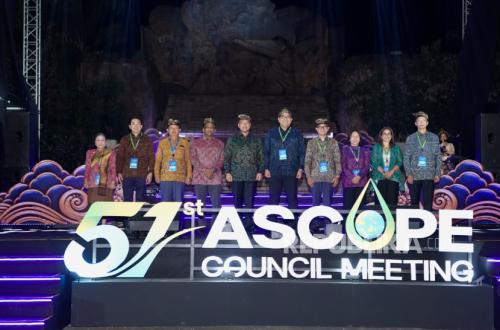
JAKARTA — Investment attractiveness is one of the determining factors in efforts to increase national oil and gas production. PT Pertamina (Persero) is calling for policy support, including fiscal incentives, to make upstream oil and gas projects more commercially competitive and attractive to investors amid rising energy demand and global geopolitical challenges.
Pertamina Deputy President Director Oki Muraza said upstream oil and gas investment requires certainty about project economics so companies can carry out exploration and development sustainably. Appropriate fiscal policies, he said, can improve the appeal of projects, particularly amid competition for capital to develop energy resources.
Oki explained that efforts to increase investment cannot rely solely on the potential of oil and gas resources. The government and industry players must also ensure that these resources can be developed under arrangements that provide an adequate return on investment.
In the upstream oil and gas industry, investment decisions are closely linked to exploration risks, capital requirements and the time it takes for a project to begin producing. Fiscal incentives and policy certainty are therefore important considerations for investors before they commit capital.
Pertamina believes a stronger investment climate is needed to support higher national oil and gas production. The company allocates around 75 per cent of its capital expenditure (capex) to upstream activities. This is part of efforts to boost production and achieve Pertamina’s target of producing one million barrels of oil per day by 2030.
However, increased investment also needs an industry ecosystem that can make exploration and development more efficient. Oki cited the potential for developing unconventional hydrocarbons in the Rokan Block, which requires support from service providers and technology companies to reduce drilling costs.
He referred to the experience of the Permian Basin in the United States, where an ecosystem of vendors and service providers supports the development of unconventional resources. Strengthening a similar ecosystem, Oki said, could help improve the cost efficiency of development in Indonesia.
In addition to Rokan, Pertamina sees opportunities to develop oil and gas resources in other areas, including the potential at Padang Pancuran and Jambi Merang. Exploration in Java, the Java Sea and eastern Indonesia is also considered to offer further prospects, particularly for natural gas development.
These opportunities require sustained investment. Without field development and new reserve discoveries, resource potential will not automatically translate into higher production. Policies that support project economics are therefore one means of accelerating investment decisions and field development.
The push for upstream oil and gas investment is also linked to the outlook for energy demand in South-east Asia. Oki estimates that ASEAN could become a net importer of natural gas after 2032 if production growth fails to keep pace with regional demand. This prospect underscores the urgency of developing gas resources and increasing upstream investment.
According to Oki, countries in the region need to strengthen co-operation to increase production and develop cross-border investment opportunities. Such efforts are needed to safeguard energy supplies amid geopolitical shifts that can affect global energy trade routes and distribution.
In this context, fiscal incentives are one of the factors to consider in building a competitive investment climate. Policies that support project economics are expected to encourage investors to proceed with development decisions, including for fields requiring greater investment and more advanced technology.
Pertamina considers higher oil and gas production to depend on an integrated approach combining resource potential, investment, technology and supportive policies. This approach is expected to turn available resources into production that contributes to meeting national energy needs.
Ultimately, the upstream oil and gas challenge is not simply to find new resources, but to ensure they are commercially viable to develop. Appropriate fiscal policy, together with regulatory certainty and operational efficiency, is important to sustaining investor interest and strengthening long-term energy security.
Source: jawawa.id (https://jawawa.id/newsitem/pertamina-calls-for-fiscal-incentives-to-attract-upstream-oil-and-gas-investment-1793098352)
Originally published by Republika (https://ekonomi.republika.co.id/berita/tnk9b3522/pertamina-dorong-insentif-fiskal-untuk-tarik-investasi-hulu-migas), translated from Indonesian