
Pertamina Boosts Pangkah Gas Output to Meet Industrial Demand
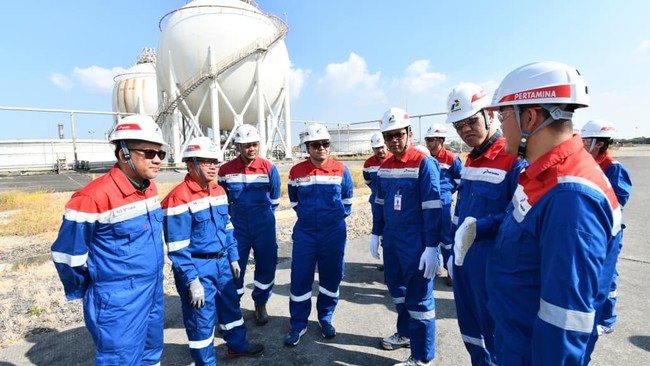
Amid rising industrial energy demand, Pertamina views the Pangkah Working Area in Gresik, East Java, not merely as an already-producing oil and gas asset.
More than that, the area is believed to still hold opportunities to yield additional oil and gas. To that end, Pertamina continually seeks to optimise the facilities already in place.
This step is important because East Java is one of the country’s industrial bases. The closer an energy source is to industrial consumers, the greater the opportunity to maintain supply reliability, including making the energy supply chain more efficient.
The Pangkah Working Area is managed by SIPL, a subsidiary of PT Saka Energi Indonesia (PGN Saka), which is part of Pertamina’s Gas Subholding. In addition to sustaining ongoing production, PGN Saka continues to seek opportunities to discover new reserves and enhance the value of assets already held.
Pertamina Vice President Director Oki Muraza explained that the presence of gas sources close to industrial centres is one advantage that needs to be continuously optimised to maintain continuity of energy supply for industry.
“East Java has a very strong industrial base. Therefore, continuity of energy supply, particularly natural gas, must be maintained. We hope PGN Saka continues to strengthen exploration studies to find new gas reserves,” Oki said in a written statement, quoted on Monday (10/8/2026).
He added that efforts to increase Pangkah’s contribution are not made solely by seeking new reserves. Existing infrastructure also needs to be utilised to the maximum so that the asset can provide greater value for national energy security.
In addition, Oki and PGN Saka management reviewed a number of facilities in the Pangkah area, including the Onshore Processing Facility and the LPG Plant.
“We discussed how the existing infrastructure can be utilised more optimally. There are various excellent facilities, including the LPG Plant, which we hope can make a greater contribution to Indonesia’s energy security,” Oki said.
Through this approach, Pangkah’s development is carried out along two tracks simultaneously: maximising existing production and facilities, and seeking potential new reserves for future energy needs.
In March 2026, SIPL completed drilling of the UPA-17ST development well in the Ujung Pangkah Field.
Well test results showed an initial flow rate of 2,443 barrels of oil per day (BOPD) and 3.72 million standard cubic feet of gas per day (MMSCFD) of associated gas. This achievement exceeded the company’s initial target.
This result is one indication that there are still opportunities to increase the value of the Pangkah asset through field development and measured exploration activities, including tapping hydrocarbon potential.
“We have received positive news regarding quite substantial hydrocarbon potential. This potential needs to be further deepened through exploration, its project maturity increased, and then pushed towards development and production so that it can provide additional energy supply for Indonesia,” he explained.
PGN Saka President Director Intan Fauzi said optimisation is carried out in an integrated manner, both at onshore and offshore facilities, while continuing to open opportunities for developing new oil and gas potential.
“This visit serves as encouragement for all Saka personnel to continue improving operational performance and maximising all the facilities we have in the Pangkah area, both onshore and offshore,” Intan said.
Ultimately, this strategic step is expected not only to increase the value of the Pangkah asset, but also to strengthen domestic natural gas availability to support the industrial and economic needs of East Java and Indonesia’s energy security.