
Pertamina and Jababeka Strengthen Collaboration Towards Net Zero Emissions
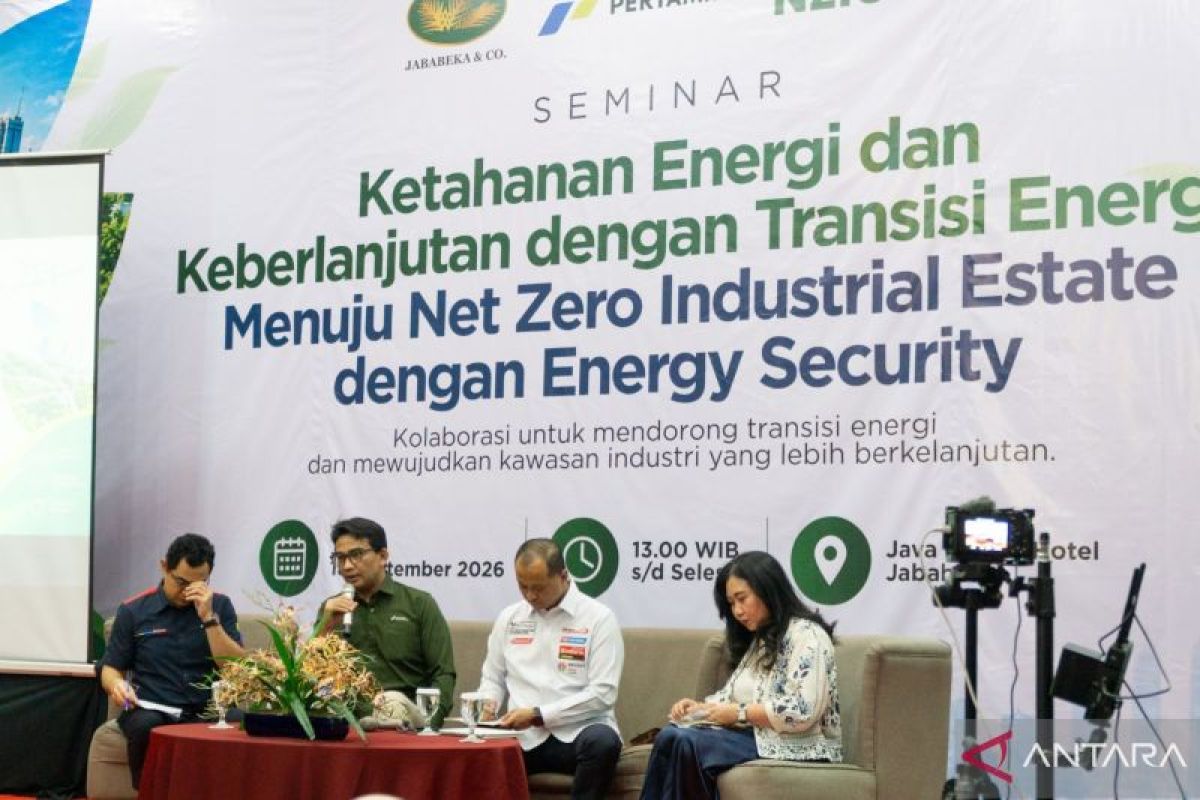
Bekasi Regency (ANTARA) - PT Pertamina (Persero) and Jababeka Tbk (KIJA) are strengthening their collaboration to transform towards a green and clean zone, alongside the implementation of ‘Net Zero Emissions’ through the use of clean energy, waste-to-energy, and the use of hydrogen for industry and transport.
Agung Wicaksono, Director of Transformation and Business Sustainability at PT Pertamina (Persero), appreciated Jababeka’s vision for a green and sustainable industry, noting that the companies within the estate have demonstrated real commitment and action towards green industry and decarbonisation.
“This collaboration was initiated in 2022 during the B-20 Summit and the World Economic Forum G-20 in Davos. We are committed to continuing the cooperation scheme as previously established, with a focus on developing environmentally friendly industries, particularly the provision of green energy within the Jababeka Industrial Estate,” he said in Cikarang on Sunday.
He explained that the strengthening of cooperation this year includes the use of piped gas, ISCC-certified biomethane or gas from organic waste that can replace natural gas, solar panels and electricity storage batteries, as well as carbon credits—a mechanism that provides economic value to emission reduction efforts.
His party will also explore the green hydrogen sector for low-carbon transport within a concept of a city based on integrated public transport, as an expansion of other clean energy types, including the development of biomethane and potential geothermal energy.
He also praised the commitment of companies for their success in implementing tangible evidence towards net zero emissions. An example is Unilever, which is developing biomethane as an environmentally friendly gas source alongside PT Perusahaan Gas Negara (PGN), part of the Pertamina group.
Another example is Astemo, which began installing rooftop solar panels with a capacity of 1.2 megawatts three years ago and has now increased this to over 2 megawatts.
“This demonstrates the tenants’ commitment to becoming a net zero industrial cluster with the support of Jababeka Infrastructure. Therefore, Pertamina, through Pertamina NRE and PGN, is ready to continue developing and meeting the needs of tenants in carrying out decarbonisation,” he said.
His party ensures providing support in the form of resolving environmental issues, such as processing waste into energy and utilising gas from waste to produce hydrogen for use in industrial areas and the transport sector.
“We are confident that with the support of Jababeka Infrastructure, this commitment from tenants can be realised and can encourage the government to prepare regulations so that the goal can be achieved,” he said.
The President Director of Jababeka Infrastructure, Didik Purbadi, stated that the strengthening of this collaboration aims to help companies within the area reduce carbon emissions, making the area cleaner, greener, and more comfortable for working, living, and activities.
He stated that the company continues to innovate and transform towards net zero emissions, one way being the installation of a 230 kWp Rooftop Solar Power Plant (PLTS) at the local industrial area’s water treatment plant, a result of cooperation with Pertamina NRE.
Since operating in 2023, these panels have generated 858.21 MWh of electricity. According to management data, this amount is equivalent to a carbon emission reduction of 734 tons of CO2e.
The use of rooftop solar panels is now being followed by other companies in the same area. As of September 2026, it is recorded that 23 companies in the Jababeka Industrial Estate have carried out installations with a total capacity of 14.5 MWp.
As a pioneer and the first private industrial developer in Indonesia, established in 1989 by 21 national entrepreneurs in Cikarang, Bekasi Regency, this area was born from a concept of modern, environmentally conscious industry and integrated infrastructure to maintain global competitiveness and attract investment to the country.
The company currently manages approximately 2,000 multinational companies from 36 countries, which since the beginning of development were prepared as a modern and sustainable eco-industrial area through joint development with ProLH GTZ under a technical cooperation programme between the Indonesian Ministry of Environment and the Republic of Germany.
“Making this industrial area the most complete and integrated basic infrastructure, all based on sustainability principles, such as the first private power plant using gas, not using coal for 35 years, building WTP from surface water, and the first integrated WWTP/IPAL in the country,” he said.
His party is committed to continuously creating area orderliness so that entering industries comply with regulations and the environment, including a dry port for logistics efficiency and emission reduction, as well as addressing Over Dimension Over Loading (ODOL) vehicles through trains to the port and preparing mass transport for workers.
“Through the synergy of modern infrastructure and a self-sufficient eco-industrial concept, we also contribute to creating a multiplier effect for employment, MSMEs, and national economic growth,” he said.
This industrial area has continued to grow over three decades to become a national manufacturing industry hub, followed by other industrial areas, creating 1.1 million jobs and an income of USD 35,000 per capita, while making Bekasi contribute 22-45 percent of national manufacturing exports.
Jababeka Industrial Estate has been designated by the government as a National Vital Object through Presidential Decree 63/2004, Minister of Industry Decree Number 620/2012, and Number 973/2025, concerning vital infrastructure such as power plants, clean water and wastewater treatment, gas, and dry port logistics distribution flows that must not have disrupted operations.