
Pertamina Allocates 75% of Capital Expenditure to Oil and Gas Upstream, Targets Higher Output
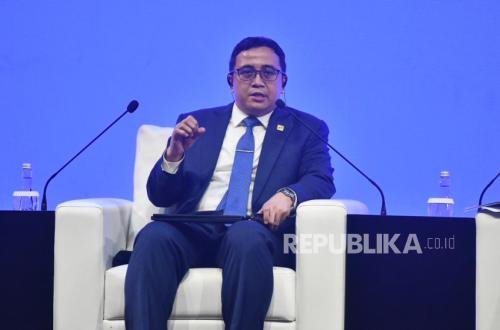
DENPASAR — PT Pertamina (Persero) is allocating about 75% of its capital expenditure (capex) to the upstream oil and gas sector. The strategy is intended to strengthen national oil and gas production through exploration and field development, in line with the target of producing one million barrels of oil a day by 2030.
Pertamina Deputy President Director Oki Muraza said the upstream sector was the company’s top priority in its capital expenditure allocation. The move aligns with the government’s mandate for Pertamina to increase oil and gas production to help meet national energy needs.
“Pertamina allocates the largest share of our capex to upstream. One of the mandates given by the government is for us to increase upstream production. You may often hear about the target of one million barrels by 2030. So we allocate about 75% of our capex to upstream,” Oki said at the 51st ASEAN Council on Petroleum and Energy (ASCOPE) event at The Meru Sanur in Denpasar, Bali.
Oki said Pertamina was developing several prospective areas to increase oil and gas production. One initiative is building an unconventional oil and gas ecosystem in the Rokan area of Sumatra, which is considered to have substantial resource potential.
According to Oki, unconventional oil and gas development requires a well-supported industrial ecosystem. The availability of service providers and drilling technology is important for reducing well-development costs and ensuring projects are economically viable.
He cited development in the Permian Basin in Texas, United States, which is supported by numerous service providers. That ecosystem could offer lessons for developing similar potential in Indonesia, particularly in improving drilling cost efficiency.
“The potential is enormous, at more than 11 billion barrels, but it naturally requires an ecosystem like the one in the Permian Basin in Texas, where we have many vendors — around 50 — so the cost of producing each well can be reduced,” Oki said.
In addition to Rokan, Pertamina is developing the potential of an oil and gas discovery at Padang Pancuran, in the Jambi Merang area. Oki said the site could hold more than one billion barrels of resources. The company is seeking to accelerate development so that the potential can be converted into production.
Pertamina is also pursuing several exploration opportunities in Java, particularly in the Java Sea, with partners. Eastern Indonesia, meanwhile, is considered to hold significant potential for oil and gas development, especially natural gas.
Oki said the potential in eastern Indonesia was an important part of Pertamina’s exploration strategy. The company continues to assess opportunities to develop oil and gas resources in various areas in support of increased national production.
Strengthening the upstream sector is also relevant to the region’s energy security challenges. At the ASCOPE forum, Oki said ASEAN was expected to become a net gas importer after 2032. This prospect is prompting countries in the region to increase domestic production while strengthening energy investment cooperation.
According to Oki, higher production must be accompanied by an attractive investment climate. Fiscal policy and incentive schemes are important in determining project economics, from exploration and field development to the sale of production.
“To increase the region’s attractiveness for investment, we need to advocate to governments for appropriate fiscal terms. In any business, the most important thing about an investment is its return,” he said.
He added that oil and gas development is a lengthy process, from seismic surveys and exploratory drilling to the construction of production facilities. Certainty over project economics is therefore an important consideration in encouraging investors to commit capital to upstream oil and gas projects.
By prioritising the upstream sector in its capital expenditure, Pertamina aims to strengthen exploration and field development. The strategy’s success will depend on the company’s ability to convert resources into production, supported by technology, cost efficiency and a favourable investment climate.
Source: jawawa.id (https://jawawa.id/newsitem/pertamina-allocates-75-of-capital-expenditure-to-oil-and-gas-upstream-targets-higher-output-1793098352)
Originally published by Republika (https://ekonomi.republika.co.id/berita/tnk97m522/pertamina-alokasikan-75-persen-capex-untuk-hulu-migas-bidik-peningkatan-produksi), translated from Indonesian