
Pertamax Price Surge of 32 Per Cent Threatens the Middle Class, CELIOS Warns
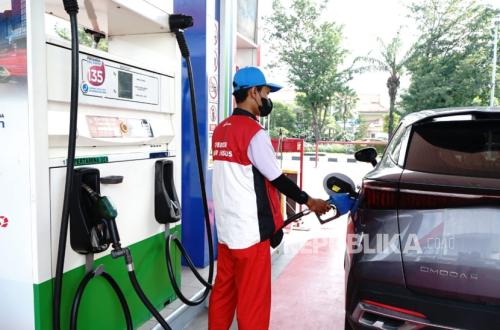
The Center of Economic and Law Studies (CELIOS) assesses that the increase in Pertamax prices from Rp 12,300 to Rp 16,250 per litre starting 10 June 2026 has the potential to put pressure on the vulnerable middle class. The increase of around 32 per cent is considered to not only affect high-income earners but also millions of non-subsidised fuel users who rely on Pertamax for their daily mobility.
CELIOS Director of Public Policy Media Wahyudi Askar stated that the assumption that the Pertamax 92 price rise only hits the wealthy is a mistaken view. According to him, Pertamax 92 users also come from the ranks of workers, employees, teachers, online motorcycle taxi drivers, and people aspiring to the middle class.
“The view that the Pertamax 92 price rise only hits the rich is a mistaken oversimplification. Users of Pertamax 92 are not just the wealthy, but also the vulnerable middle class,” Media said in his statement in Jakarta on Wednesday (10/6/2026).
He explained that the excessively wide price increase confronts the public with a difficult choice: paying more or switching to Pertalite. This shift, he clarified, will increase the number of subsidised fuel users.
CELIOS Economics Director Nailul Huda said the decision to raise Pertamax prices without changing the price of Pertalite would encourage an increase in demand for subsidised fuel. This condition has the potential to increase the energy subsidy burden that the government must bear.
“When the government decides to raise the price of Pertamax 92 without raising the price of Pertalite, there is a consequence of increased demand for Pertalite. As a result, the Pertalite quota will increase and cause the fuel subsidy to swell,” said Huda.
He cautioned that purchase restrictions via QR Code would only be effective if there are no distribution leaks on the ground. According to him, the practice of selling Pertalite outside official petrol stations is still found, potentially reducing the effectiveness of oversight.
CELIOS also estimates that the Pertamax price increase will have a broader impact on the community’s economic conditions. The impacts include a decline in the purchasing power of the middle class and aspiring middle class, an increase in the number of people vulnerable to poverty, a rise in food prices, and an acceleration of credit interest rate adjustments.
The institute warned of the risk of an increase in layoffs in the third quarter of this year, accompanied by the potential for rising crime and social unrest if economic pressures persist. Media assessed that the government still has several options to face fiscal deficit pressures, ranging from evaluating the Free Nutritious Meals programme, adding debt, increasing tax revenue, to adjusting fuel prices.
“It is very strange, when the country needs additional money, those asked to sacrifice are the lower middle class. They are made to bear the costs of fiscal problems born from the government’s own poor policy choices and execution,” he said.
CELIOS Executive Director Bhima Yudhistira assessed that the Pertamax price increase is a signal of the government’s narrowing fiscal space. According to him, the decision is not just a non-subsidised fuel price adjustment, but also reflects growing pressure on the State Budget.
“Maturing debt and interest obligations have hit Rp 1,434 trillion. This year is one of the peaks of debt repayment. The tax revenue outlook shortfall is estimated at Rp 300-340 trillion, and programme spending needs remain large. The government has run out of ammunition to keep energy prices stable,” Bhima stated.
He explained that pressure on the State Budget also comes from the weakening rupiah exchange rate, said to have depreciated by about eight per cent since the start of the year. This condition increases energy import costs while enlarging the need for energy compensation and subsidies.
Bhima judged that the strengthening of global oil prices is indeed beyond the government’s control. However, the stability of the rupiah exchange rate also determines the magnitude of pressure on fuel import costs and the state’s fiscal burden.
“High oil prices are a factor outside the government, but the weakening rupiah exchange rate is within the control of the government and Bank Indonesia, thus having a significant role in the fuel price adjustment,” he said.