
Pertamax Price Hike: Impact of Consumer Shift to Pertalite Needs Anticipation
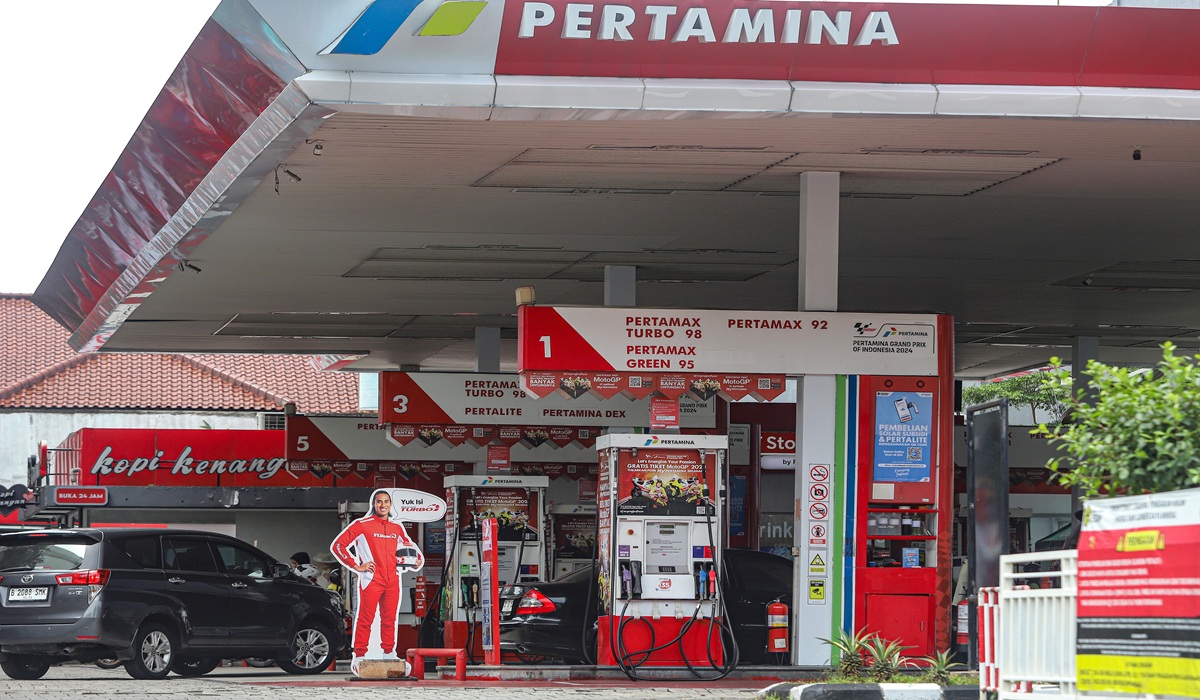
Center of Reform on Economics (CORE) economist Yusuf Rendy Manilet has reminded the government to anticipate the impact of the Pertamax price increase, noting that consumers may switch to Pertalite. Fuel prices today saw Pertamax (RON 92) rise from Rp12,300 per litre to Rp16,250 per litre, and Pertamax Green 95 (RON 95) increase from Rp12,900 per litre to Rp17,000 per litre. "The price difference, which now reaches around Rp6,250 per litre, creates a strong economic incentive for the public to switch to cheaper fuel. In economics, this phenomenon is known as the trading-down effect, where consumers reduce spending by substituting consumption with lower-priced products," Yusuf told Media Indonesia on Wednesday (10/6). He said these symptoms are already visible from increased queues for Pertalite and reduced congestion in Pertamax lanes. If the price difference persists over the coming months, consumer migration is likely to continue. In a moderate scenario, Yusuf said Pertalite consumption has the potential to rise by about 7% and remain within the quota limit. However, in a more severe scenario, the increase could reach 12%, raising the risk of exceeding the quota. "Based on simulations, the new quota risks being exceeded when consumer migration approaches 11.3%," he revealed. From the fiscal side, increased Pertalite consumption will add to the government’s compensation burden. Assuming compensation of around Rp5,400 per litre, the additional burden is estimated to range from Rp4 trillion to Rp17 trillion, with a moderate scenario nearing Rp10 trillion. Nonetheless, Yusuf assesses that this pressure remains within the available fiscal capacity, making it more a narrowing of fiscal space than a threat to state budget stability. "Therefore, the government’s main concern at this time should not only be the size of the compensation burden, but also the availability of Pertalite supplies in the field," he said. According to Yusuf, the most tangible risk is the emergence of shortages and long queues if consumer migration occurs faster than expected. Therefore, distribution monitoring and purchase restrictions are important to keep consumption under control. In terms of inflation, he continued, the direct impact of the Pertamax price increase is expected to be limited because the majority of the public uses subsidised fuel. However, indirect impacts still need to be observed because increased transportation and logistics costs for non-subsidised fuel users can propagate into the prices of goods and services. Yusuf assessed that the Pertamax price increase needs to be seen as a consequence of changing global energy market conditions and exchange rates. He explained that Pertamax is a non-subsidised fuel, so its price adjustment follows developments in procurement costs.