
Pertamax price hike could trigger delay in non-essential spending, expert warns
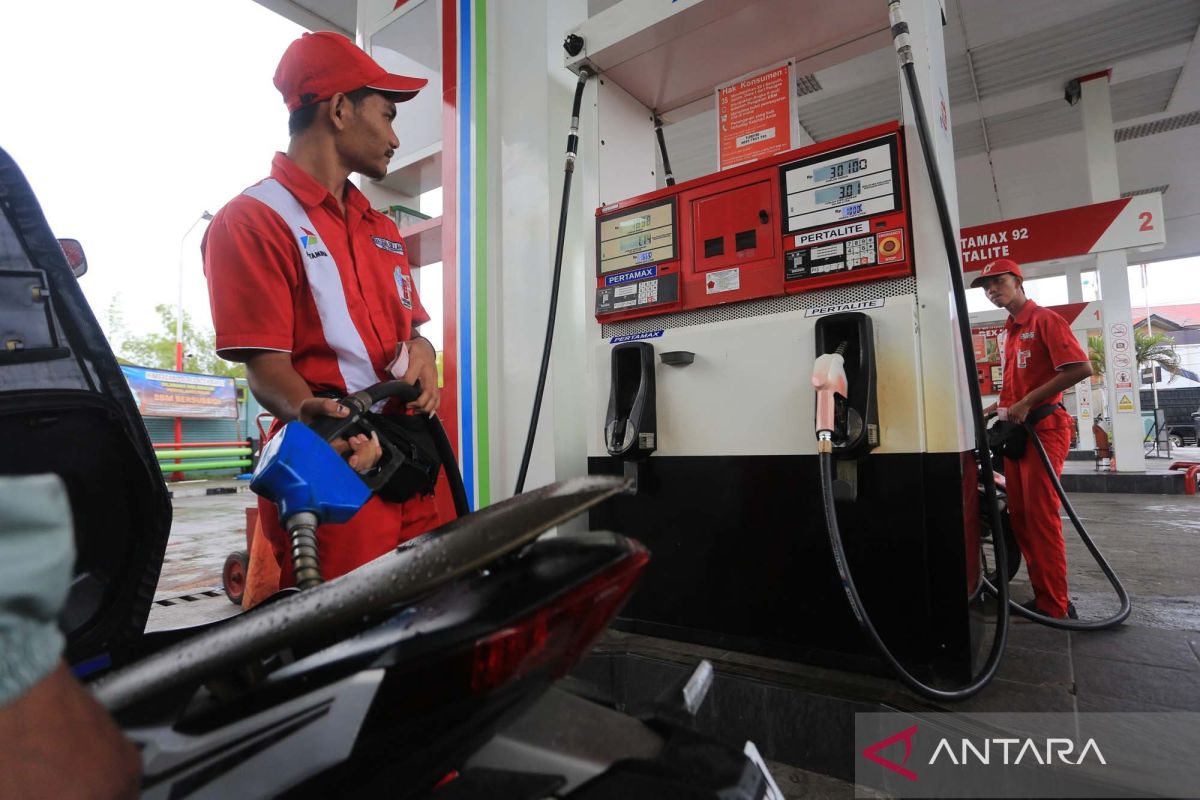
Jakarta (ANTARA) - Professor Rahma Gafmi from the Faculty of Economics and Business at Universitas Airlangga (Unair) has assessed that the increase in the price of non-subsidised Pertamax fuel could potentially trigger a delay in non-essential spending by the middle class, as the share of household expenditure on transport grows. “It will impact the postponement of non-essential spending. Middle-class households will most likely reduce or hold back consumption in secondary and tertiary sectors, such as holidays, entertainment, food and beverage or eating out, and electronic goods,” Rahma said when contacted by Antara in Jakarta on Friday. She noted that the majority of Pertamax consumers come from the middle to upper-middle class groups. When the price of Pertamax rises, this group faces an income effect in the form of shrinking disposable income because the household budget allocation for transport swells. She explained that the need for petrol tends to be inelastic in the short term because people still have to work and be mobile. As a result, spending room for non-essential needs becomes increasingly limited. This condition is considered to burden the middle class, who do not receive fiscal cushions like the poor and vulnerable poor groups who receive social assistance (bansos) or direct cash assistance (BLT). The middle group, Rahma clarified, must fully absorb the increase in living costs independently amid income or salary growth that tends to be stagnant. This pressure also comes at a less-than-ideal time, coinciding with the new school year, which usually increases household spending on education needs. Besides affecting household consumption patterns, the Pertamax price hike also has the potential to cause ripple effects across several business sectors. Although it is not the main fuel for the staple goods logistics sector, which generally uses diesel, the Pertamax price increase is still considered capable of raising operational costs for a number of business actors. She cited sectors that rely on private vehicles or operational vehicles using non-subsidised petrol, such as courier services, online motorcycle taxi drivers, and culinary MSMEs that use private vehicles to purchase raw materials. If the increase in operational costs is passed on to end consumers, the price of goods and services at the retail level could potentially rise, adding pressure to core inflation and eroding real household purchasing power more broadly. Even so, Rahma assessed that the impact of the Pertamax price hike on headline inflation is still relatively limited. “Although the percentage increase (in Pertamax price) is massive, rising about 32 percent from Rp12,300 to Rp16,250 per litre, its domino effect on headline inflation remains under control because it is not an increase in the logistics sector. Even if there is an effect, it is only about 0.1 percent,” she said. Rahma added that the Pertamax price hike will not immediately trigger an extreme surge in national inflation because the public transport and heavy logistics sectors still use subsidised fuels, such as Pertalite and Biosolar. Nevertheless, she estimates that inflation in June 2026 will remain under pressure. Transport sector dynamics are one of the factors that could potentially push headline inflation (consumer price index/CPI) to increase compared to the previous month. “The inflation projection for June 2026 is under quite strong pressure. Transport sector dynamics are one of the main triggers that could potentially push headline inflation (CPI) to creep up to approach or even breach the 4 percent range year-on-year (yoy), increasing from May’s position which was at 3.08 percent (yoy),” Rahma said.