
Pertamax Price Hike: BI Forecasts 0.25% Inflation Impact
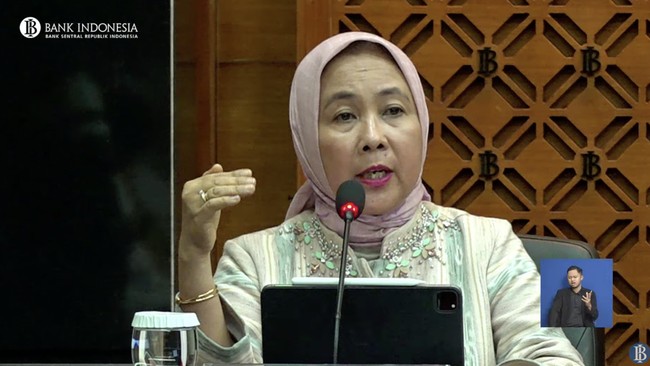
Bank Indonesia (BI) is warning of mounting inflationary pressures in Indonesia, driven not only by global supply disruptions but also by the recent adjustment of domestic fuel prices. This risk assessment prompted the central bank to raise its benchmark interest rate by another 25 basis points this month to 5.75%, marking the second BI rate hike in June 2026. “That was one of our considerations for raising the BI rate, as a forward-looking, pre-emptive step to ensure inflation over the next two years, 2026-2027, remains under control within the target of 2.5% plus or minus 1%,” said BI Governor Perry Warjiyo during an online press conference on Thursday (18/6/2026). BI Deputy Governor Aida S Budiman explained that global inflationary risks stem from volatile oil and commodity prices, which could trigger imported inflation domestically. “Our attention is certainly on global spillovers, namely oil and commodity prices entering the domestic market, or what we call imported inflation. The second risk, which has not yet materialised but we are on alert for, is weather disruptions,” Aida stated. Domestically, she noted that inflationary pressure will arise following the government’s increase in non-subsidised fuel prices, such as Pertamax and Pertamax Turbo, even though prices for Dexlite and Pertamina Dex have decreased. Aida said the contribution of these fuel price hikes, classified as administered prices, to inflation will reach 0.25%. “This will naturally fluctuate depending on global prices. For now, our calculations suggest it will contribute roughly 0.25% to inflation,” she said. Further inflationary pressure is also expected within the volatile food category, including fertiliser prices. However, Aida stressed that the impact on volatile food inflation remains minimal because domestic fertiliser production can still meet demand. “Meanwhile, El Niño may occur around late June through October or November, but various coordination efforts have already been undertaken, including preparations in the regions,” Aida emphasised. Considering these various inflationary risks, Aida stated that overall future inflation will still move within the government’s target range of 2.5% plus or minus 1%, with the highest estimate at 3.5%. “Indeed, inflation projections are starting to increase, but everything remains within the 2.5% plus or minus 1% target, so the highest level of 3.5% is still within that target,” Aida concluded.