
Pertalite Subsidy Restructuring Makes Electric Motorcycles an Increasingly Relevant Mobility Choice
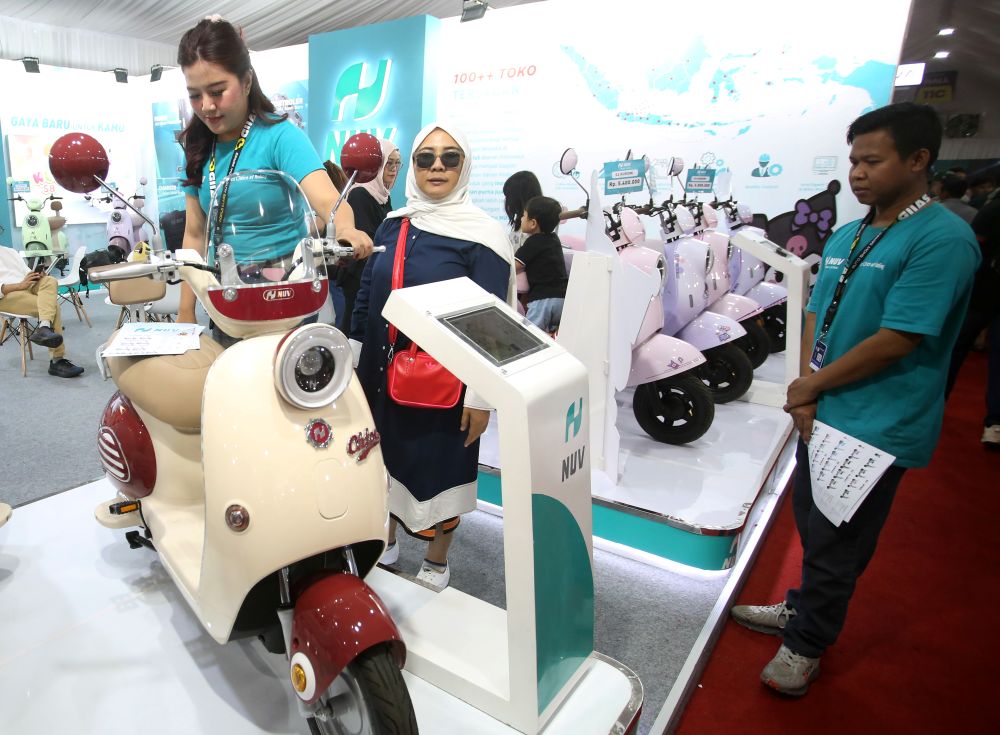
The government’s discourse on restructuring Pertalite distribution to ensure it is better targeted is seen as a momentum for the public to consider more efficient mobility options. The Indonesian Electric Motorcycle Industry Association (Aismoli) is encouraging electric motorcycles to become a primary choice to reduce public dependence on fuel while supporting national energy spending efficiency.
Discussions on the Pertalite arrangement resurfaced after Minister of Finance Purbaya Yudhi Sadewa met with Minister of Energy and Mineral Resources Bahlil Lahadalia on Tuesday, 11 August 2026. The government is reviewing restrictions on Pertalite access for affluent groups, including the ninth and tenth income deciles, with a phased implementation once supporting systems are ready.
According to Aismoli, this momentum should be viewed beyond just the restructuring of subsidy recipients. Indonesia also has the opportunity to structurally reduce fuel demand by accelerating the adoption of electric vehicles, particularly motorcycles, which are the dominant mode of transport. Data from the Central Statistics Agency (BPS) for 2025 shows the number of motorcycles in Indonesia has reached approximately 139.45 million units. The sheer size of this population means that even a partial shift of two-wheelers to electric power could have a significant impact on national energy consumption.
“The subsidy restructuring is the right moment to expand public choice. If people have more efficient vehicles for their daily needs, dependence on fuel can also be reduced. Electric motorcycles are increasingly relevant because their operational costs are lower and the product choices are more diverse,” said Aismoli Chairman Budi Setiyadi.
The potential savings are considerable. The Ministry of Energy and Mineral Resources previously estimated that the use of 900,000 electric motorcycles could reduce fuel consumption by around 320 million litres per year while cutting Pertalite compensation by approximately IDR 480 billion annually. For users, the ministry estimates annual fuel cost savings of around IDR 2.68 million per electric motorcycle. Given Indonesia’s vast number of two-wheelers, Aismoli believes accelerating electric motorcycle adoption could yield increasingly significant savings effects. Based on the ministry’s consumption saving ratio, every one million motorcycles switching to electric equates to a potential reduction in fuel consumption of around 356 million litres per year. This means a shift of 5 million motorcycles could potentially reduce fuel demand by about 1.78 billion litres per year, while 10 million could reach around 3.56 billion litres per year. These figures are illustrative based on the ministry’s calculation ratio, with actual realisation depending on usage patterns and the type of fuel previously used.
“If carried out on a scale of millions of vehicles, the benefits are not only felt by owners through lower operational costs. The country also has the opportunity to reduce fuel consumption and the fiscal space currently needed to maintain energy prices. Therefore, electric motorcycles must start to be seen as part of the national energy efficiency solution,” Budi said.
Aismoli stressed that the public will only switch if electric vehicles offer genuinely competitive benefits. Therefore, accelerating adoption must go hand in hand with improving product quality and safety, more affordable pricing, availability of spare parts, after-sales service networks, charging and battery swapping infrastructure, and consumer protection. Strengthening the industry must also involve all business players who have invested and contributed in Indonesia, from vehicle and battery manufacturers, component industries, workshops and distribution networks, to infrastructure providers.
“The transition cannot be driven solely by changes in fuel policy. The public must have strong reasons to choose electric motorcycles: quality products that are safe, economical, and easy to use. The industry’s task is to ensure this entire ecosystem is in place,” Budi said.
Aismoli also supports increasing the use of locally made components alongside strengthening the capabilities of local suppliers. Industrial policy needs to maintain healthy competition and provide room for all players who meet standards, invest, create jobs, build services, and provide consumer protection. According to Aismoli, the restructuring of fuel subsidies and the acceleration of electric vehicle adoption can ultimately go hand in hand. Subsidies can be increasingly directed to those in need, while consumers who have the means and the need to switch are offered more efficient mobility choices.
“What we want to build is not simply more electric motorcycles on the road. We want the public to have more economical mobility choices while helping Indonesia reduce its dependence on fuel. If the ecosystem becomes stronger, the benefits will be felt by consumers, industry, and the country,” Budi concluded.