
Pertalite Restriction Plan: Fiscal Savings vs Inflation and Middle-Class Purchasing Power Risks
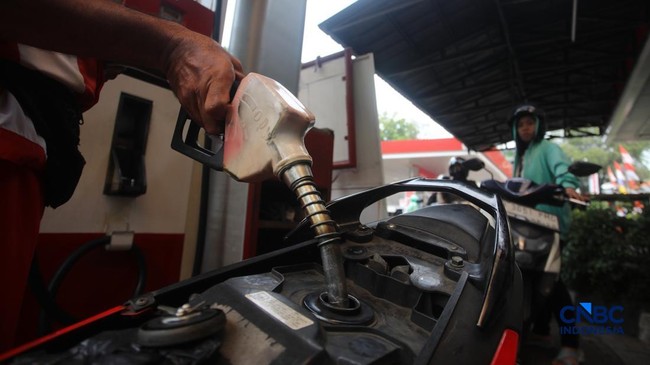
The plan to regulate the distribution of the Special Assignment Fuel Type (JBKP) Pertalite has resurfaced. This move is primarily driven by the large burden of energy subsidies and compensation in the state budget. In the 2025 State Budget, the total allocation for energy subsidies and compensation reaches Rp498.8 trillion. It has been stated on various occasions that around 80% of current Pertalite consumers come from affluent communities using private four-wheeled vehicles. This underlies the proposal to restrict access to subsidised fuel based on socio-economic welfare rankings or a decile system.
From a fiscal efficiency perspective, restricting consumption specifically for Decile 9 and 10 groups (the top 20% of the population) is projected to provide savings of up to 10% of the total energy subsidy and compensation budget, or between Rp10 trillion and Rp15 trillion per year. These state budget savings are planned to be reallocated to productive sectors and social safety nets, such as direct social assistance, health spending, and improvements to educational facilities. The transformation from commodity-based subsidies to beneficiary-based subsidies (target-based subsidy) is conceptually appropriate and necessary.
From a regulatory and operational status perspective, it is stated that this policy is still in a maturing review stage. The main legal instrument, a revision of Presidential Regulation Number 191 of 2014 concerning the Supply, Distribution and Retail Selling Price of Fuel Oil, has not been officially issued. Therefore, restrictions on Pertalite purchases based on decile classification have not yet been implemented at petrol stations. The mechanism currently operating in the field is limited to registration and digital transaction recording based on the MyPertamina QR Code to limit daily vehicle quotas, such as allocations of 20 to 120 litres per day depending on the type of vehicle.
The delay in executing this policy reflects the government’s caution in ensuring IT infrastructure readiness and measuring its impact on national economic dynamics. Before the regulation is enacted and this policy is implemented massively, there are at least three main aspects that require in-depth attention, ranging from technological reliability, inflation risk, to its impact on people’s purchasing power:
- Operational Technical Readiness and Data Validity
Implementation of this policy demands real-time data integration between the National Socio-Economic Single Data (DTSEN) managed by the Ministry of Social Affairs, vehicle ownership databases at Samsat/Korlantas, and Pertamina transaction servers. The DTSEN database covers around 280 million people, equivalent to 75 million households. To avoid disruption in the field, the margin of error in matching Population Identification Numbers (NIK), vehicle registration numbers, and decile status must be minimised. A data mismatch rate of just 2% could potentially cause exclusion errors for 1.5 million vulnerable households that should be entitled to receive subsidies. Besides data validity issues, network infrastructure capacity in the field is a critical challenge. Data processing time (latency) when scanning QR Codes at Pertamina petrol station nozzles should be below three seconds per vehicle. This speed limit is very important to prevent long queues and congestion at more than 7,500 Pertamina petrol stations spread across Indonesia.
- Inflationary Impact and Sectoral Domino Effects
The restriction policy will condition middle-class consumers who do not have access to Pertalite (Rp10,000/litre) to switch to non-subsidised fuels such as Pertamax. If Pertamax is sold at only Rp12,500–Rp13,500/litre, this shift could create a fuel cost adjustment for affected individuals of 25% to 35%. Fuel commodities have a weighting of 2.5% to 3.5% in the national Consumer Price Index (CPI) basket. Theoretically, the migration of consumption from this affluent group will contribute direct inflation (first-round effect) of 0.3% to 0.4%. Meanwhile, the indirect impact (second-round effect) will spread to the logistics sector and supply chains. Based on Input-Output analysis models, fuel cost adjustments for small business operational vehicles and freight transport will drive up food and transportation service prices, contributing an additional indirect inflation of 0.2% to 0.4%. Thus, the total potential additional national inflation under such conditions alone could already be in the range of 0.5% to 0.8%. With current Pertamax prices ranging from Rp15,000–Rp16,000/litre, the inflationary impact would certainly be greater.
- Pressure on Middle-Class Purchasing Power
On paper, the middle-class group (Deciles 5 to 8) is the group most vulnerable to changes in energy prices. Based on National Socio-Economic Survey (Susenas) data, this group allocates 10% to 15% of their total monthly expenditure specifically for daily transportation costs. Micro simulations show that a household in Decile 7 consuming an average of 120 litres of Pertalite per month for work mobility could experience an increase in transportation costs of Rp300,000 to Rp420,000 per month or more if they have to switch to Pertamax (depending on the price difference). This cost increase is equivalent to a real purchasing power cut of 4% to 6% of their total monthly consumptive income. Because the middle class is not included in the Direct Cash Assistance (BLT) scheme or other government social assistance programmes, this condition will trigger a crowding-out effect. Households will be forced to cut non-essential spending, such as retail shopping.
Source: jawawa.id (https://jawawa.id/newsitem/pertalite-restriction-plan-fiscal-savings-vs-inflation-and-middle-class-purchasing-power-risks-1787320418)
Originally published by CNBC Indonesia (https://www.cnbcindonesia.com/opini/20260821185257-14-761433/catatan-atas-rencana-pengaturan-distribusi-pertalite), translated from Indonesian