
Pertalite and Biosolar Prices Unchanged, Energy Watch: Public Still Has Affordable Energy Options
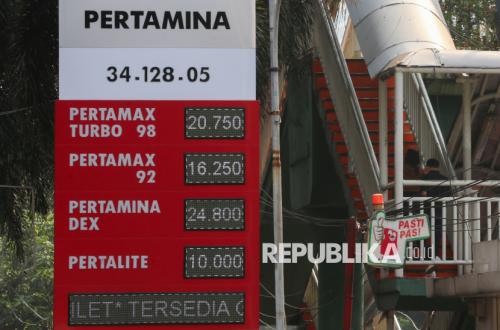
JAKARTA – The government’s decision to maintain the prices of subsidised fuels Pertalite and Biosolar is considered an important step to ensure public access to affordable energy amidst global market dynamics.
Executive Director of Energy Watch, Olo Berto Siahaan, stated that this policy demonstrates the government’s alignment with the public who are entitled to receive energy subsidies. He noted that despite price adjustments for several non-subsidised fuels, the public still has access to fuel options with stable prices.
“Of course, subsidised fuels like Pertalite and Solar remain an option for the public who are entitled to receive subsidies. Meanwhile, those who are more financially capable need to show empathy by not switching to Pertalite or Solar, as this would cause subsidies to be mistargeted,” Berto said on Friday (12/6/2026).
Berto stressed that the sustainability of the subsidy programme heavily depends on the accuracy of beneficiary targeting. He therefore urged economically capable groups to continue using non-subsidised fuels so that the subsidy allocation can be enjoyed by those in need.
On the other hand, Berto assessed that the price adjustments for Pertamax and Pertamax Green were made by considering various factors, including public purchasing power and global energy market developments. According to him, this step is a consequence of the market price mechanism.
“What increased were non-subsidised fuels. So it is reasonable to adjust to the global market mechanism because part of the procurement must be obtained through imports,” he said.
Berto explained that the price adjustment is also necessary to maintain the financial health of business entities. Moreover, he noted, the price of non-subsidised fuel had been maintained for several months despite external pressures.
“Additionally, this policy is important to ensure the sustainability of energy supply and the health of the downstream oil and gas industry,” Berto said.
According to him, the price adjustment mechanism for non-subsidised fuel is in accordance with the provisions of Minister of Energy and Mineral Resources Decree Number 245.K/MG.01/MEM.M/2022. Under this regulation, the selling price of non-subsidised fuel follows global energy market developments, including the movement of world oil prices and the rupiah exchange rate.
“Moreover, most of it is imported, so it is greatly influenced by geopolitical conditions, including world oil prices and currency exchange rates,” he said.
Berto added that there are extra costs in the energy distribution chain from the upstream to downstream sectors that also affect the price structure of non-subsidised fuel.
He assessed that if the price of non-subsidised fuel were not adjusted under current conditions, the impact could instead pressure the sustainability of business and investment in the national energy sector.
“In the long term, there will be pressure on business sustainability and energy sector investment,” he said.
Berto added that fuel prices in Indonesia are still relatively competitive compared to several other countries. In the Philippines, for example, fuel equivalent to RON 91 is sold for around Rp24,763 per litre and RON 95 for around Rp25,160 per litre. Meanwhile, in Singapore, RON 92 fuel is marketed at the equivalent of Rp47,269 per litre and RON 95 at around Rp47,815 per litre.
Meanwhile, National Energy Council (DEN) member Satya Widya Yudha assessed that the price adjustment for Pertamax and Pertamax Green is a reasonable step because these two products do not receive government subsidies. “It is reasonable, because these are non-subsidised fuels,” Satya said.
According to him, the government had previously held back the price increase for Pertamax and Pertamax Green despite pressures from the weakening rupiah exchange rate and high world oil prices.
“With the current fluctuations in the rupiah and world oil prices, it is returned to its principle. The principle is that Pertamax and Pertamax Green are non-subsidised, so they must follow the market mechanism,” Satya said.
He assessed that the price adjustment for non-subsidised fuel is necessary to avoid placing a greater burden on the state’s fiscal position and the state budget (APBN).
Source: jawawa.id (https://jawawa.id/newsitem/pertalite-and-biosolar-prices-unchanged-energy-watch-public-still-has-affordable-energy-options-1781250956)
Originally published by Republika (https://ekonomi.republika.co.id/berita/tgibp9522/harga-pertalite-dan-biosolar-tetap-energy-watch-masyarakat-masih-punya-pilihan-energi-terjangkau), translated from Indonesian