
Persis Holds Hisbah Session to Deliver Relevant Sharia Guidance
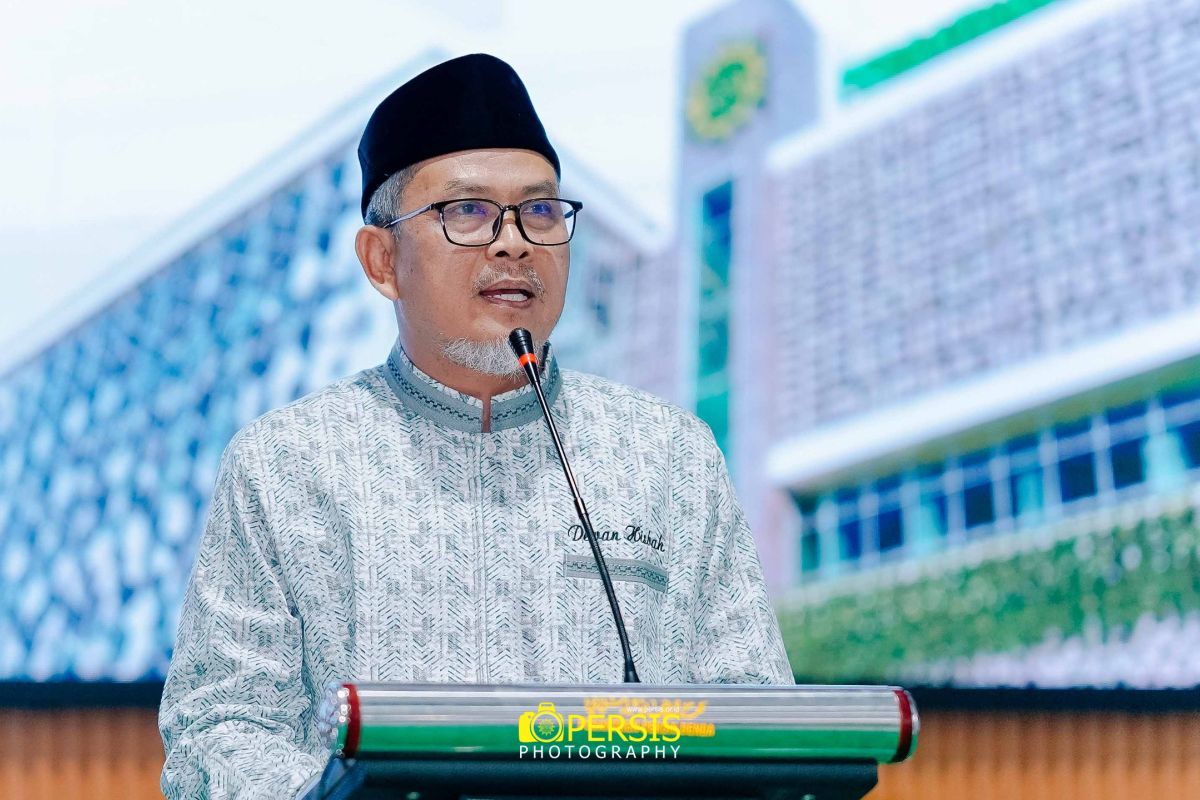
The Hisbah Council of the Islamic Union (Persis) is holding its Fourth Plenary Session for the 2022-2027 term at the Persatuan Islam 67 Islamic Boarding School in Tasikmalaya, discussing various contemporary religious issues in an effort to provide relevant sharia guidance in line with the times. PP Persis Chairman Jeje Zaenudin stated that the Hisbah Council session is not merely an academic forum for discussing religious matters. It is a collective effort by Persis scholars to produce fatwas that guide the community’s sharia practice according to the Quran and Sunnah while considering the realities of life. He explained that the fatwas produced by the Hisbah Council do not only address issues of halal and haram or sunnah and bid’ah. Furthermore, the fatwas are expected to serve as ethical guidelines in social interactions, build community morals, and provide solutions to evolving social problems. One of the strategic issues highlighted in this session is the formulation of etiquette and fiqh guidelines for social media. According to Jeje, the development of information technology has brought major changes to people’s lives, so sharia guidance is needed to ensure that the use of social media reflects Islamic values. ‘We want to present fatwas that guide the community to understand and practice the Quran and Sunnah, including in social media activities, so that social piety is born alongside individual piety,’ he said. Jeje noted a current paradox in society where, on one hand, the level of religiosity is increasing, but on the other hand, various moral problems such as corruption, sexual violence, and a lack of concern for others are still prevalent. ‘Ritual piety does not always go hand in hand with moral and social integrity. In Islam, faith is not only measured by rituals but is also reflected in morals and social behaviour,’ he said. Therefore, Jeje believes that fatwas must be responsive to the changing times without altering sharia principles. Instead, fatwas should strengthen the implementation of sharia to provide solutions to emerging societal problems. Meanwhile, Chairman of the Persis Hisbah Council Zae Nandang explained that the Hisbah Council acts as a working body that collects religious issues from the community to be processed through organisational mechanisms. The results of the Hisbah Council’s deliberations are then ratified by the PP Persis as official organisational decisions. These decisions become guidelines that must be obeyed by all Persis members. However, Zae Nandang emphasised that the Hisbah Council does not have the authority to impose sanctions on members who do not implement the decisions. The council’s function focuses primarily on formulating religious guidance.