
Perry Warjiyo: Indonesia's Foreign Reserves Remain More Than Sufficient
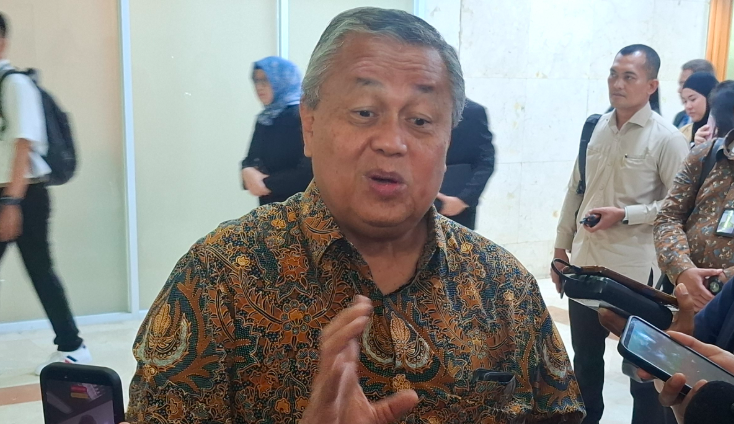
Bank Indonesia (BI) has confirmed that Indonesia’s foreign exchange reserve position remains at an adequate level to maintain national economic stability, including facing pressure on the rupiah exchange rate. Based on Bank Indonesia data, Indonesia’s foreign exchange reserves at the end of May 2026 were recorded at US$144.9 billion, or approximately Rp2,616.6 trillion with an assumed exchange rate of Rp18,058 per US dollar. This figure is down US$1.3 billion, or approximately Rp23.5 trillion, compared to the position at the end of April 2026 which reached US$146.2 billion, or equivalent to Rp2,640.1 trillion. However, BI Governor Perry Warjiyo stressed that the current amount of foreign exchange reserves is still far above the required adequacy limit. “(Foreign exchange reserves) are more than sufficient,” Perry stated at the Senayan Parliament Complex, Jakarta, on Tuesday (9/6). Perry explained that Bank Indonesia periodically measures the adequacy of foreign exchange reserves using an indicator issued by the International Monetary Fund (IMF), namely the adequacy reserve asset. This indicator is used to assess the ability of foreign exchange reserves to anticipate deep pressure on the rupiah exchange rate. “BI always measures what the sufficient amount of foreign exchange reserves is. There is an indicator issued by the IMF, called the adequacy reserve asset. And we measure that, how much foreign exchange reserves are needed to cover a deep rupiah weakening,” Perry said. According to him, the measurement results indicate that Indonesia’s foreign exchange reserve position is still above international adequacy standards. As of the end of May 2026, Indonesia’s foreign exchange reserves were equivalent to financing 5.6 months of imports. “We measure it and currently it is still more than 115%. So it is still more than sufficient. Besides that, it is equivalent to about 6 months of imports. So don’t worry, the amount of foreign exchange reserves is more than sufficient,” he stated. On the other hand, Perry acknowledged that the rupiah depreciation occurred more deeply than BI’s projections. Therefore, the central bank is taking a number of further steps to strengthen exchange rate stabilisation. “Indeed, the rupiah depreciation exceeded our projections; we are taking further steps to stabilise the rupiah exchange rate,” Perry said. The first step taken was raising the BI-Rate benchmark interest rate by 25 basis points to 5.50% to increase the attractiveness of domestic financial instruments. In addition, BI also raised the yield on Bank Indonesia Rupiah Securities (SRBI) to attract foreign capital inflows. At the same time, BI lowered hedging transaction costs by about 10 percent to make them more competitive for investors. “So this is more competitive. We made hedging cheaper by reducing it by about 10%. That is comparable to, among other things, the obligation of foreign investors to pay tax. If foreign investors buy Government Securities (SBN) or SRBI in Indonesia, they are subject to an average tax of about 10%,” Perry explained. Furthermore, BI also reactivated weekly repurchase agreement (repo) auctions to ensure sufficient liquidity in the money market and banking sectors. “The fourth is for sufficient liquidity in the domestic money market and banking; we have reactivated weekly repurchase agreement auctions. Banks can come to BI and use underlying for their liquidity needs,” Perry explained. Additionally, BI will increase the intensity of monetary operations in both the rupiah and foreign exchange markets as part of efforts to maintain the stability of the exchange rate and the national financial system.