
Permata Hati Primary Clinic Promotes Prevention of Congenital Defects from Preconception Stage
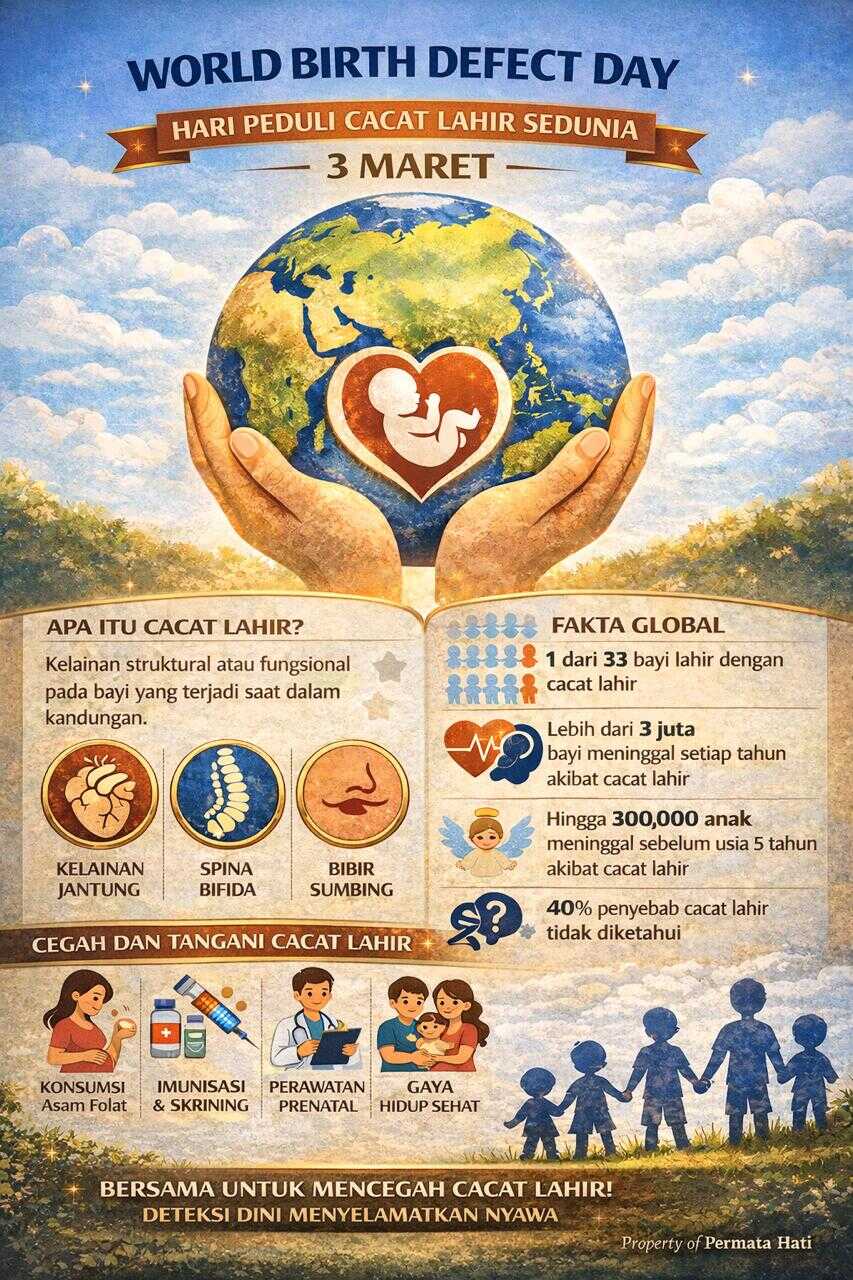
The World Birth Defects Day observance provides an important opportunity to increase public awareness that child health is not determined solely during pregnancy, but begins well before conception occurs.
Permata Hati Primary Clinic has reaffirmed its commitment to promoting the prevention of congenital defects through an educational, preventive, and integrated clinical service approach.
Congenital defects are abnormalities that occur during foetal development and can affect both the structure and function of a child’s body. These conditions encompass a wide spectrum, ranging from congenital heart disease and nervous system disorders such as spina bifida, to genetic disorders including Down syndrome.
“The impact is felt not only by the individual affected, but also places a long-term burden on families and the healthcare system,” stated Dr Aloysius Suryawan, Fetomaternal Consultant at Permata Hati Primary Clinic.
However, scientific evidence demonstrates that most risk factors for congenital defects are modifiable. Interventions conducted during the preconception phase and early pregnancy have proven to play a significant role in reducing the incidence of birth abnormalities.
The critical role of the preconception phase
According to Aloysius Suryawan, the period before pregnancy represents a crucial phase that is frequently overlooked. “Many couples only begin attending to their health once pregnancy has occurred. However, the preconception phase is actually an important window for intervention. Adequate folic acid intake, management of chronic diseases such as diabetes, and basic health screening can significantly reduce the risk of congenital defects,” he explained.
He added that micronutrient deficiency, particularly folic acid, has long been known to be associated with increased risk of neural tube defects. Therefore, adequate supplementation before pregnancy represents one of the most effective and evidence-based prevention strategies.
Additionally, maternal medical conditions such as uncontrolled diabetes, obesity, and other chronic diseases also contribute to increased risk of foetal developmental disorders. The preconception approach allows optimisation of maternal health conditions before pregnancy occurs.
Comprehensive and multidimensional approach
In line with this, Dr Zeus Suryawan, Obstetrician from Permata Hati Primary Clinic, added that the prevention of congenital defects cannot be conducted in isolation.
“Foetal development is influenced by various factors that interact with one another. Maternal nutrition, maternal health status, environment, and daily lifestyle all play a role. Therefore, prevention must be conducted comprehensively and continuously,” he stated.
He explained that simple steps carried out consistently can yield significant impact. These include:
Consumption of folic acid before and during pregnancy
Preconception health examinations
Regular pregnancy check-ups
Maintenance of healthy lifestyle patterns
Avoidance of harmful substances such as tobacco, alcohol, and medications without medical indication
According to Zeus, appropriate education will help the public understand that a healthy pregnancy is not a process that occurs by chance, but rather the result of planned preparation.
The clinic’s role in education and support
As a maternal and child health service facility, Permata Hati Primary Clinic continues to develop services focused on prevention. Through preconception consultation programmes, antenatal examinations, and continuous education, the clinic seeks to provide comprehensive support to prospective mothers.
This approach emphasises not only clinical aspects, but also enhancement of public health literacy. With better understanding, couples are expected to make informed decisions regarding pregnancy planning.
Investment for future generations
The effort to prevent congenital defects represents part of a long-term investment in improving the quality of human resources. By reducing the risk of abnormalities from an early stage, it is hoped that children can grow and develop optimally.
With the values of “Health, Love and Care”, Permata Hati Primary Clinic is committed to continuing to play an active role in supporting the creation of a healthier generation through education, services, and sustained preventive approaches.