
Perludem Highlights Key Issues in the Draft Election Bill, Including Parliamentary Threshold
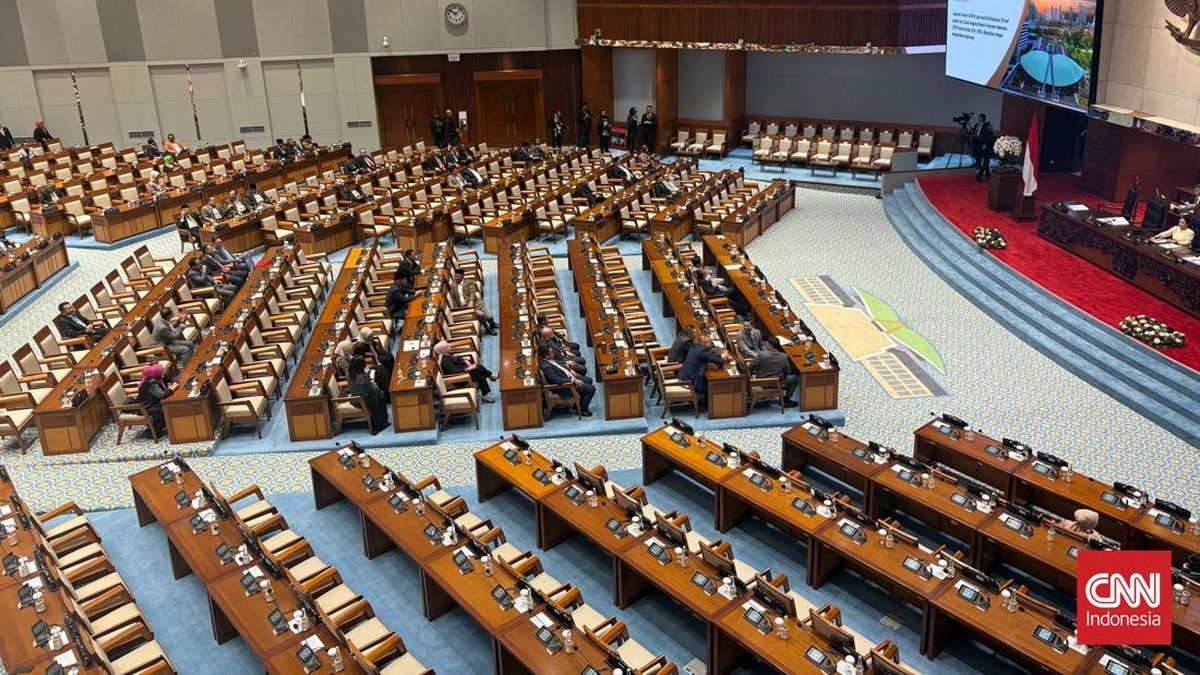
The Association for Elections and Democracy (Perludem) has provided a number of notes on the Draft Election Bill (RUU Pemilu) currently in the drafting stage at Commission II of the House of Representatives (DPR).
Perludem Programme Manager Kahfi Adlan Hafiz revealed several aspects his organisation is focusing on in the RUU Pemilu. These aspects include points that have been the subject of Constitutional Court (MK) rulings.
“There are several, our focus besides some important aspects, is also on several articles that have been revised by the MK,” Adlan said when contacted on Thursday (23/7).
Firstly, concerning the separation of national and local elections as decided by the MK. This decision is contained in ruling number 135/PUU-XXII/2024. Through this ruling, the MK abolished the five-box election system and established a minimum gap of 2 to 2.5 years between national and local elections.
Secondly, Adlan said his organisation is scrutinising the legislative election system, which has the potential to change from an open system to a closed or mixed one. This includes changes to the composition of electoral districts and their conversion into seats.
“In the context of debate between parties, much lies in the aspect of the election system, where this aspect also contains several crucial MK rulings, such as the separation of national-local elections, the legislative election system, the arrangement of electoral districts, as well as the parliamentary threshold and presidential nomination,” he said.
Thirdly, regarding the parliamentary threshold. The MK ruling instructs the DPR and the government to change the 4 percent parliamentary threshold. However, this ruling cannot be directly executed because the MK also ordered that the threshold be set rationally and scientifically.
Therefore, he warned that the parliamentary threshold might actually be increased. Moreover, several parties in the DPR have proposed such an increase.
“The potential is that the threshold figure will be increased without a meaningful participation process and research on the effectiveness of that threshold figure,” he said.
According to Adlan, some of the MK rulings are self-executable, meaning they apply directly without further regulation, such as the parliamentary threshold. Meanwhile, others are non-self-executable and require further regulation.
For example, the separation of local and national elections. He said the MK ruling on this matter needs further regulation because it involves other provisions.
“This ruling cannot be implemented directly because the simultaneous format has consequences for other regulations, such as the Regional Election Law which must be codified and merged into the Election Law,” he said.
Perludem is proposing that the parliamentary threshold be lowered. Adlan cited two reasons. Firstly, the 4 percent figure has no rational basis. He views it merely as a means to limit small parties from gaining seats in parliament.
Secondly, the 4 percent threshold has caused a loss of proportionality. In the 2024 election, around 10 percent of votes were wasted because parties could not meet the 4 percent threshold.
Perludem proposes changing the threshold and lowering it to 1 percent. This figure is calculated from the effective threshold theory by Taagepera, which considers the number of electoral districts, the number of parliamentary seats, and the average district magnitude.
“There is also a proposal to adjust it to the number of parliamentary committees, which also has a more scientific basis than simply stating a figure,” he said.