
Perilous Seas: 10 Subsea Oil Pipeline Giants Feast on Boom
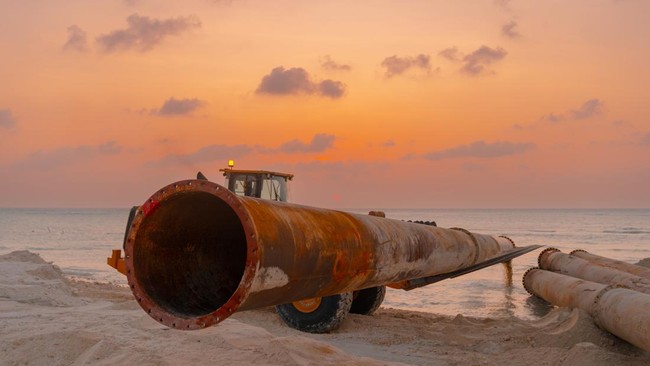
Repeated attacks in the Strait of Hormuz, the Red Sea and the Black Sea, along with surging global energy prices, are driving large-scale construction of subsea pipelines.
Amid rising geopolitical risk and the paralysis of the Strait of Hormuz, oil pipelines in the Middle East are once again becoming vital energy export routes. Infrastructure such as Saudi Arabia’s East-West pipeline is considered to help mitigate the impact of conflict with Iran.
This situation is encouraging countries in the region to expand their pipeline networks.
The United Arab Emirates plans to double the capacity of the Habshan-Fujairah pipeline, while the United States, Iraq, Qatar, Chevron and Aramco are exploring new pipeline projects linking Iraq, Syria and Turkey.
According to Global Energy Monitor, around 12,300 km of oil pipelines are under construction and a further 20,100 km are planned. If realised, the global oil pipeline network, which currently spans 350,000 km, will expand further.
Oil pipeline infrastructure connects offshore wells to production platforms, Floating Production, Storage, and Offloading vessels, processing facilities, transmission networks, and coastal landing points.
Subsea pipelines are generally laid on the seabed. In certain locations, pipelines may be buried beneath the seabed surface to reduce the risk of damage from ship anchors, fishing activity, currents and sediment movement.
The companies in this list are not merely steel pipe manufacturers. They are Engineering, Procurement, and Construction contractors and pipelay specialists that handle design, procurement, welding, transportation, installation, connection and testing of pipelines at sea.
The figures compared are the lengths of subsea pipelines in projects undertaken or secured by each contractor. Power cables, fibre optics, umbilicals and onshore pipeline sections are not counted.
The figures are also not the companies’ historical totals because not all contractors publish cumulative data using a uniform method.
Allseas recorded a scope of approximately 2,300 kilometres on Nord Stream 2, the twin pipeline project crossing the Baltic Sea. This figure represents the installation scope published by the company. Allseas ceased its activities in December 2019, so the project cannot be described as a system they fully completed.
Saipem has a cleaner comparison through the Ichthys LNG project in Australia. The company worked on an 889-kilometre subsea gas pipeline from offshore production facilities to the LNG facility in Darwin. This project is one of the longest subsea trunklines in the Asia-Pacific region.
Beyond single projects, Saipem and Allseas each claim to have installed more than 30,000 kilometres of subsea pipelines over their operational history. These cumulative figures are not included in the chart because other companies have not consistently published comparable data.
Hyundai Heavy Industries entered the list through the Third Transmission Pipeline in the Gulf of Thailand. The 606-kilometre project includes engineering, procurement, construction and installation of a subsea gas network using Hyundai’s pipelay fleet.
India’s L&T Energy secured a project to replace approximately 350 kilometres of ONGC’s subsea pipelines off the country’s west coast. Lamprell subsequently secured a similar project spanning 285 kilometres in 2026. Lamprell’s figure represents the contracted scope, not pipelines that have been fully installed.
McDermott has a scope of 300 miles, or approximately 483 kilometres, on the North Field Expansion in Qatar. The network forms part of Qatar’s LNG expansion and connects offshore gas production facilities with downstream processing infrastructure.
Technip and Heerema secured the joint Kaombo project in Angola, covering approximately 300 kilometres of pipelines at depths of up to 2,000 metres. As a consortium project, the figure should not be treated as 300 kilometres separately for each company.
Subsea7 handled 126 kilometres of rigid risers and flowlines plus 98 kilometres of flexible lines in the Mero 4 project in Brazil. The total subsea pipeline count reaches 224 kilometres, excluding 88 kilometres of umbilicals.
Petrofac recorded 200 kilometres through SARB3 in Abu Dhabi. GSP Offshore worked on 18 kilometres of pipeline between the Doina field and the Ana platform, plus 121 kilometres from the platform to shore in the Midia Gas Development. Its total subsea scope reached 139 kilometres after excluding the onshore pipeline section.
Route length is not the only measure of difficulty. Depth, diameter, pressure, corrosive gas content, seabed contours, and the choice of S-Lay, J-Lay or reel-lay methods determine project cost and risk levels.
China has COOEC and a fleet that has installed pipelines in the South China Sea and the Middle East. Russia also has a pipe manufacturing base and project experience in the Baltic, Black Sea and Arctic regions.
Neither appears in the list because no publicly disclosed contractor scope was found that exceeded the ten selected projects. Their absence does not mean they lack capability, but rather reflects differences in business models, consortium structures and data transparency.
The pipelay market has the potential to expand from oil and gas towards carbon dioxide transport, hydrogen, and support networks for offshore facilities. Specialised vessels, welding capability, fabrication facilities and safety records are assets that are difficult to build in a short time.
The dominance of European contractors is beginning to be challenged by South Korea and India, while the Middle East is building capability from its substantial domestic energy investment.
The contest for the next projects will be determined not only by who can install the longest routes, but also by who can work deepest, safest and most efficiently.
Source: jawawa.id (https://jawawa.id/newsitem/perilous-seas-10-subsea-oil-pipeline-giants-feast-on-boom-1786366362)
Originally published by CNBC Indonesia (https://www.cnbcindonesia.com/research/20260806171831-128-757209/laut-mencekam-10-raksasa-pipa-minyak-bawah-laut-ini-pesta-pora), translated from Indonesian