
Periklindo Urges Government Not to Tie Electric Vehicle Incentives Solely to Nickel Batteries
JAKARTA — The Indonesian Electric Vehicle Industry Association (Periklindo) has asked the government to review plans to offer larger incentives for electric vehicles powered by nickel-based batteries. The policy should take account of battery technology, production costs and vehicle affordability, it said, so that manufacturers and consumers are not restricted to a single technological option.
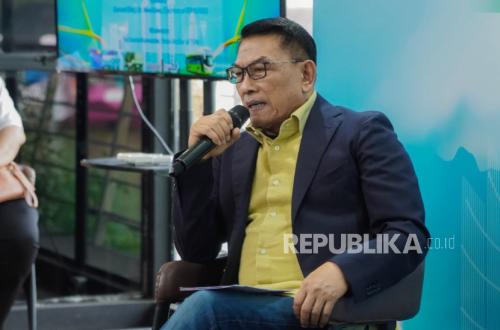
Periklindo chairman Moeldoko said electric vehicle battery development should not be limited to one type of material, despite Indonesia’s abundant nickel resources. Material choices, he said, should reflect industry needs and technological progress. “Does the material have to be nickel? In my view, it cannot be imposed that way,” Moeldoko said at a press conference in Jakarta on Friday (23 October 2026).
He said battery development needed to factor in the availability of raw materials, production costs and the battery’s ability to meet users’ needs. Energy density, charging speed and driving range were also considerations in deciding which technology was most suitable.
Moeldoko said the domestic battery industry should continue to make the most of nickel. However, rapid technological change means battery research and development should remain open to alternative materials that could be easier to obtain and cheaper to produce.
Prabowo Kartoleksono, Periklindo’s deputy chairman for development and research, pointed to advances in lithium iron phosphate (LFP) batteries, which do not use nickel as their main cathode material. LFP technology is developing towards energy densities closer to those of nickel-manganese-cobalt (NMC) batteries, he said, while remaining less expensive.
“Perhaps in the past LFP technology did not match NMC in energy density, but now its energy density is on a par, while it is 30 per cent cheaper,” Prabowo said.
Sodium-ion batteries are also being developed as an alternative in the global electric vehicle industry. Prabowo said advances in different technologies should inform the government’s incentive scheme, allowing manufacturers to choose technologies suited to market needs.
He warned that if larger incentives were given only to vehicles with nickel-based batteries, manufacturers could be constrained in choosing the technology best suited to their customer segments. This was particularly important for price-sensitive electric vehicles such as electric motorbikes.
Prabowo said using more expensive batteries could put further pressure on vehicle prices, while manufacturers were still working to expand the market. He also highlighted the link between nickel batteries and compliance with the Domestic Component Level (TKDN) requirement. “If you want to meet the TKDN requirement, you have to use a nickel battery, and nickel batteries are very expensive,” he said.
At the same time, Prabowo said solid-state battery development offered Indonesia an opportunity to increase the value added from its nickel resources. This next-generation technology deserved consideration because of its potential for high energy density and its ability to use nickel. “Solid-state battery technology can use nickel. So if Indonesia wants to enter that field, it should move into solid-state battery technology while it is still new,” he said.
The government is currently finalising plans for incentives for battery electric vehicles (BEVs) in Indonesia to support consumer purchasing power. One option under consideration is a larger incentive for electric cars using nickel-based batteries. The policy is intended to increase the use of domestic mineral resources and strengthen the national battery industry.
Periklindo, however, said the policy direction needed to be accompanied by clarity on the form and timing of its implementation. Prabowo said certainty over incentives was necessary for manufacturers to plan production and sales strategies, including stock and component requirements.
“Industry players need policy certainty so they can adjust their business strategies to market conditions, whether the government continues the incentives or decides not to provide subsidies,” Prabowo said.
He explained that uncertainty over whether subsidies would be introduced could lead prospective buyers to delay purchases while waiting for an official government announcement. Some buyers feared missing out on a discount if they purchased a vehicle before the incentive policy was announced.
“Consumers will naturally put off buying: ‘If I buy now, what if a subsidy policy is introduced next week?’ The subsidy is worth a lot to buyers,” he said.
Delays in purchases also make it harder for manufacturers to forecast demand and set production levels. Prabowo said some local electric motorbike manufacturers that had prepared stock were under pressure when sales fell short of expectations. An uncertain market could add to the challenges facing industry players, including companies trying to remain in business, he said.
Periklindo therefore hopes the government will communicate its incentive policy consistently and transparently. Certainty is important so manufacturers can plan production, manage inventory and develop the national electric vehicle market. At the same time, the incentive scheme should support the domestic battery industry without overlooking technological advances and consumer needs.
The government is still working on a subsidy plan for electric motorbikes, which had previously been expected to take effect no earlier than September 2026. For Periklindo, a policy that considers industrial competitiveness, affordability and technological flexibility is an important factor in expanding electric vehicle adoption in Indonesia.
Source: jawawa.id (https://jawawa.id/newsitem/periklindo-urges-government-not-to-tie-electric-vehicle-incentives-solely-to-nickel-batteries-1792799438)
Originally published by Republika (https://ekonomi.republika.co.id/berita/tndgb8348/periklindo-minta-insentif-kendaraan-listrik-tak-terpaku-baterai-nikel), translated from Indonesian