
Periklindo Says Nickel-Based Battery EV Incentives Need Review
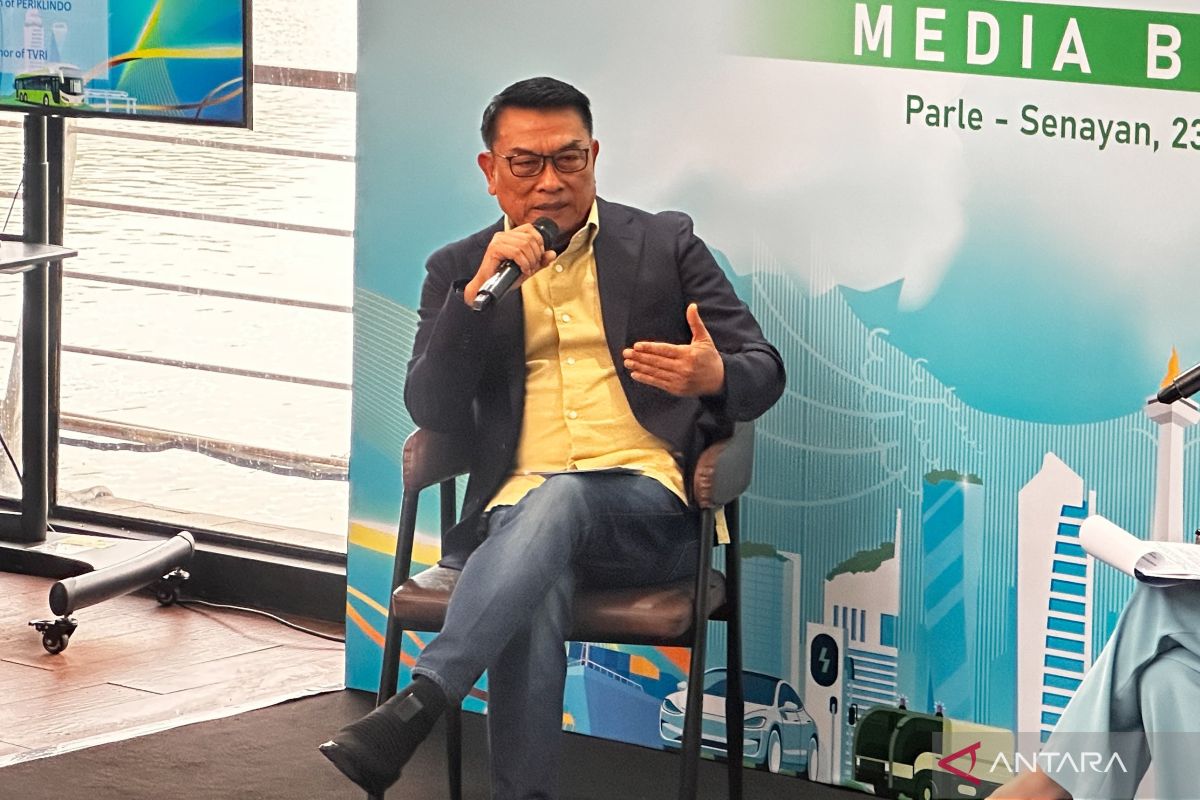
Jakarta (ANTARA) — The Indonesian Electric Vehicle Industry Association (Periklindo) says the government’s plan to offer larger incentives for electric vehicles using nickel-based batteries needs to be reviewed, taking technological advances and vehicle affordability into account.
Periklindo Chairman Moeldoko said electric vehicle battery development should not be limited to one type of material, even though Indonesia has abundant nickel resources.
“Does the material have to be nickel? In my view, it cannot be imposed like that,” Moeldoko said at a press conference in Jakarta on Friday.
He said battery technology development needed to take into account the availability of raw materials, production costs and how well batteries meet users’ needs, including charging speed and vehicle range.
Moeldoko said the domestic battery industry was still expected to make the most of nickel. However, rapid technological progress meant battery research should remain open to alternative materials that were more readily available and offered lower costs.
Periklindo Deputy Chairman for Development and Research Prabowo Kartoleksono agreed, saying incentives should not prioritise vehicles solely on the basis of a particular battery material.
He said the policy needed to account for advances in alternative battery technologies, particularly lithium iron phosphate (LFP), whose cathodes do not use nickel as their main material.
Prabowo said LFP batteries now had energy density increasingly close to that of nickel manganese cobalt (NMC) batteries, while costing less.
“Perhaps in the past LFP technology did not match NMC in energy density, but now its energy density is equivalent, while it is 30 per cent cheaper,” Prabowo said.
Sodium-ion batteries are also being developed as another alternative in the global electric vehicle industry, he said.
Prabowo said the issue was particularly important for price-sensitive electric vehicles such as motorbikes. He warned that more expensive batteries could put further pressure on sale prices, while manufacturers were still facing challenges in expanding sales.
“If you want to obtain the TKDN [Domestic Component Level], you have to use nickel batteries, and nickel batteries are very expensive,” Prabowo said.
Meanwhile, Prabowo said the development of solid-state batteries could give Indonesia an opportunity to increase the added value of its nickel reserves by mastering next-generation battery technology.
He said the technology was worth considering because it offered high energy density and used nickel, potentially providing a direction for the development of the national battery industry.
“Solid-state battery technology can use nickel. So if Indonesia wants to enter that field, it should move into solid-state battery technology while it is still new,” Prabowo said.
The Indonesian government is currently finalising incentives for domestic purchases of battery electric vehicles (BEVs) to stimulate consumer demand.
One scheme under consideration is to provide larger incentives for electric cars using nickel-based batteries. The policy is intended to encourage the use of domestic mineral resources and strengthen the national battery industry.