
Performance-based EV incentives could strengthen national economy, says economist
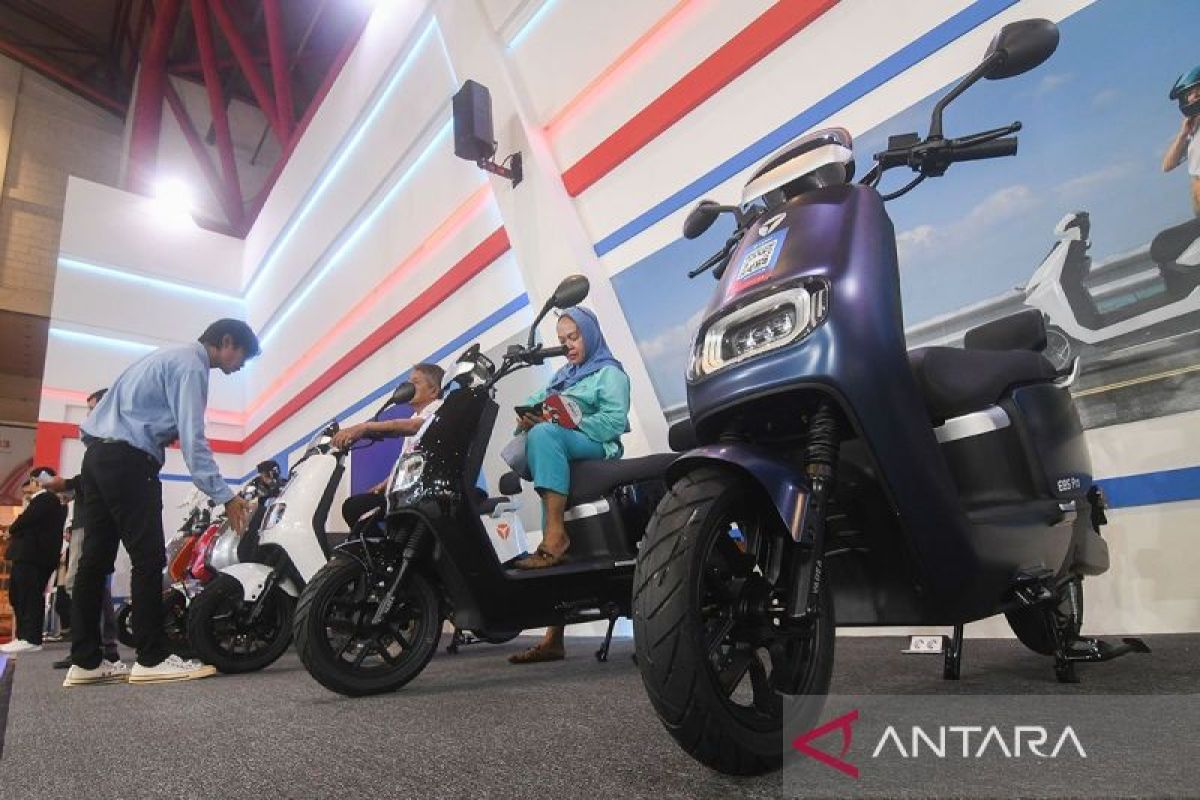
Jakarta (ANTARA) - Adhitya Wardhono, an economist at the University of Jember (Unej), said the government’s plan to provide incentives for battery-based electric vehicles (KBLBB) would have a greater impact on the economy if awarded based on industry performance.
According to him, industry performance includes production levels, use of local components, employment absorption, and technology transfer.
Speaking to ANTARA in Jakarta on Tuesday, Adhitya said a performance-based approach would encourage industry players to compete in increasing investment and deepening the electric vehicle supply chain in Indonesia, so that the benefits of the policy would not be felt merely through increased vehicle sales.
“The direction of favouring national brands is indeed easy to understand. However, in my view, incentives would be more effective if given based on measurable contributions to the national industry,” he said.
According to him, such measures can be seen from the scale of production carried out domestically, the level of local component use, job creation, and companies’ commitment to technology transfer.
He believes a performance-based incentive scheme would strengthen the competitiveness of the national electric vehicle industry while providing certainty for investors to continue expanding in Indonesia.
Adhitya explained the government could still provide affirmation for national brands, but such a policy should be accompanied by transparent indicators so that it encourages all industry players to increase investment and local content.
“To my mind, this is precisely the most valuable benefit. If subsidies are too exclusive without transparent criteria, the risk is that competition narrows, with the knock-on effects of less competitive prices and fewer choices for consumers,” he said.
Beyond encouraging investment, Adhitya said the approach also has the potential to accelerate the formation of an electric vehicle supply chain from upstream to downstream. Indonesia would not only be a market, but could also increase production capacity for components, batteries, and supporting technologies for electric vehicles.
He added that regulatory certainty is also an important factor for the incentive policy to attract long-term investment. Therefore, the government needs to establish a consistent incentive mechanism based on measurable indicators.
“That is why, in my view, incentives should be tiered and performance-based. National companies would still be given room to grow, but other companies could also receive support as long as they genuinely bring significant benefits to Indonesia,” said Adhitya.
Source: jawawa.id (https://jawawa.id/newsitem/performance-based-ev-incentives-could-strengthen-national-economy-says-economist-1785848054)
Originally published by Antara (Indonesian) (https://www.antaranews.com/berita/5679632/ekonom-insentif-kblbb-berbasis-kinerja-perkuat-perekonomian-nasional), translated from Indonesian