
PERDAMI: Early Detection of Crossed Eyes Prevents Lazy Eye Risk in Children
The Indonesian Ophthalmologists Association (PERDAMI) Jaya has underscored the need for early detection to identify and follow up on squint (strabismus) as an effort to prevent amblyopia, or lazy eye, especially during the critical period of children’s visual development, to ensure quality of life.
“In the field, there are still children with squint who are late in obtaining an examination because the condition is often considered merely a matter of appearance or can be postponed. In fact, strabismus can affect the quality of vision and increase the risk of amblyopia or lazy eye, especially during the period of visual development in children,” said Dr Julie Dewi Barliana, Chairwoman of PERDAMI Jaya.
Julie stated in Jakarta on Monday that strabismus can be influenced by various factors, including family history, premature birth, low birth weight, uncorrected refractive errors, differences in visual acuity between the two eyes, as well as disorders of the eye muscles or nerves controlling eye movement.
“Neurological conditions, trauma, diabetes, hypertension, and certain systemic diseases can also cause strabismus, particularly those that appear in adulthood,” she said.
Therefore, appropriate treatment is expected not only to help optimise visual function but also to support the child’s quality of life through better eye appearance, allowing the child to grow and engage in activities with greater confidence.
She also expressed appreciation for the presence of the Squint Surgery Centre at JEC Menteng Eye Hospital as a step to strengthen education, referral systems, and public access to proper strabismus treatment.
“In infants aged around three to four months, the eyes sometimes appear not yet fully coordinated because the visual system is still developing. However, if the misalignment persists after the age of four months, squint generally does not improve on its own and can affect three-dimensional vision, distance perception, and increase the risk of amblyopia,” she said.
Sudden-onset squint, she added, especially if accompanied by headache, vomiting, drooping eyelid, weakness of the limbs, or other neurological disorders, needs to be examined immediately.
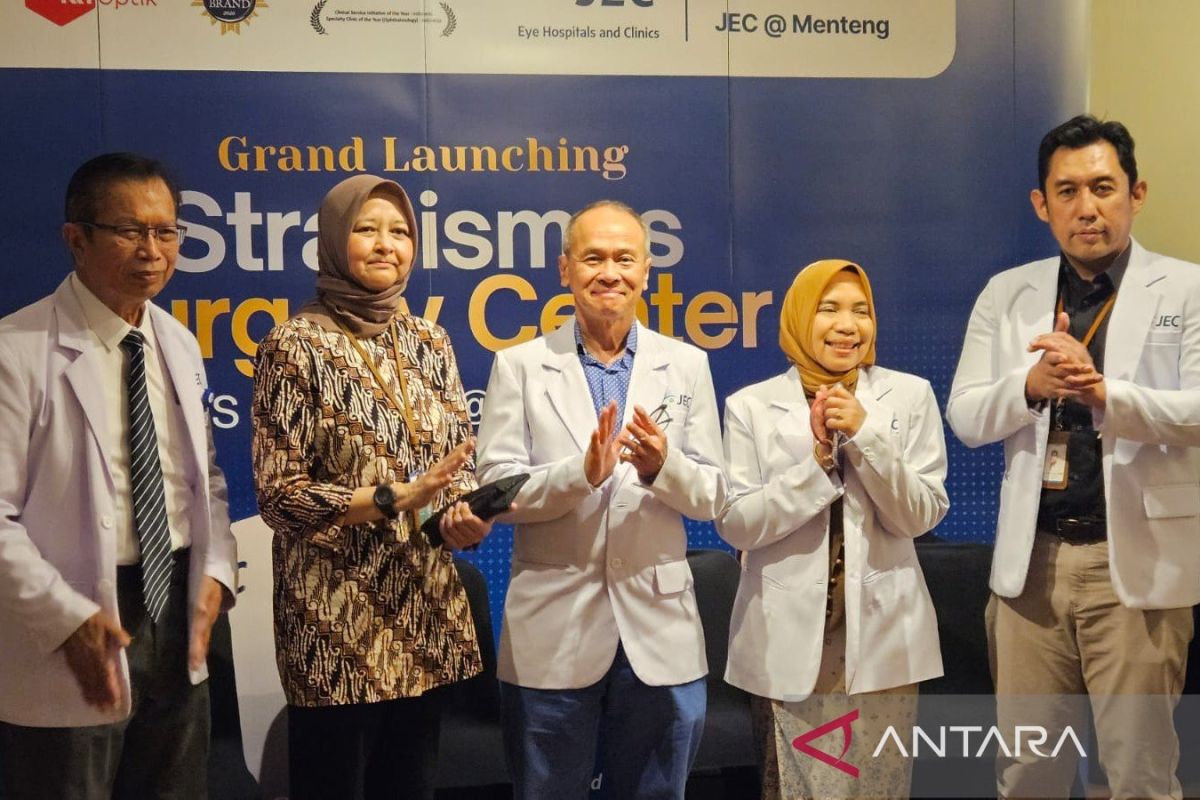
Coinciding with World Strabismus Day, commemorated every 10 August, JEC @ Menteng Eye Hospital inaugurated the Squint Surgery Centre, a specialised service for the treatment of strabismus or squint for both paediatric and adult patients.
Supported by JEC Consultant Ophthalmologists in Paediatric Ophthalmology & Strabismus, this service includes diagnostic examinations, correction of refractive errors, amblyopia therapy and vision exercises, as well as eye muscle surgery based on the patient’s diagnosis and clinical needs.
Dr Referano Agustiawan, President Director of JEC Menteng Eye Hospital, said that besides affecting visual function, strabismus can also have a psychosocial impact. In children, this condition can reduce self-confidence and increase the risk of bullying, while in adults it can affect social interaction, self-confidence, and opportunities in professional environments.
“Through the Squint Surgery Centre, both paediatric and adult patients can receive appropriate treatment, ranging from non-surgical therapy to surgery based on medical indications,” said Referano.
Source: jawawa.id (https://jawawa.id/newsitem/perdami-early-detection-of-crossed-eyes-prevents-lazy-eye-risk-in-children-1786352106)
Originally published by Antara (Indonesian) (https://www.antaranews.com/berita/5687480/perdami-deteksi-dini-mata-juling-cegah-risiko-mata-malas-pada-anak), translated from Indonesian