
Perbarindo Says Local Data Can Strengthen Rural Banks’ Credit Assessments
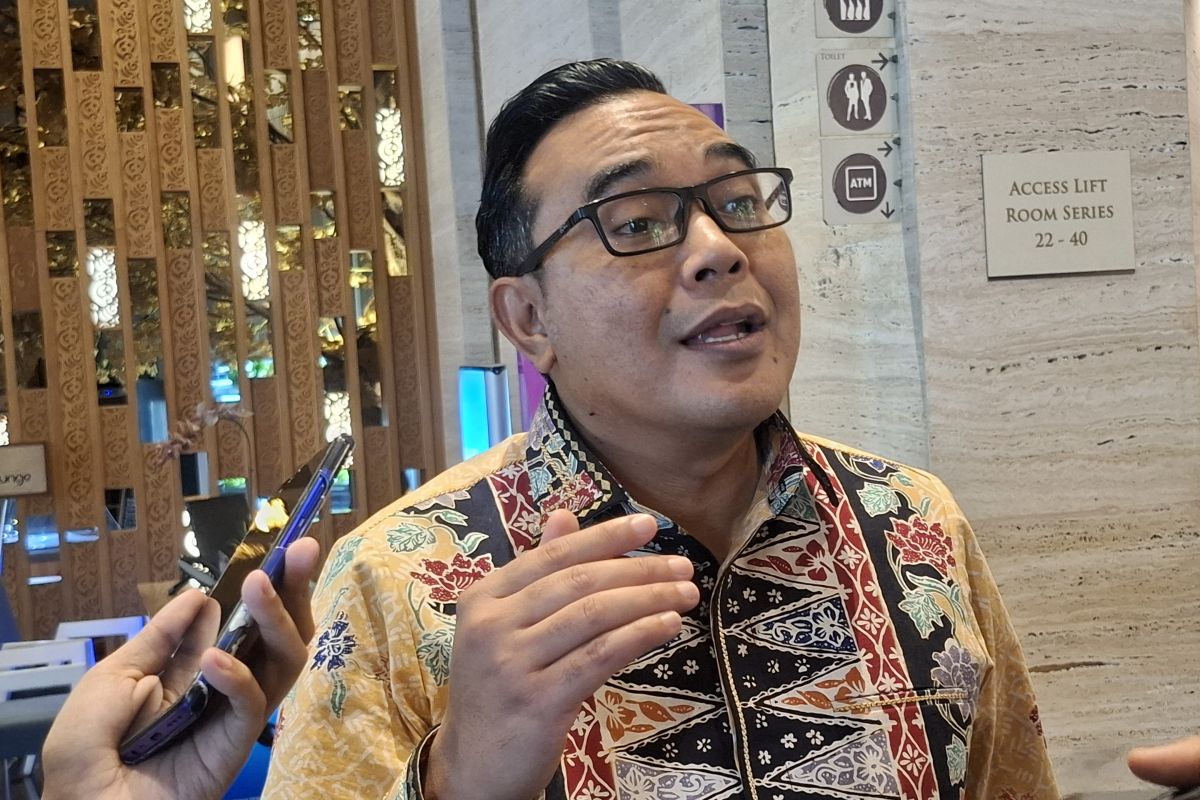
Jakarta (ANTARA) – The Indonesian Association of Rural Banks (Perbarindo) says the use of local data could strengthen credit assessments by Rural Banks (BPRs), helping ensure that financing for micro and small businesses reflects the characteristics of communities in each region.
Perbarindo chairman Tedy Alamsyah said BPRs could develop innovative credit-scoring (ICS) methods by using data and information about economic conditions in the areas where they operate.
“One approach is the use of innovative credit scoring,” Tedy said after Perbarindo’s 12th National Seminar and Congress in Jakarta on Monday.
He said the method could be developed using data held by the BPR industry, as well as information from the surrounding community, to help assess prospective borrowers’ creditworthiness.
It could draw on primary and secondary data processed using statistical and mathematical methods, without immediately requiring advanced artificial intelligence technology.
“The biggest challenge is technology,” he said.
Tedy said technological advances were prompting BPRs to adapt their business models, including by developing services beyond conventional approaches that rely on face-to-face visits to customers.
However, such changes need to take account of differences in community characteristics, since a credit-assessment approach suited to one area may not work in another.
He cited Ciputat in South Tangerang and Lenteng Agung in Jakarta as examples of nearby areas whose residents may have different financial habits and economic characteristics.
“Ciputat and Lenteng Agung each have their own big data, so to speak. They have their own characteristics,” he said.
According to Tedy, understanding local social and demographic conditions and community habits is important when using technology to serve the financing needs of micro and small businesses.
He said some informal-sector businesses generate cash flow but may not meet all the requirements for obtaining bank loans.
In addition, some microbusinesses are run directly by their owners, whose household and business finances are often still mixed. This makes it necessary to understand customers’ financial circumstances.
“But it is important to understand the characteristics of the local community,” he said.
Tedy added that credit-assessment models could first be built using suitable data and calculation methods, before being developed for integration with core banking systems.
Separately, the Financial Services Authority (OJK) said that in August 2026, MSME loans or financing accounted for more than 50 per cent of total lending or financing at both BPRs and Sharia Rural Banks (BPRS).
Overall, OJK data showed that bank lending to MSMEs reached Rp1,529.38 trillion in August 2026, up 2.32 per cent year on year, with a non-performing loan (NPL) ratio of 4.53 per cent.
OJK also recorded eight registered Alternative Credit Rating (PKA) providers as of September 2026.
Requests for credit-score data from PKA providers totalled 28.71 million in August 2026, representing the industry-wide figure.
On the regulatory front, OJK has issued Regulation No. 19 of 2025 on Facilitating Access to Financing for MSMEs. Among other provisions, it sets out ways to ease business creditworthiness assessments and speed up financing through the use of alternative credit ratings.
The regulation also stresses the importance of governance and risk management when facilitating access to financing for MSME operators.
Tedy said technology that takes local community characteristics into account would help BPRs develop financing services suited to the needs of micro and small businesses in different regions.
Source: jawawa.id (https://jawawa.id/newsitem/perbarindo-says-local-data-can-strengthen-rural-banks-credit-assessments-1792410723)
Originally published by Antara (Indonesian) (https://www.antaranews.com/berita/5796957/perbarindo-nilai-data-lokal-dapat-perkuat-penilaian-kredit-bpr), translated from Indonesian