
Perbanas Warns of Money Laundering Risks if PFII Is Not Properly Regulated
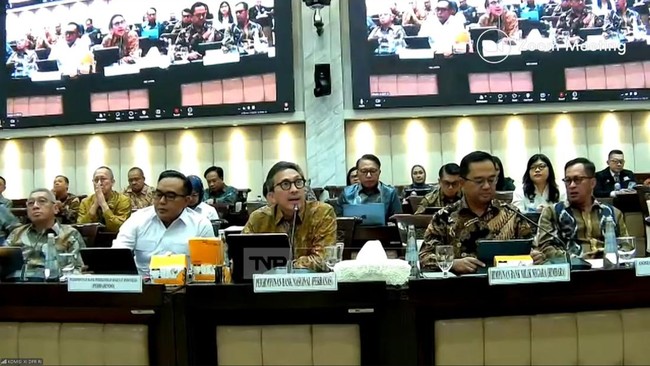
The Indonesian Banks Association (Perbanas) has reminded the government that the establishment of the Indonesian International Financial Centre (PFII) brings not only opportunities but also various risks that must be anticipated from the outset. These include the potential for money laundering, tax avoidance, and the impact on the financial industry outside the PFII zone.
Perbanas Deputy Chairman Tigor M. Siahaan stated that the national banking industry is ready to be a strategic partner for the government in making the PFII a success. “We at Perbanas are ready to be a partner for this PFII, and we also feel that financial institutions, financial markets, and all supporting professions in Indonesia are very ready to be partners so that this PFII becomes a success in Indonesia,” he said during a public hearing with the House of Representatives’ Commission XI in Jakarta on Thursday (9/7/2026).
However, he stressed that the success of the PFII must be able to generate additional new fund flows into Indonesia, not just recycle funds that have already been within the country. “The impact, there are always positives and negatives. The positive we hope is that the funds coming in are additive, again additive, not just recycled funds. If it is just recycled, what was previously taxed here goes out and then becomes zero tax, well, I think that is not additive, it does not add value,” Tigor explained.
He gave an example that new banking business lines could become a bridge for foreign companies to invest worldwide, similar to what financial centres in Singapore and Hong Kong have done. On the other hand, Tigor warned that more complex financial activities in the PFII also have the potential to increase various risks. Therefore, he believes the regulatory framework must be able to anticipate various potential misuses.
“But there are many risks too. The transactions are complex, and we also know that as a member of the FATF (Financial Action Task Force), we must also be vigilant against the risks of money laundering and tax avoidance. We must be careful here, and the regulatory environment must be supportive,” he added.
Additionally, he highlighted the potential for imbalance if all business activities become concentrated in the PFII, causing financial institutions outside the zone to potentially be left behind. “And also one thing that I think is a risk but maybe good, if this is successful, this PFII is successful, what is the threat to banking or financial institutions outside this PFII? Will everything eventually go there? So will those here be abandoned? Or if it is very successful, perhaps those here, if they are left behind, they must improve their quality, they must increase their awareness,” he explained.
According to Tigor, this condition could actually become a driver for increasing the competitiveness of the national banking industry, as happened when foreign banks began entering Indonesia in the late 1960s. “So I am reminded of 1968 when the banking sector in Indonesia was opened for foreign players like Citibank, JP Morgan Chase, and others, the level of banking was indeed different, national banks and foreign banks. But over time, national banks had to advance, had to adapt, had to compete, so that now we know that national banks are just as good as foreign banks. So that is because they were forced to compete,” he said.
Thus, Perbanas hopes that the success of the PFII can encourage the banking industry to compete and become more advanced. On that occasion, Perbanas also conveyed eight recommendations for the government to support the implementation of the PFII. These include the formation of a special authority with a one-stop service, legal certainty, competitive regulations and incentives, the development of Indonesia as a wealth management and family office centre, deepening of financial markets, strengthening global talent, the involvement of Perbanas as a strategic industry partner, and ensuring the success of the PFII can support national priority programmes such as downstreaming, energy, food, infrastructure, and the digital economy.
Source: jawawa.id (https://jawawa.id/newsitem/perbanas-warns-of-money-laundering-risks-if-pfii-is-not-properly-regulated-1783597941)
Originally published by CNBC Indonesia (https://www.cnbcindonesia.com/market/20260709172258-17-749560/perbanas-ingatkan-risiko-pencucian-uang-jika-pfii-tak-diatur-matang), translated from Indonesian