
Perbanas Reveals Structural Issues Behind Sluggish MSME Lending
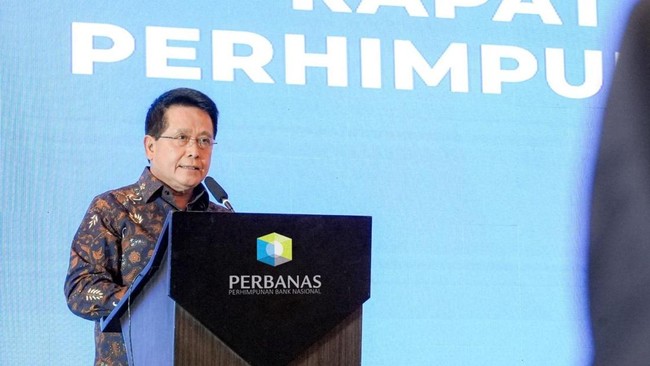
The Indonesian National Banking Association (Perbanas) has revealed that the sluggish growth in MSME credit is occurring because the majority of MSME players feel they do not require loans.
Perbanas noted that MSME credit growth has shown signs of weakening since late 2022 and began entering negative territory by the end of 2025. As of February 2026, MSME credit remained contracted at approximately -0.47% year-on-year (yoy).
This weakening differs from the general trend in banking credit, particularly regarding working capital, investment, and consumption credit, which continue to grow positively. Consequently, the decline in MSME credit indicates fundamental issues within the MSME segment.
“Interestingly, our research finds that the main challenge currently does not lie in the limited supply of credit or banking availability; instead, the majority of MSME players have not applied for credit because they feel they do not yet require funding costs and still rely on their own capital,” stated the General Chair of Perbanable, Hery Gunardi, during a press conference on the results of an MSME study at the Four Seasons Hotel on Thursday (18/06/2026).
In fact, the credit approval rate for the MSME segment in banks remains relatively high. According to Hery, this indicates a structural problem that requires collective attention.
Aviliani, Head of Research, Economic & Banking Studies at Perbanas, continued that the current weakness in MSME credit is driven more by the credit demand side, or is demand-driven. The majority (nearly 90%) of formal and informal MSMEs do not apply for credit because their primary reason is that they do not yet feel the need for loans. Their business financing is almost 90% derived from personal funds (self-funded).
This indicates that the primary issue regarding low access to MSME financing lies on the demand side of credit itself. On the other hand, this research shows that the supply side of MSME financing is already very supportive. This is reflected in surveys finding that when formal MSMEs apply for credit, the approval rate is very high, at approximately 94.3%.
“We do not want it to be like this; from the banks’ perspective, we actually want to provide funding,” said Aviliani.
Additionally, Perbanas found that another reason for the continuous decline in MSME credit is shocks from both the cost and demand sides. The decline in MSME credit is indicated by a combination of rising costs, weakening demand/sales, compressed margins, and banks becoming increasingly selective regarding risk.
As a form of support to strengthen the MSME sector, Perbanas launched the MSME Centre on Thursday (18/06/2026). Hery stated that he hopes the MSME Centre can serve as a bridge connecting MSME players with the ecosystem they need to grow sustainably.
“We believe that MSMEs that become more productive, formal, and bankable will become an important foundation for more inclusive and sustainable economic growth in Indonesia,” said Hery.