
Perbanas: MSME Business Model Revitalisation Needed to Boost Lending
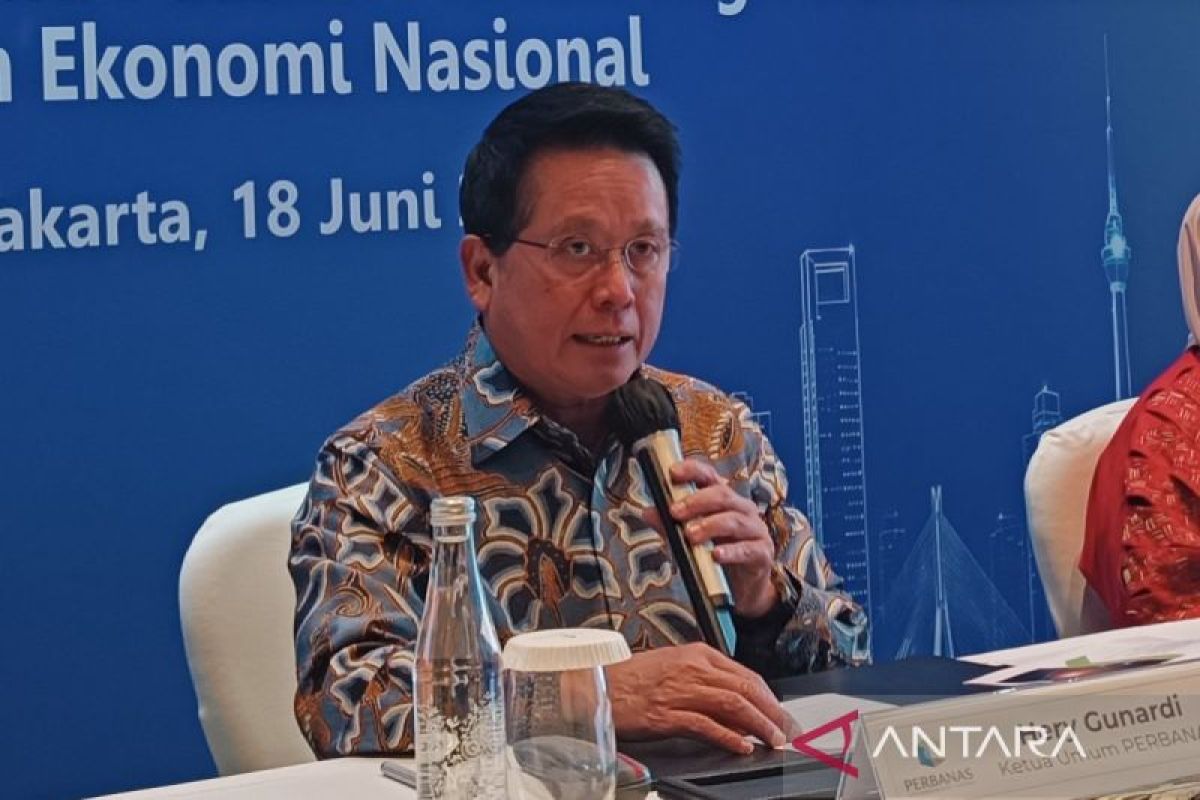
The Indonesian Banks Association (Perbanas) has stated that the business models of micro, small, and medium enterprises (MSMEs) need to be revitalised in an effort to drive credit growth and the national economy. “As the backbone of the economy, the MSME sector needs to be strengthened so that its contribution to the national economy continues to increase,” said Perbanas Chairman Hery Gunardi in Jakarta on Thursday. Hery said that Perbanas launched an MSME centre with the hope of providing sustainable mentoring so that MSME players not only grow and develop, but can also move up to the next level. He added that MSME growth will ultimately have a tangible impact on the economy and job creation. According to him, from an initial survey and Focus Group Discussions (FGD) with stakeholders, Perbanas has put forward a number of recommendations that can be considered for advancing MSMEs. “One of the recommendation points concerns the importance of revitalising MSME business models in encouraging credit growth and the national economy,” he said. Data from Perbanas research states that 88 percent of informal MSMEs do not access bank credit, because they choose to use personal funds to run their businesses. Perbanas Chief Economist Winang Budoyo said that MSME credit growth has shown a weakening trend since the end of 2022 and began entering negative territory at the end of 2025. “As of February 2026, MSME credit was still contracting by around 0.47 percent year-on-year. This weakening differs from the general banking credit trend, especially working capital, investment, and consumption credit, which are still growing,” he said. He added that from face-to-face interviews with a number of MSMEs, Perbanas found that low credit demand is closely related to the characteristics of Indonesian MSMEs, which remain very owner-centric. Many MSMEs still rely on personal financing, operate on an ultra-micro or self-employed scale and micro scale with 1-4 employees, use family labour, and do not yet have a clear separation between business finances and household finances. Winang said the study also found that there are differences in financing needs between formal and informal MSMEs. For formal MSMEs, bank credit plays more of a role in supporting operations and working capital. “In addition, this research also found that bookkeeping and digitalisation factors are linked to improvements in their business performance,” he said. Based on the findings and a series of FGDs, Perbanas concluded that the revitalisation and expansion of MSME credit needs to be placed within a framework of strengthening the business ecosystem. Programmes and regulations can become catalysts for new demand if MSMEs are facilitated to enter supply chains, contract schemes, off-taker relationships, and strong law enforcement, particularly in billing and collateral execution. “With market and regulatory certainty, MSME financing will be more productive and on target,” he said. The Perbanas research recommends five main policy directions for MSME financing. First, strengthening MSME mentoring in aspects of simple bookkeeping, separation of business accounts, transaction digitalisation, and business formality. Second, designing credit policies based on segment needs, namely expansion financing for informal MSMEs and working capital or supply chain financing for formal MSMEs. Third, expanding the use of receivables and inventory as alternative collateral. Fourth, diversifying policy instruments beyond interest subsidies. Fifth, encouraging government programmes as a source of new demand for MSMEs through integration into supply chains and strategic projects.