
Perbanas Launches UMKM Centre Amid Weakening SME Lending
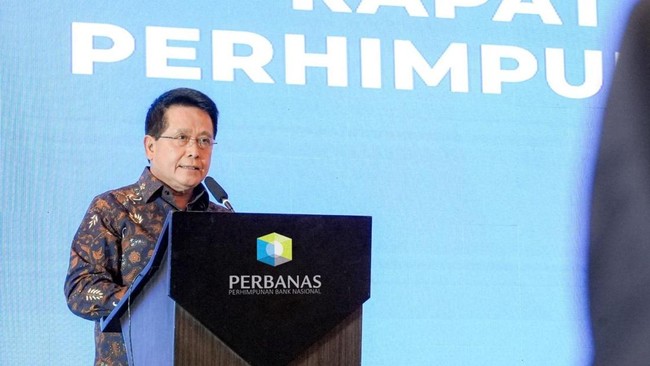
The Indonesian National Banking Association (Perbanas) officially inaugurated the MSME Centre on Thursday (18/06/2026) as a form of support to strengthen the MSME sector. On the same occasion, Perbanas also presented the preliminary results of research regarding the current development and challenges facing MSMEs.
The research utilised a method combining qualitative and quantitative approaches. The qualitative approach was conducted through a series of focus group discussions (FGDs) that brought together financial services industry associations, such as Himbara, Asbanda, and the Fintech Association (Aftech), with business actors, MSME communities, and academics. In addition to parties representing both the credit supply and demand sides, the FGDs also included policymakers (regulators) directly related to the MSME sector.
“The inauguration of the MSME Centre and the presentation of MSME research results are forms of our concern and an effort to advance Indonesia’s MSME industry. As the backbone of the economy, the MSME sector needs to be strengthened so that its contribution to the national economy continues to increase. We are optimistic that good cooperation between the banking industry, the MSME ecosystem, and policymakers will provide extraordinary benefits for this country,” said the General Chairman of Perbanas, Hery Gunardi, during a press conference at the Four Seasons Hotel on Thursday.
The research findings were presented by Winang Budoyo, Chief Economist of Perbanas. In his presentation, Winang stated that MSME credit growth has shown signs of weakening since late 2022 and began entering negative territory by the end of 2025. As of February 2026, MSME credit was still contracting by approximately -0.47% year-on-year. This weakening differs from the general trend in banking credit, particularly working capital, investment, and consumer credit, which continue to grow positively. Consequently, the decline in MSME credit indicates fundamental issues within the MSME segment.
The current weakening of MSME credit is primarily driven by the credit demand side, or is demand-driven. The majority (nearly 90%) of formal and informal MSMEs do not apply for credit because they feel they do not yet require loans as their primary reason. Their business financing is almost 90% self-funded. This indicates that the main problem regarding low access to MSME financing lies on the demand side of credit itself.
On the other hand, the research shows that the supply side of MSME financing is already very supportive. This is reflected in a survey finding that when formal MSMEs apply for credit, the approval rate is very high, at approximately 94.3%.
“This fact confirms that the main issue does not lie in bank rejections, but rather in the low demand for new credit, limited business expansion incentives, and the lack of readiness among MSMEs to access formal financing,” said Winang.
On the same occasion, the Head of Research, Economic & Banking Studies at Perbanas, Aviliani, expressed hope that the MSME Centre could assist unbankable MSME players in becoming bankable, providing mentorship, and collaborating with various parties to elevate the class of MSME entrepreneurs.
Source: jawawa.id (https://jawawa.id/newsitem/perbanas-launches-umkm-centre-amid-weakening-sme-lending-1781783476)
Originally published by CNBC Indonesia (https://www.cnbcindonesia.com/market/20260618153210-17-743802/kredit-umkm-kian-melemah-perbanas-luncurkan-umkm-center), translated from Indonesian