
PepsiCo Views Indonesia as a Promising Snack Market, Here's Why
JAKARTA - The American food and beverage company PepsiCo states that the prospects for Indonesia’s food and beverage industry remain promising, supported by the country’s population of 280 million people.
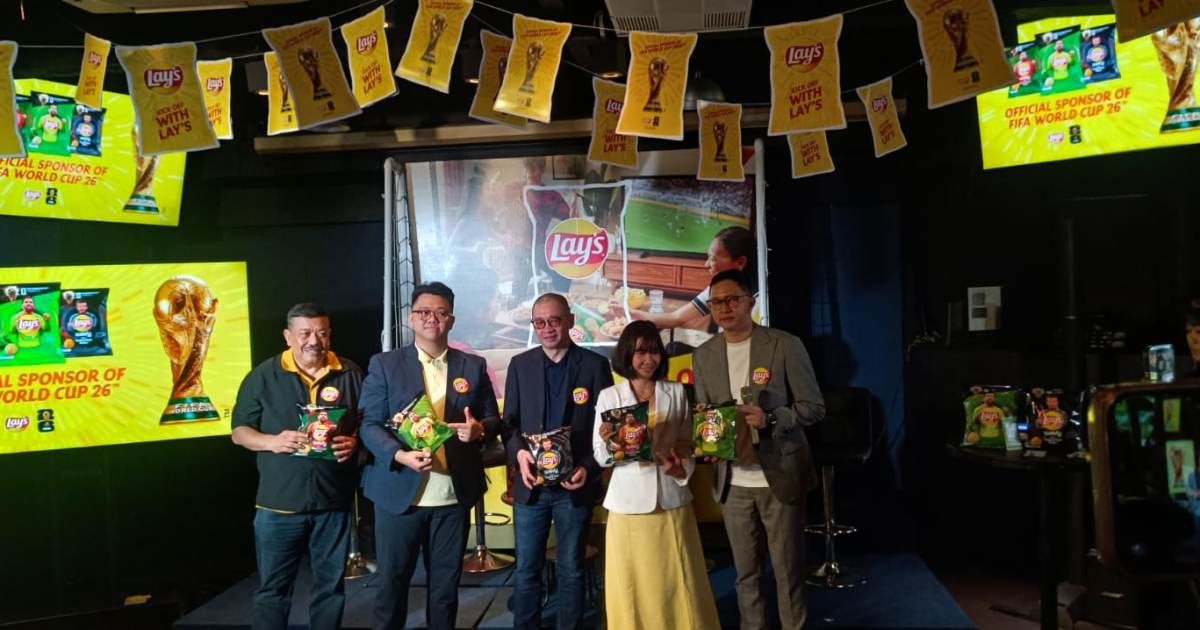
PepsiCo’s Director of Public Policy, Government Affairs & Corporate Communications, Gabrielle Angriani, said that based on data from the Indonesian Food and Beverage Entrepreneurs Association (Gapmmi), the sector is one of the largest contributors to gross domestic product (GDP). “Looking at the population side, Indonesia is indeed experiencing growth,” she stated during the launch of a special edition Lay’s packaging for the FIFA World Cup in Jakarta on Thursday (7/5/2026).
Gabrielle added that the high snacking culture in Indonesia is one of the main reasons for the company’s expansion and construction of production facilities in the country. “We see that Indonesian people like to snack. So we believe Indonesia is a suitable market for Lay’s,” she said.
Gabrielle revealed that PepsiCo has invested around Rp 3 trillion in building production facilities in Indonesia in 2025. This investment was made because the company sees great potential in the domestic market supported by the population size. “We believe there is great potential in Indonesia because the population is around 280 million,” she said.
According to her, the company’s current focus is on developing flavours that suit local tastes. PepsiCo considers this approach important because Lay’s production in Indonesia only started last year. To strengthen market penetration, PepsiCo is introducing various flavours adapted to local preferences, such as grilled beef, seaweed, and spicy seaweed.
Gabrielle was not yet willing to disclose details on sales or market share for the first quarter of 2026. “Regarding market share and sales, we cannot answer yet,” she said.
Geopolitical Adaptation
PepsiCo continues to adapt to global geopolitical dynamics that impact the plastics industry and packaging supply chains. Amid these conditions, the company is proceeding with its recycling packaging strategy and strengthening investments in Indonesia through the development of Lay’s snack products.
She said the current geopolitical situation affects all producers using plastic packaging, not just specific industries. “Regarding the current plastic situation, I think it’s a geopolitical condition and it impacts everyone. All producers using plastic packaging,” said Gabrielle.
She emphasised that the company is striving to adjust to changing global conditions while hoping for improvement. According to her, PepsiCo is currently using monolayer plastic packaging for its products in Indonesia. This type of packaging is easier to recycle compared to the multilayer packaging commonly used in the snack food industry. “As a company, we are already using monolayer plastic packaging, which means this packaging is easier to recycle,” she said.
Gabrielle said PepsiCo has also been running a packaging collection and recycling programme since the first year of its factory operations in Indonesia in 2025. “As a producer, we have already carried out our responsibility to recycle packaging. So we collect it, we recycle it,” she said.
Although global geopolitical dynamics are still ongoing, Gabrielle said the company has not yet seen significant impacts on product prices in the domestic market. “For us, we haven’t seen the overall impact yet, because it’s still fluctuating,” she said.
She added that the company continues to consider internal pricing strategies to keep marketed products attractive to Indonesian consumers.
She said that raw materials for Lay’s production, such as potatoes, are currently supplied from farmer groups in West Java, while corn comes from Central Java.
Regarding potato seeds, Gabrielle explained that the company uses several types of seeds, including exclusive seeds owned by PepsiCo globally and protected by intellectual property rights. “The first seed is one owned only by PepsiCo. So we have IP protection for that seed,” she said.
Although open to export opportunities in the future, Gabrielle said the company’s main focus at present is still on strengthening the domestic market. “Of course there is hope for that, but right now we are indeed focusing on the local market,” she said.