
People’s Schools: Prabowo’s Effort to Break the Cycle of Poverty
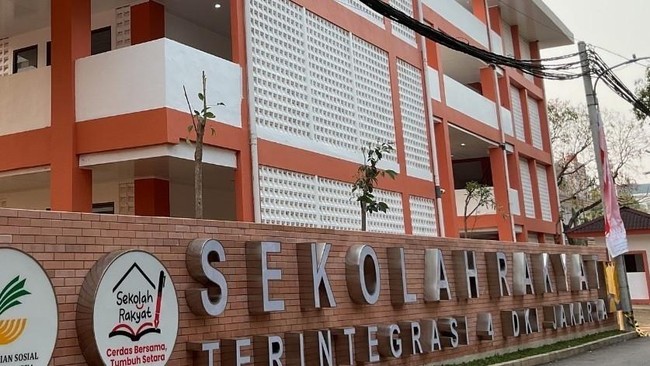
Jakarta, CNBC Indonesia – Poverty is one of the causes preventing some people from accessing essential basic services, including education. This is a major challenge for President Prabowo Subianto and Vice-President Gibran Rakabuming Raka’s government as it works towards the vision of a Golden Indonesia 2045.
Inability to access quality education can also lead to low literacy and skills, while limiting people’s chances of finding better jobs and improving their income and welfare. It is therefore no surprise that, when he took the presidential oath of office, Prabowo made education one of the government’s main priorities.
One initiative is the People’s Schools (Sekolah Rakyat, or SR) programme. In his speech at the Annual Session of the People’s Consultative Assembly (MPR) on 14 August 2026, Prabowo said the programme was a strategy to break the cycle of poverty in Indonesia.
“We want to break the cycle of poverty. If parents live in poverty, their children should not have to. Under Article 34 of our Constitution, the state must intervene,” Prabowo said.
The SR programme uses a boarding-school model for children from poor and extremely poor families, identified through the National Single Socio-Economic Data (DTSEN). Its pupils come from vulnerable families and have diverse life experiences. Some have been out of school for one or two years, some have worked in inappropriate settings, while others need rehabilitation before they can participate fully in lessons.
The programme is designed not merely to provide access to education, but as an integrated poverty-reduction model that brings together a range of government initiatives. These include empowering pupils’ parents; home improvements through the 3 Million Houses programme; free health checks (CKG); free nutritious meals (MBG); health insurance for parents and pupils through PBI-JK; comprehensive social assistance for families, including the Family Hope Programme (PKH) and food assistance; and membership of the Merah Putih Village/Urban Ward Cooperatives.
Pupils are provided with accommodation, three nutritious meals and two snacks a day, uniforms, school supplies, personal necessities, health checks, and character and life-skills training. Educational facilities are being developed in stages and include laptops, interactive digital boards (smartboards), laboratories, libraries, places of worship and sports facilities. Prabowo has set a target of establishing 500 People’s Schools, each with capacity for 1,000 pupils.
Social Affairs Minister Saifullah Yusuf has acknowledged Prabowo’s commitment to poverty reduction. He said the programme was Prabowo’s own idea, designed to break the chain of poverty.
Since July last year, SR has been operating at 182 sites across 34 provinces, serving more than 44,000 pupils from poor and extremely poor families, from primary through to upper-secondary level. More than 90 sites have moved into permanent buildings.
Saifullah, widely known as Gus Ipul, said the Ministry of Social Affairs was continuing to coordinate efforts to meet staffing needs and complete the schools’ facilities and infrastructure.
“We are continuing to coordinate and work to address shortages in human resources, as well as the need for facilities and infrastructure. But overall, I can say that the learning process is running well,” he said, as quoted on Monday (26 October 2026).
Public awareness of the People’s Schools
Public policy analyst Trubus Rahadiansyah said the government’s decision to run the SR programme was well-intentioned. In his view, it would give children from poor families the opportunity to attend school.
“The People’s Schools policy gives these children greater opportunities. Children from the first, second, third and fourth deciles, including those in extreme poverty, can go to school. It is free and operates as a boarding school. The curriculum is also good, so it can offer bright prospects for the future of education in Indonesia,” Trubus told CNBC Indonesia on Tuesday (27 October 2026).
However, Trubus noted that many members of the public still knew little about the programme.
“That is the problem: the facilities and other aspects,” Trubus said.
A Voxpol Center survey titled “Evaluation of the Government’s Two-Year Performance” found strong public support for the SR programme, with 84.9% of respondents saying they supported it. A further 83.4% rated its performance as good or very good.
Even so, awareness-raising needs to be expanded: 30.7% of respondents had not heard of the programme. In addition, 84.1% said it was beneficial and 69.2% considered it well-targeted. Most respondents wanted the programme to continue with improvements (48.5%), while 41.2% wanted it to continue unchanged.
Source: jawawa.id (https://jawawa.id/newsitem/peoples-schools-prabowos-effort-to-break-the-cycle-of-poverty-1793159455)
Originally published by CNBC Indonesia (https://www.cnbcindonesia.com/news/20261028094037-4-780079/sekolah-rakyat-jadi-ikhtiar-prabowo-memutus-lingkaran-kemiskinan), translated from Indonesian