
People's Schools Orientation to Be Held in Four Waves Starting 14 July
The School Environment Orientation Period (MPLS) for People’s Schools for the 2026/2027 Academic Year is scheduled to begin on 14 July 2026 in four staggered waves involving 101 People’s Schools. The first wave of 19 permanent People’s Schools starts on 14 July, the second wave of 63 permanent schools on 31 July, a third wave of 8 pilot People’s Schools in Greater Jakarta on 15 August, and a fourth wave of 11 permanent schools on 31 August.
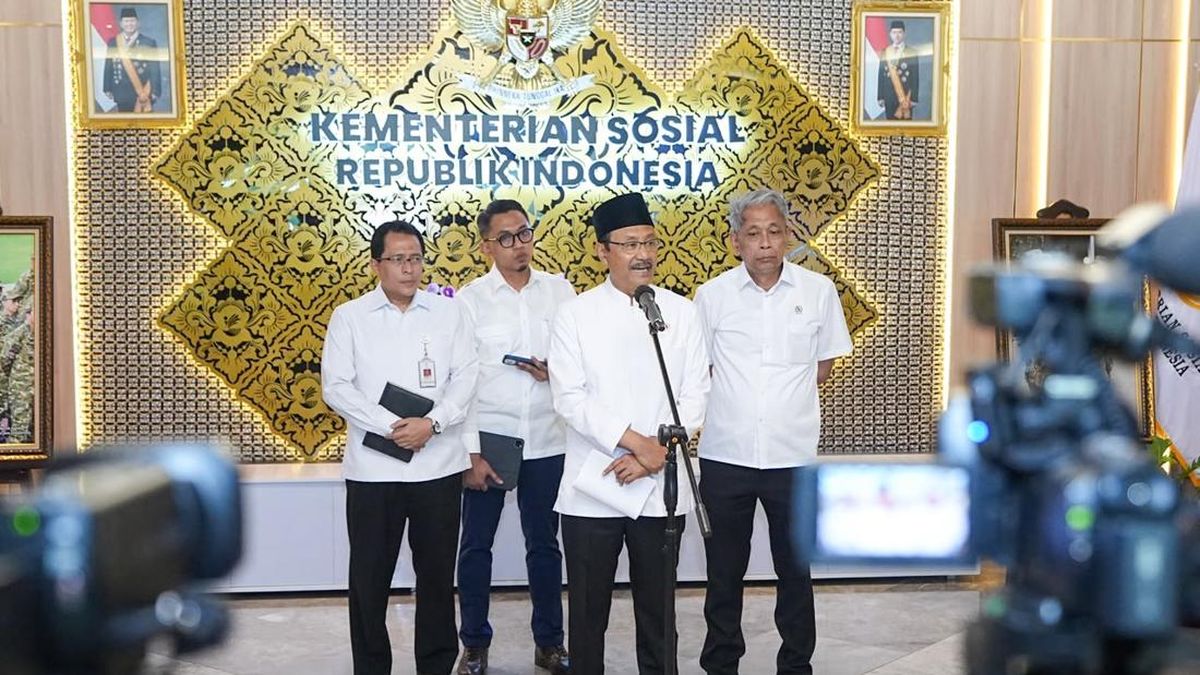
Social Affairs Minister Saifullah Yusuf, known as Gus Ipul, explained that this approach was chosen to ensure all educational and dormitory facilities are truly ready before new students arrive. “The staggered MPLS is not a sign of uncertainty but a form of responsibility. We do not want children to arrive at a location where the facilities are not yet fully ready. Every site must be safe and comfortable before we welcome them,” Gus Ipul said at the Ministry of Social Affairs office on Monday.
The implementation stages are based on three main considerations: the functional readiness of infrastructure, student safety and comfort, and the availability of basic utilities such as clean water, electricity, and sanitation. “Schools whose facilities are not yet fully ready are not forced to accept students for safety reasons. Classrooms, dormitories, and supporting facilities must be confirmed as habitable before students arrive,” the Minister stated.
He explained that all waves use the same MPLS framework, consisting of 19 days of implementation across four child-friendly phases as part of a roughly three-month preparatory programme before entering regular learning and full boarding life. “The MPLS is part of a preparatory programme lasting approximately three months. After MPLS, it continues with matriculation, then students enter the regular learning programme and boarding programme,” he said.
The preparatory programme consists of 19 days of MPLS and about 2.5 months of matriculation. During this stage, students are introduced to their potential, school community, curriculum, and the school and boarding environment. Additionally, the MPLS contains 36 materials grouped into seven themes: introduction to the school environment, character building, literacy and numeracy, child health and protection, digital literacy, discipline, and prevention of risky behaviours such as bullying, drug abuse, and online gambling.
During MPLS, all students will also undergo free health checks, psychological assessments and self-potential mapping, as well as guidance for adapting to boarding life. In the first five days, students will be accompanied by TNI-Polri cadets to help instil discipline and independence in daily activities. Gus Ipul stressed that the entire MPLS series is implemented with child-friendly principles and zero tolerance for any form of violence. “There will be no sexual violence, physical violence, bullying, or intolerance. If violence occurs, the perpetrator will be immediately dismissed. There will be no first or second warning letters,” he said.
In its implementation, People’s Schools apply a multi-entry, multi-exit approach, allowing students to join throughout the academic year according to the readiness of the educational unit. “The staggered MPLS aligns with the multi-entry, multi-exit philosophy. This is not an indication of delay, but rather the design of the People’s School admission system. Every new student, from any wave, must first undergo matriculation before studying with existing students,” Gus Ipul stated.
Furthermore, Gus Ipul invited the public to monitor the implementation of the People’s Schools MPLS through the Call Centre at 021-171 or the WhatsApp Centre at 0887-7171-171. He stated that every incoming report would be followed up by the Ministry of Social Affairs. “We want the public to see firsthand how People’s Schools work. Therefore, we are opening a space for public oversight so that the entire process is safe, comfortable, and in the best interests of the child,” Gus Ipul concluded.