
People’s Schools Face Challenges as Social Affairs Minister Calls for Stronger Governance
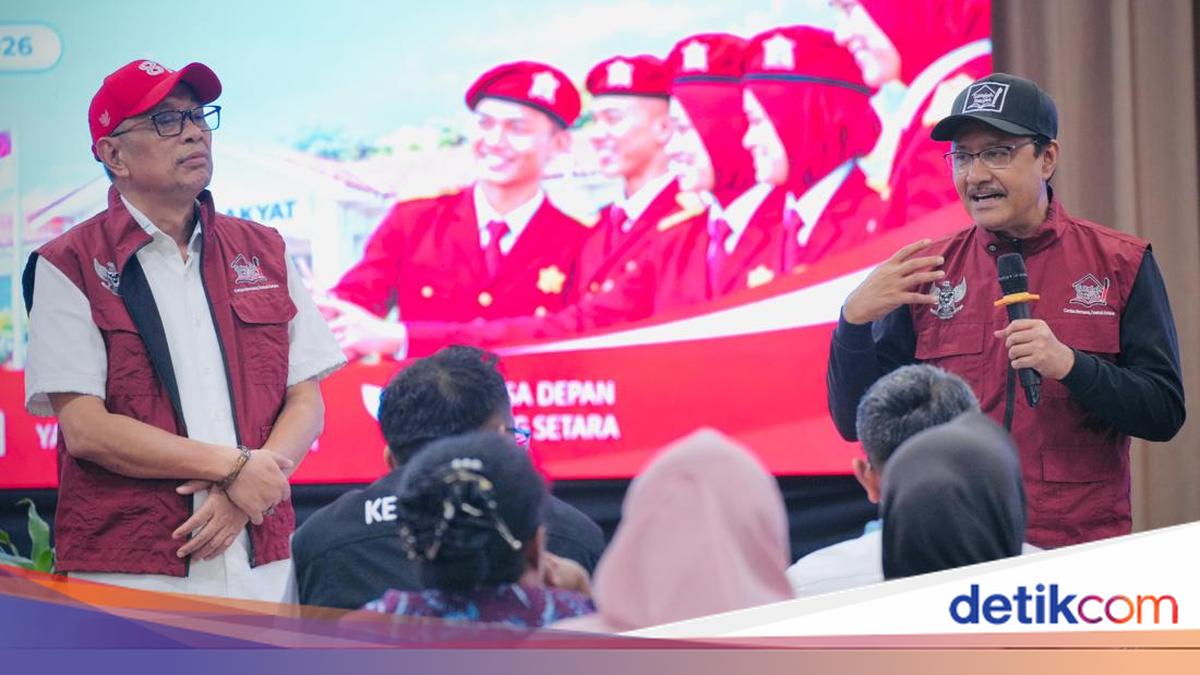
After operating for more than a year, the People’s Schools programme is facing a range of challenges. Students’ diverse backgrounds and the complexity of the boarding-school system require particular attention.
Social Affairs Minister Saifullah Yusuf, known as Gus Ipul, said these developments needed to be addressed appropriately. This would require consolidation, stronger governance, and continuous monitoring and evaluation.
“I am once again meeting all the heads of People’s Schools, who have come from various regions, to consolidate our efforts,” Gus Ipul said in a written statement on Wednesday (27 October 2026).
He made the remarks after an event on strengthening school heads’ managerial capacity in running People’s Schools, held at the Swiss-Belhotel Waterfront Makassar on Tuesday (27 October 2026).
Together with Deputy Social Affairs Minister Agus Jabo Priyono, Gus Ipul said the ministry was paying particular attention to developments at the schools.
“We know that the challenges and changes at People’s Schools need to be handled properly,” he said.
Gus Ipul said that, in addition to coming from diverse backgrounds, almost all pupils at the People’s Schools were from vulnerable families and had experienced social difficulties that had long gone unaddressed. Some had also received limited education because they had not had proper access to schooling.
“Sometimes there are also inappropriate parenting practices, so the children have very different habits,” he said.
Some pupils had been victims of violence or faced mental health problems. “All of them must be supported with great empathy,” Gus Ipul said.
He said the challenge was to help bring pupils to a comparable starting point so they could participate fully in education and character-building.
For this reason, every pupil entering a People’s School first undergoes a health check. If needed, they receive rehabilitation at centres run by the Ministry of Social Affairs before beginning lessons.
Gus Ipul said pupil numbers were continuing to grow as the programme expanded to 182 locations across Indonesia, serving primary, junior secondary and senior secondary levels.
He said each age group had different needs: primary pupils were learning independence, junior secondary pupils were going through puberty, and senior secondary pupils were approaching adulthood.
“There are many issues and many changes, which we are continually trying to address in an appropriate way, following procedures and norms while respecting and valuing the pupils as human beings,” he said.
Gus Ipul said he was nevertheless pleased that the programme was running smoothly overall, including in terms of pupils, the curriculum, infrastructure, education staff and other supporting facilities.
“We are continuing to address shortcomings, including by meeting the need for teachers, boarding supervisors and carers,” he said.
He urged school heads to plan early for students’ pathways after graduation. The results of talent DNA tests, he said, should guide preparations for pupils to become skilled workers or continue to further education.
Agus Jabo, meanwhile, stressed the importance of aligning understanding both within the schools and with parents to minimise problems on the ground. He also called for a robust system to help achieve the programme’s central aim of breaking the cycle of poverty through education.
“That is the spirit of it. People’s Schools provide formal education and character education. That is what sets us apart from regular schools,” he said.
Ministry Secretary-General M Hasan Chabibie similarly said the programme needed to follow clear systems to operate effectively.
He said this should not be difficult, given the existence of national education guidelines, but that systems would be meaningless without professional staff.
“Without the commitment not to give up, and without a team that is not afraid of hardship or going hungry, this simply cannot work well,” he said.
For students’ post-school pathways, Hasan said the programme needed personalised learning, vocational education and collaboration with universities. This would help graduates continue their education or acquire strong work skills.
“Vocational approaches can be pursued together with all the polytechnics across Indonesia. I have already sought approval, before moving here, to communicate with all the universities and polytechnics across the country so they can help us develop the People’s Schools together,” he said.
Source: jawawa.id (https://jawawa.id/newsitem/peoples-schools-face-challenges-as-social-affairs-minister-calls-for-stronger-governance-1793148762)
Originally published by detikcom (https://news.detik.com/berita/d-8727139/sekolah-rakyat-hadapi-dinamika-tantangan-mensos-minta-perkuat-tata-kelola), translated from Indonesian