
PeopleMath Book: Human Capital as the Key to Future Economic Productivity
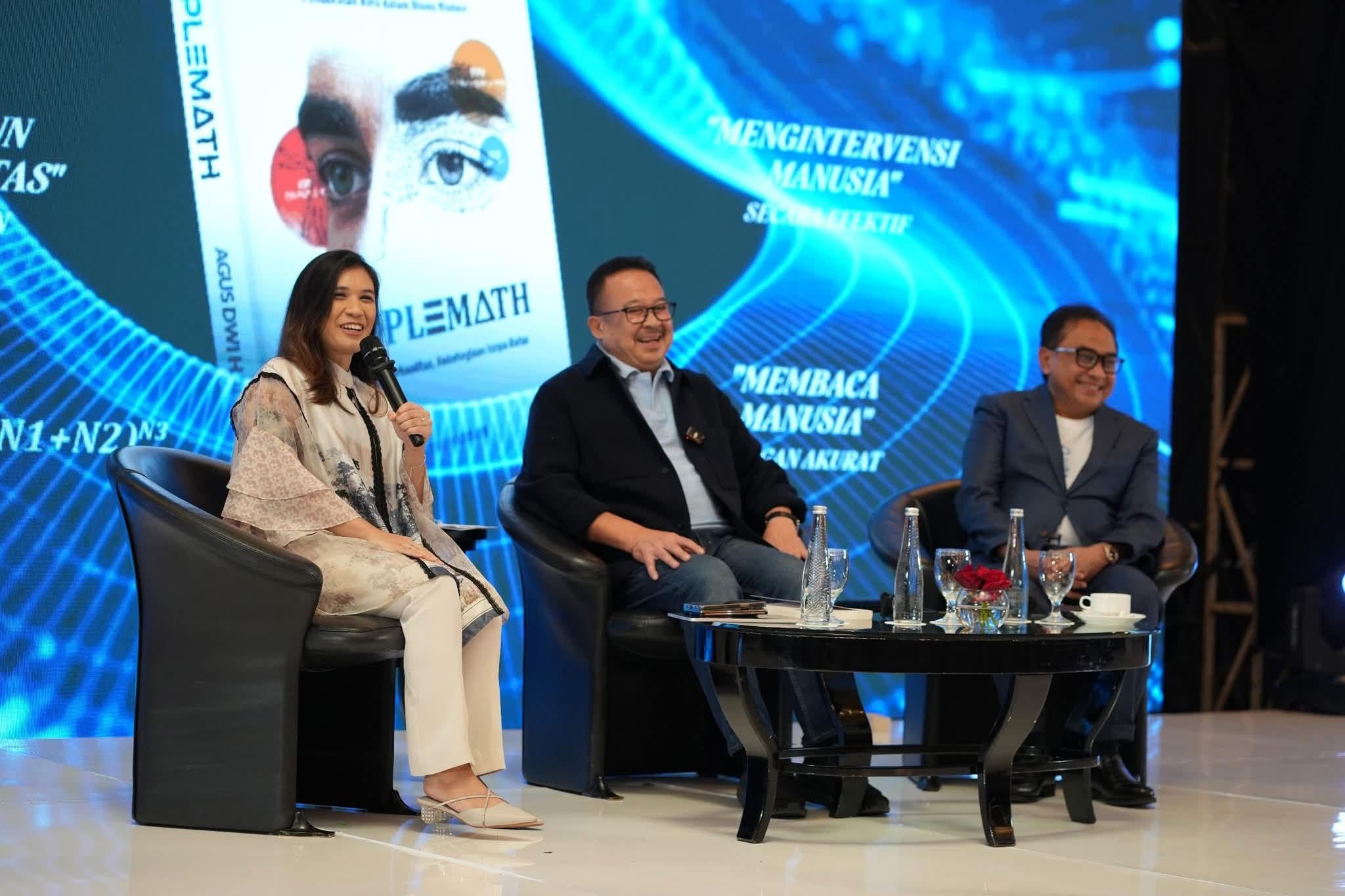
Amidst the increasing demands of a competitive global workforce, the quality of human resources has become a decisive factor in national economic competitiveness. Rather than merely chasing targets and productivity figures, companies are now required to develop people capable of sustainable growth to ensure business performance remains stable.
This phenomenon serves as the background for the creation of the book ‘PeopleMath’ by Agus Dwi Handaya. The book, which introduces a new approach to human capital development, has received a positive market response. The first printing of 3,500 copies sold out within approximately two to three weeks of its release, prompting the publisher to prepare a second printing of 2,000 copies and granting the book ‘National Best Seller’ status.
The high level of reader interest reflects the growing attention from professionals, business owners, and human resource practitioners regarding the importance of investing in human resource quality as the foundation for long-term economic productivity.
Agus Dwi Handaya stated that true productivity is not built solely through targets, systems, and technical abilities, but originates from the quality of continuously evolving humans. “If we misread people, we will almost certainly mismanage productivity. True productivity is not just built from targets, systems, or technical skills, but from humans who continue to develop through knowledge, skills, character, motivation, beliefs, environment, and proper leadership,” he said in Jakarta on Monday.
According to Agus, the current challenge in the working world is not just increasing output, but creating an environment capable of building people to work more effectively without sacrificing psychological health and meaning in work.
Through ‘PeopleMath’, Agus offers an approach that uses the logic of mathematical equations to help understand the various factors that shape human quality. This approach is not intended to reduce humans to mere numbers, but rather as a systematic way to read the relationship between knowledge, skills, character, motivation, experience, leadership, organisational systems, and individual health in relation to productivity.
“PeopleMath is not about mathematising humans into formulas or numbers. Rather, through the logic of equations, we can see humans more holistically and understand what enables an organisation to build productivity sustainably,” said Agus.
In the book, Agus introduces 21 ‘PeopleMath’ formulas, consisting of two core formulas and 19 derivative formulas. The entire concept is designed as a practical guide for organisational leaders in building human resources that are not only productive but also possess a better quality of life.
Additionally, he introduces the ‘3N’ leadership concept—Nagih (Inspiring), Nata (Organising), and Nuntun (Guiding)—which emphasises the importance of balancing performance targets, clear working systems, and mentorship to ensure employees continue to grow.
The idea for ‘PeopleMath’ was born from Agus’s nearly three decades of experience in the human capital field. His career began in 1997 at Bank Exim Medan and later involved participating in the merger process that created Bank Mandiri. This experience served as the foundation for formulating the human development approach presented in this book.
At the time of the book’s publication, Agus served as the Director of Human Capital & Compliance at Bank Mandiri and Managing Director of Human Capital at PT Danantara Asset Management. He is also active in various human resource development organisations, including the Forum Human Capital Indonesia.
According to Agus, experiences in both social and corporate environments show the same pattern: humans can develop significantly when supported by the right environment, leadership, systems, discipline, and beliefs.
“From these two very different experiences, I found the same pattern: humans can be shaped powerfully. Productivity is not something that simply appears at the end of the work process, but is the result of a long process of shaping and developing people,” he concluded.
Source: jawawa.id (https://jawawa.id/newsitem/peoplemath-book-human-capital-as-the-key-to-future-economic-productivity-1783507920)
Originally published by Media Indonesia (https://mediaindonesia.com/humaniora/908797/buku-peoplemath-human-capital-jadi-kunci-produktivitas-ekonomi-masa-depan), translated from Indonesian