
Penti Weki Peso Beo in Manggarai: Meaning, Rituals and Timing
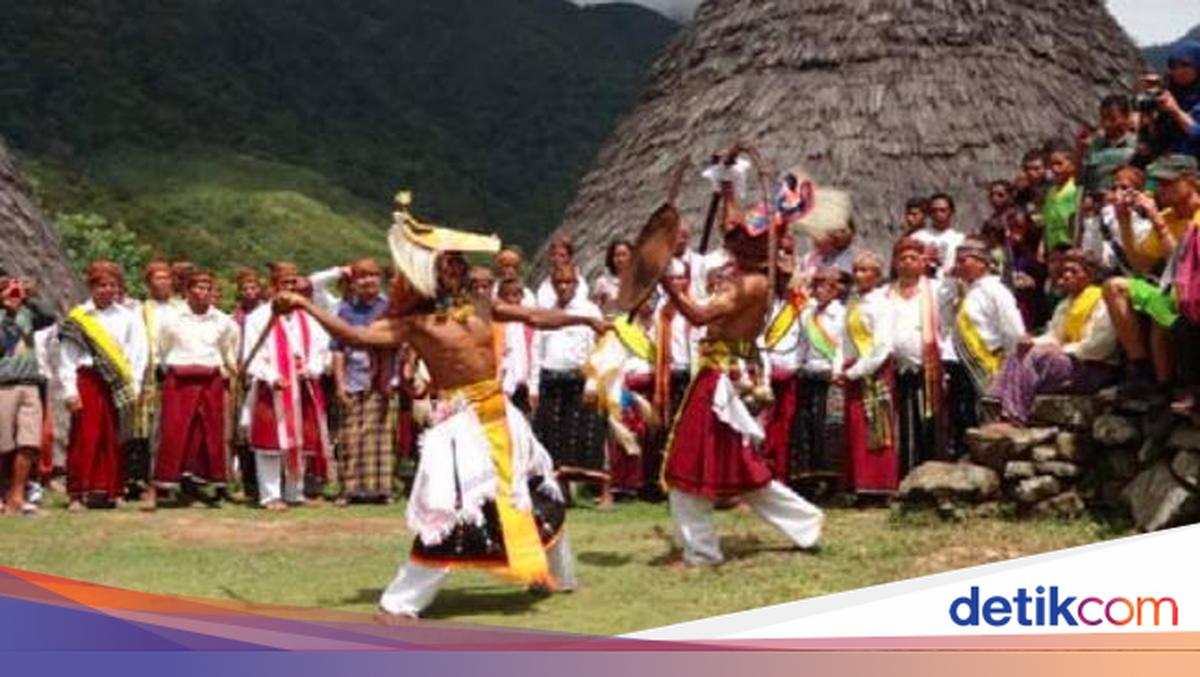
The Manggarai people of Flores, East Nusa Tenggara (NTT), have a traditional harvest festival and thanksgiving ceremony known as Penti Weki Peso Beo. Penti is a Manggarai customary celebration expressing gratitude to God (Mori Jari Dedek or Mori Kraeng) and to the ancestors (empo).
The Manggarai dictionary defines penti as the Manggarai New Year celebration. The full expression is “penti weki peso beo reca rangga wali ntaung”. It means giving thanks for the passing year, the completion of a long working season and the imminent start of a new one.
The tradition begins by welcoming the spirits believed to guard gardens and water sources, as well as ancestors at their graves and the spirits dwelling at the village altar. They are invited from the outskirts of the village to the customary house to attend the thanksgiving celebration’s climax, known as Penti Weki Peso Beo.
Meaning of Penti Weki Peso Beo
Penti Weki Peso Beo is grounded in the balance of five aspects of life: lingko (communal garden), wae teku (water source), natas labar (village square), compang (offering altar) and mbaru (house).
When life feels out of balance, residents seek strength and protection through penti, invoking these five aspects. According to Manggarai belief, neglecting penti could bring the Creator’s anger and disaster upon the community.
Researchers identify three dimensions to the meaning of penti. The vertical dimension is gratitude to God and the ancestors. The horizontal dimension strengthens bonds among clans (wa’u), sub-clans (panga), siblings (ase ka’e), and the families of the bride and groom (anak rona and anak wina), in keeping with the philosophy “gendang one lingko pe’ang”.
The social dimension is a family reunion, including for people who live outside their village, and an opportunity for reconciliation among residents.
Penti rituals
Penti is, in essence, a sequence of cultural practices that proceeds from outside the home towards the customary house. The Bali Cultural Heritage Preservation Office (BPNB) records six stages in the Penti ceremony in Waso sub-district, Ruteng.
The sequence starts with a customary deliberation and Cako Reke, followed by Barong Londok in the communal garden, Barong Wae Teku at the water source and Barong Compang at the village altar. These are followed by Wisi Loce at the customary house.
The next stage is Libur Kilo, held at each family’s home. The climax, Renge Eta Penti, takes place at the customary house (mbaru gendang).
Some villages add other rituals. Todo Traditional Village, for example, holds Roi Boa to call the ancestors at their graves. Its main ceremony begins with the beating of gongs at around 7pm Central Indonesia Time.
Meaning of each ritual
Cako Reke. Cako means “to speak” and reke means “promise”. This ritual is a pact with the ancestors and the entire community, and also sets the date of Penti. The sacrificed rooster is either white (bakok), signifying purity, or reddish-brown (cepang), signifying courage.
Barong Lodok. Barong means “to summon”. The spirit believed to guard the garden is invited to the evening celebration, and an offering is made to the teno, a stake planted at the centre of the communal garden, in gratitude for the harvest.
Barong Wae Teku. The spirit believed to guard the water source is invited and thanked for the water that never runs dry. In Todo, the ritual is also understood as a purification before the Creator and ancestors are invited to the main ceremony.
Roi Boa or Barong Boa. The spirits of ancestors at their graves are summoned. Residents believe it was the ancestors’ blessings that passed down the gardens, water sources and produce of the land.
Barong Compang. The village altar is believed to be inhabited by the naga golo or naga beo, a guardian spirit said to protect the village from fires, strong winds and bloodshed. After this, Wisi Loce (laying out mats) invites all the summoned spirits to wait for the main ceremony.
Libur Kilo. This is a family-level thanksgiving and a moment to renew life and restore relationships among family members. It may also include teing hang empo (making offerings to the ancestors) and casting away bad dreams (nipi da’at) by a river at sunset, while welcoming good dreams.
Renge Eta Penti. Prayers are recited in the customary language over the sacrificial animal. After it is slaughtered, its blood is smeared on the doorframe of the customary house to mark the completion of Penti. The ritual leader then examines the animal’s liver (toto urat) to determine whether the offering has been accepted; the result is announced and shared in a moment of thanksgiving.
The ceremony continues with sanda songs praying for plentiful water and harvests, livestock, and safe homes, before ending with a communal dinner.
- Cai (not always held). Two men take turns striking with whips and defending themselves with shields. The BPNB notes that the contest is not about winning and does not leave participants feverish; rather, it strengthens brotherhood.
When Penti is held
Penti has no fixed date. Its timing is decided through customary deliberations and varies from village to village. According to the BPNB, Penti in Waso, Ruteng, is held after the harvest, around June to September, and lasts four to seven days depending on the community.
Todo Traditional Village holds the festival annually towards the end or beginning of the year, as agreed by residents. There is also penti mese, held every five years and involving a buffalo sacrifice, while annual penti uses a pig.
Residents of Wae Rebo hold the ceremony each November, lasting a day and a night. The Ministry of Tourism notes that many villages in Flores now follow a five-year cycle because preparations are intensive and costs are high. Wae Rebo, however, continues to hold it every year.
The timing of Penti Weki Peso Beo is therefore decided by each village. Anyone hoping to witness or take part in the celebrations should first confirm the date with customary leaders or the local tourism office.
Residents of Manggarai continue to preserve the tradition. They have also carried it to places where they have settled, including West Kalimantan. One study says that Penti there expresses gratitude for success away from home and helps introduce customary traditions to younger generations.
Source: jawawa.id (https://jawawa.id/newsitem/penti-weki-peso-beo-in-manggarai-meaning-rituals-and-timing-1793587835)
Originally published by detikBali (https://www.detik.com/bali/budaya/d-8734180/penti-weki-peso-beo-di-manggarai-makna-rangkaian-ritual-waktu-pelaksanaan), translated from Indonesian