
Pentagon Email Leak Reveals US Preparing Punishments for NATO Allies
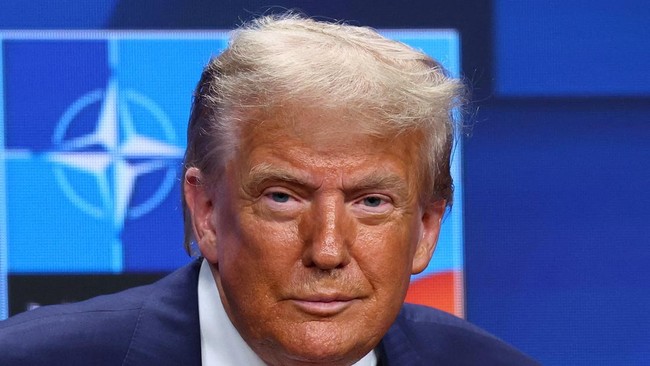
Tensions between NATO and the United States have escalated once again following the emergence of an internal Pentagon discussion paper considering “punitive” measures against its European allies. The options even include extreme steps such as suspending Spain’s membership in the Western military alliance.
In a report disclosed to Reuters, a US official stated that an internal Pentagon email detailed several policy options in response to NATO countries deemed to have provided inadequate support for US military operations in the war against Iran.
One of the measures under consideration is to reassess Washington’s position on the British claim to the Falkland Islands.
According to the official, who spoke on condition of anonymity, the email reflects deep frustration in Washington towards allies perceived as reluctant or refusing to grant access, military bases, or airspace permissions—known as ABO—in the Iran war operations. The note states that ABO is “simply the most basic standard for NATO”.
Other options discussed include removing countries considered “difficult” from important or prestigious positions within NATO’s structure. Nevertheless, the document does not explicitly propose that the US withdraw from NATO or close its military bases in Europe.
US President Donald Trump has previously issued sharp criticisms of NATO allies for not sending naval forces to help reopen the Strait of Hormuz, a vital global energy trade route disrupted since the war began on 28 February. Trump even stated that he was considering the possibility of pulling the US out of the alliance.
“Wouldn’t you do the same if you were in my position?” Trump said in an interview with Reuters on 1 April, in response to a question on whether US withdrawal from NATO was a real option.
However, the official emphasised that the internal Pentagon email does not recommend leaving NATO. He also did not confirm any plans to reduce US troops in Europe, although the issue has long been the subject of speculation.
In response to the report, Pentagon spokesperson Kingsley Wilson stated that the US government wants more balanced contributions from its allies.
“As President Trump has said, regardless of everything the United States has done for its NATO allies, they are not there for us,” he said.
“The Department of War will ensure that the President has credible options to make sure our allies are no longer paper tigers and truly fulfil their roles. We have no further comment on any internal considerations regarding this,” he added.
Meanwhile, the US-Israel war against Iran has raised new concerns about the future of the 76-year-old NATO alliance. Analysts and diplomats assess that this conflict is triggering uncertainty over whether the US would still defend its European allies in the event of an attack.
Several countries, such as the UK and France, have refused to join the US naval blockade against Iran for fear that it would drag them directly into the war. However, they have expressed willingness to help secure the Strait of Hormuz if a permanent ceasefire is achieved.
On the other hand, the Trump administration views NATO as unable to function one-way. Tensions are most evident with Spain, which has refused to provide access to its bases or airspace for military operations against Iran. Yet, the US maintains two important bases in the country: Naval Station Rota and Morón Air Base.
According to the US official, the policy options in the email aim to send a strong signal to NATO allies to “reduce the sense of entitlement from the European side”.
Although the military impact of suspending Spain is estimated to be limited, the step is seen as having a very significant symbolic effect on the alliance’s cohesion.
Spanish Prime Minister Pedro Sánchez responded cautiously to the report. “We do not work based on emails. We work based on official documents and government positions, in this case the United States,” he said ahead of a meeting of European Union leaders in Cyprus.
US Secretary of Defence Pete Hegseth had previously hinted that the conflict with Iran has opened up many fundamental issues within the alliance.
“We are getting questions, or obstacles, or doubts … You don’t have much meaning as an alliance if there are countries that are not willing to stand with you when you need them,” Hegseth said.