
Pentagon Drafts New Nuclear Strategy to Counter Russia and China
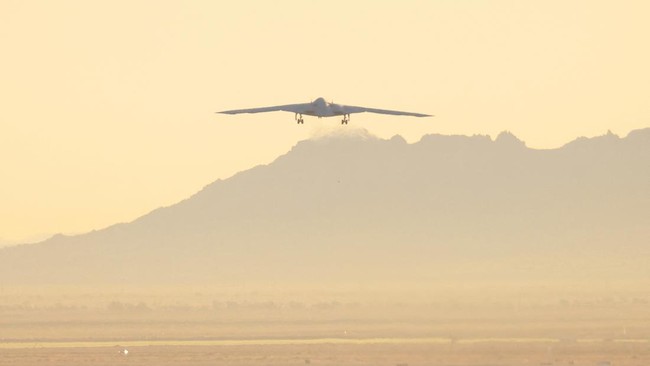
The Pentagon is drafting a new nuclear strategy to give the president of the United States a wider range of options in the event of a potential war with Russia or China. The strategy is reported to place greater emphasis on the use of short-range tactical nuclear weapons in regional conflicts rather than relying solely on long-range strategic weapons.
Citing Russia Today on Thursday (6/8/2026), the classified review is specifically aimed at addressing scenarios in which a US ally is attacked by Russia or China. The report also states that the drafting of the strategy is being directly overseen by the Pentagon’s policy chief, Elbridge Colby.
The strategic review is known to have emerged around six months after the expiry of the New START treaty, the last bilateral nuclear arms limitation agreement between the US and Russia. A US defence official argued that the availability of a more diverse range of strategic options has now become crucial.
“Giving the president more realistic and credible nuclear options will strengthen military deterrence,” the official said.
The New START treaty, signed in 2010 and extended in 2021, limited both countries to 1,550 strategic warheads. The rules, which also capped 700 delivery systems and required verification transparency, officially expired in February without a replacement draft in place.
Although the bilateral agreement has lapsed, Moscow has stated that it has no intention of being the first party to take escalatory steps. Russia has pledged not to increase its warhead numbers as long as the US also commits to taking the same approach.
Before the treaty lapsed, Russian President Vladimir Putin had proposed that both countries continue to abide by its limits for another year. The proposal was made while awaiting ongoing negotiations to find a replacement agreement.
However, US President Donald Trump at the time rejected the offer because he wanted a more comprehensive deal that would also include China. Responding to Trump’s insistence, Beijing, which is estimated to possess only around 600 nuclear warheads, immediately refused outright to join the talks.
The Chinese government argued that countries with the largest nuclear arsenals should bear the primary responsibility for disarmament. Meanwhile, Moscow also demanded that any expanded nuclear arms agreement must include NATO members such as France and the United Kingdom.
Russia had previously taken anticipatory steps by updating its nuclear doctrine in 2024. The new rules stipulate that aggression by a non-nuclear state supported by a nuclear power will be treated directly as a joint attack.
Weapons of mass destruction may also be used lawfully if conventional aggression begins to pose a critical threat to the sovereignty of Russia or its ally, Belarus. Moscow has also consistently criticised the deployment of US nuclear weapons in Europe as part of NATO’s burden-sharing scheme.
Russia has reiterated that it has no intention whatsoever of attacking any NATO member state. However, it has threatened to target its nuclear weapons directly at countries hosting such lethal weapons facilities if they are aimed at Russia.