
Penas Momentum for Food Self-Sufficiency: Gobel Says Agriculture Must Be Foundation of National Economy
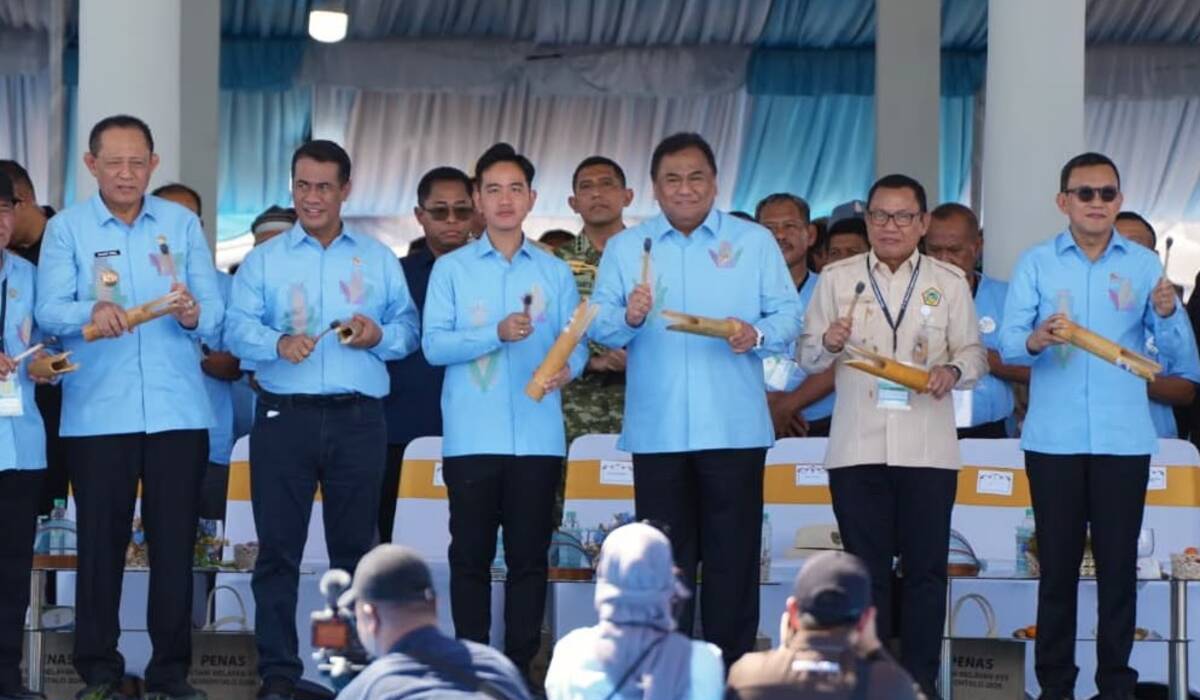
Rachmat Gobel, a member of Commission VI of the Indonesian House of Representatives (DPR RI), has invited all participants of the 17th National Farmers and Fishermen Week (Penas) 2026 to utilise this forum as a momentum for food sovereignty. “In this context, the agriculture and fisheries sectors must become the foundation of the national economy,” he stated on Saturday, 20 June 2026.
Gobel made these remarks following the opening ceremony of the Farmers and Fishermen Week in the Gorontalo Regency sports area, Gorontalo Province. This quadrennial event was opened by Vice President Gibran Rakabuming Raka and is scheduled to be closed by President Prabowo Subianto on 24 June 2026. The event was attended by Minister of Agriculture Andi Amran Sulaiman, Deputy Minister of Marine Affairs and Fisheries Didit Herdiawan, Governor of Gorontalo Gusnar Ismail, Regent of Gorontalo Sofyan Puhi, and various other officials, alongside farmers, fishermen, extension workers, and other stakeholders. Agricultural machinery was also on display during the event.
Gobel asserted that agriculture, plantations, livestock, and fisheries must serve as the foundation of the national economy. “Because that is Indonesia’s strength. We have vast land, a massive number of human resources involved, only two seasons, and fertile soil. This is not just an economic strength, but also our national resilience,” he said.
As part of the host’s efforts, Gobel has developed four tourist destinations, including the Pentadio hot springs featuring a cat statue and Indonesia’s only ball-shaped videotron, the renovation of Menara Pakaya, the beautification of Lake Perintis with light swing attractions, and the Tamendao Beach area. This ensures that the thousands of participants from across Indonesia have adequate places for relaxation during the five-day event.
To achieve food sovereignty, Gobel is building an agricultural ecosystem integrated with tourism and education. He has established 20 agrotourism villages featuring 10 agricultural commodities. In the initial phase, he developed the Tilihuwa Village Peanut Agrotourism. The development of this community-based ecosystem—comprising tourism, economy, agriculture, and education focused on peanuts—is part of an effort to improve the welfare of farmers and villagers. He has also constructed workshops, offices, warehouses, public facilities, early childhood education centres, and homestays, all managed by a cooperative.
The Head of the Agency for Agricultural Extension and Human Resources Development (BPPSDMP), Idha Widi Arsanti, and her team have inspected the Peanut Agrotourism in Tilihuwa Village. Through intensive discussions, BPPSDMP will assist in providing technical training for agricultural machinery maintenance, improving the quality of extension workers, and strengthening institutional capacity.
Gobel stated that this event should be a momentum for agricultural and fisheries stakeholders to showcase the excellence of their respective regional commodities and products. This allows participants to exchange experiences, learn from one another, and foster collaboration. Furthermore, it serves as a platform to demonstrate innovations that can be shared with participants from other regions. Regarding collaboration, Gobel shared his experience in brokering a partnership with Sukabumi City to explore soybean cultivation. For peanut crops, he is collaborating with Garudafood, and for cocoa and coffee, he is working with Chateraise, a Japanese confectionery and ice cream company.
Furthermore, Gobel emphasised that farmer welfare and agricultural productivity must go hand in hand. “The quality and quantity of products are required by consumers and are vital for national resilience; however, the welfare of farmers and fishermen must also continue to increase. This must be achieved collectively by the government, farmers, fishermen, and entrepreneurs,” he said.
He noted that farmers and fishermen face challenges such as poverty, issues with seeds and fertiliser, and falling selling prices during harvest. He acknowledged that the Prabowo Subianto administration is working hard to guarantee the supply of affordable fertiliser and seeds, as well as ensuring that harvests are absorbed at adequate prices.
Gobel stated that the progress of agriculture and fisheries, alongside the prosperity of farmers and fishermen across Indonesia, must advance together. “Penas is a strategic forum for farmers, fishermen, and the agricultural and fisheries sectors. Here, they can exchange and gain knowledge and experience to produce new innovations to be brought back to their respective regions,” he said.
Looking ahead, Gobel stated that the modernisation of agriculture is an absolute necessity to guarantee food supplies and meet the challenges of climate change. “There is the threat of a global food crisis. This must be a shared awareness. Farmers and fishermen are the spearhead of national resilience and the nation’s progress. This Penas event must foster a collective awareness of the strategic importance of farmers, fishermen, and the agricultural and fisheries sectors for Indonesia’s future.”
Source: jawawa.id (https://jawawa.id/newsitem/penas-momentum-for-food-self-sufficiency-gobel-says-agriculture-must-be-foundation-of-national-economy-1781963509)
Originally published by Media Indonesia (https://mediaindonesia.com/ekonomi/902532/penas-momentum-kemandirian-pangan-gobel-pertanian-harus-jadi-fondasi-ekonomi-nasional), translated from Indonesian