
Pemerintah prioritises national interests after Chinese Chamber of Commerce raises concerns about investment climate
The Indonesian government has affirmed its commitment to prioritising national interests in the management of natural resources, following complaints from the China Chamber of Commerce in Indonesia (CCCI) regarding the investment climate in the country.
The Indonesian Chamber of Commerce and the Investment Coordinating Board (BKPM) have acknowledged the concerns raised by Chinese businesses as valid feedback for improving the certainty of investment regulations.
JAKARTA: The Indonesian government has affirmed that it will continue to prioritise national interests in the management of natural resources, after the China Chamber of Commerce in Indonesia (CCCI) expressed concerns to President Prabowo Subianto about the investment climate in the country.
Finance Minister Purbaya Yudhi Sadewa stated that the government has the right to regulate the use of minerals within the country, including in the planned adjustment of mining royalties.
“As for the minerals, it’s fine, they belong to us,” Purbaya told Kompas.com in Jakarta on Tuesday (May 12).
He also mentioned that foreign investors can choose other countries if Indonesian policies do not align with their business interests.
“If others want to move around, they can find minerals elsewhere,” he said.
The statement came after the CCCI sent a letter to Prabowo. In the undated letter, which was seen by CNA Indonesia, the CCCI stated that Chinese companies in Indonesia have supported the government, conducted investments in accordance with the law, and contributed to economic growth, job creation, industrial development, and social responsibility.
However, the CCCI stated that these companies have recently faced increasing pressure, ranging from regulations that are considered too strict, excessive law enforcement, to alleged corruption and extortion by authorities.
“Companies operating in Indonesia generally face prominent problems, including overly strict regulations, excessive law enforcement, and even corruption and extortion by authorities,” the letter stated.
The CCCI stated that this situation has “greatly disrupted normal business operations” and “directly weakened the long-term investment confidence” of Chinese companies in Indonesia.
This tension highlights the challenges faced by Indonesia as it seeks to obtain greater economic value from its natural resources, while maintaining the confidence of foreign investors in the direction of policy, business costs, and the certainty of law enforcement.
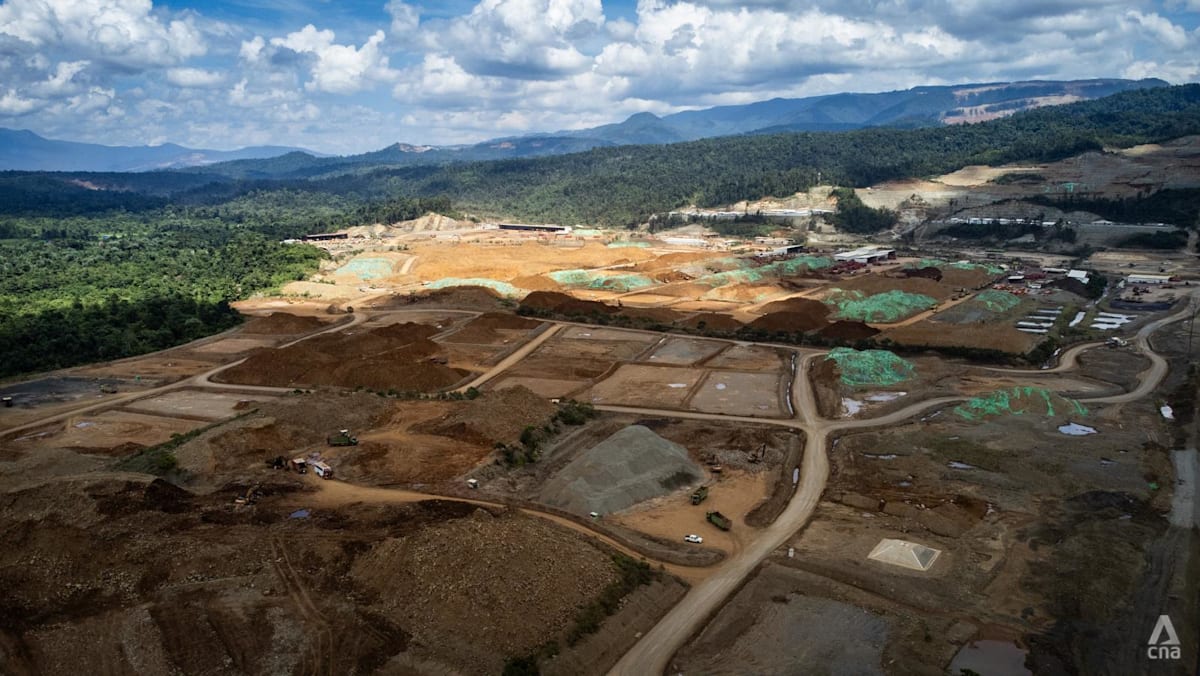
Chinese companies are one of the major players in Indonesia’s rapidly growing nickel processing industry, after the government banned the export of raw nickel ore and encouraged the development of a domestic supply chain for stainless steel and electric vehicle batteries.
ROYALTIES, EXPORT DEPOSITS, AND NICKEL QUOTAS ARE HIGHLIGHTED
In its letter, the CCCI highlighted the increase in taxes and levies, including mineral royalties, which it said had occurred repeatedly and was accompanied by more intensive tax inspections and large fines of up to tens of millions of US dollars.
“Taxes and fees, including mineral resource royalties, have been increased repeatedly, accompanied by increased tax inspections and even large fines reaching tens of millions of US dollars, creating panic among companies,” the CCCI wrote.
Purbaya denied that the government had implemented royalty increases or additional levies as complained by Chinese investors. According to him, the policy is still in the planning stage.
“Not yet, it has not been implemented, it is still in the planning stage,” he said.
In addition to royalties, the CCCI also raised concerns about the planned regulation on export proceeds. In the letter, it was stated that exporters of natural resources would be required to place 50 percent of their foreign exchange earnings in Indonesian state-owned banks for at least one year.
The CCCI believes that this regulation could put pressure on company liquidity and disrupt long-term business activities.
Purbaya said the government has prepared exceptions for certain companies, including those that do not use domestic financing.
“If the company does not borrow money in Indonesia, as far as I know, there is an exception,” he said.
Another complaint concerns the reduction in nickel ore mining quotas. The CCCI stated that quotas for large mines have been cut by more than 70 percent, with a total production decrease of 30 million tons.
According to the CCCI, this reduction could disrupt downstream industries, including new energy and stainless steel.
The CCCI also highlighted law enforcement in forestry. The group stated that a special task force for forest management has imposed a US$180 million fine on a Chinese investment company for allegedly not having a valid permit to use forest areas.
The complaint came as the government is tightening its crackdown on illegal logging and mining activities. The Jakarta Post reported that the government has been carrying out a major operation since the beginning of this year to reclaim more than 5.88 million hectares of land, with the value of assets and fines in forest areas reaching Rp371.1 trillion.
The CCCI also stated that several major projects, including a hydroelectric power plant invested by a Chinese company, have been halted after Indonesian authorities accused the projects of damaging forest areas and exacerbating flooding.
In terms of labor, the CCCI stated that the process of approving work visas is now more complicated, expensive, and strict. Restrictions on work locations for foreign technical and managerial staff are said to hinder the mobility of experts between projects.
In addition to the six main complaints, the CCCI stated that the Indonesian government is also considering additional measures, including new export duties on a number of products, the elimination of incentives for electric vehicles, and the reduction of tax breaks for special economic zones.
The letter also mentioned the change in the formula for the Reference Price for Nickel Ore (HPM) by the Ministry of Energy and Mineral Resources (ESDM). According to the CCCI, the inclusion of cobalt, iron, and other accompanying minerals in the calculation of the HPM for the first time has caused the overall cost of nickel ore to increase by up to 200 percent.
“The sudden implementation of these policies has…”}
Source: jawawa.id (https://jawawa.id/newsitem/pemerintah-prioritises-national-interests-after-chinese-chamber-of-commerce-raises-concerns-about-investment-1780601584)
Originally published by cna.id (https://www.cna.id/indonesia/china-investasi-nikel-royalti-indonesia-47211), translated from Indonesian