
PELNI Partners with Munggung Village Farmers in Klaten to Strengthen Rice Supply Chain
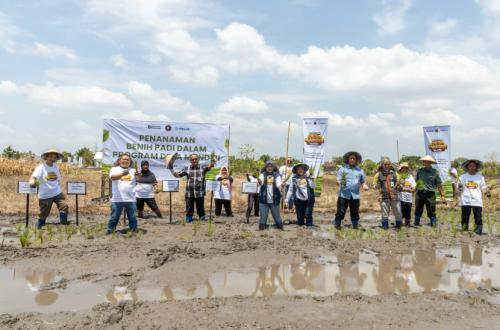
KLATEN — PT Pelayaran Nasional Indonesia, or PT PELNI (Persero), has launched its Desa Mandiri programme to empower farmers in Munggung Village, Karangdowo district, Klaten regency, Central Java, through its Social and Environmental Responsibility (TJSL) programme. The launch ceremony was held on Thursday (5 November 2026).
The event was attended by Joko Hendrawan, an expert staff member for community affairs and human resources at the Klaten regional secretariat; PELNI Services President Director Didik Martono; PELNI Vice President for Treasury and TJSL Sayyidah Sarah Ghaida; PELNI Semarang branch head Yuniati Fatimah; and local officials and community leaders.
PELNI Corporate Secretary Ditto Pappilanda said the Klaten Desa Mandiri programme was the company’s third initiative of its kind. PELNI previously launched similar programmes in Cianjur, West Java, in 2024 and Batu, East Java, in 2025. The initiative is part of the company’s commitment to delivering TJSL programmes that provide social benefits while creating added value through community economic empowerment.
“As a sea transport company serving thousands of passengers every day, PELNI has a continuing need for food supplies, with quality and availability taken into account. Through the Desa Mandiri programme in Munggung Village, we want to build a mutually beneficial partnership: farmers can increase rice productivity and quality, while sustainably supporting the rice supply needed for PELNI’s passenger services,” Ditto said.
Munggung was selected because it is one of the rice-supplying villages for PELNI Services, a PELNI subsidiary that provides food ingredients for passenger ships. A dependable supply of rice in terms of both quality and volume is an important factor in providing meals to passengers during their journeys.
From January to October 2026, PELNI served more than 4.5 million passengers across Indonesia. With an average of around 14,000 to 15,000 passengers each day, ensuring the availability and quality of food, including rice, is essential.
The Desa Mandiri programme will run for 12 months and include farmer mentoring and capacity-building activities. These include training in producing rice seed independently, rice cultivation and the provision of IR 32 seeds, a demonstration plot for premium Japonica rice, integrated pest management, and practical instruction on making mineral fertiliser, herbicide and fungicide independently.
The programme also covers post-harvest handling, the provision of rice-drying facilities, strengthening farmer-group institutions, and regular mentoring and monitoring. The activities are expected to improve harvest quality and quantity, as well as packaging processes and food safety.
Ditto added that the programme was intended not only to increase agricultural output, but also to help farmers develop stronger skills and competitiveness over the long term.
“We hope this programme will be a first step towards making Munggung’s farmers more self-reliant and productive, and enabling them to produce better-quality rice. We thank Brawijaya University, the Munggung Village Government, Gapoktan Maju Lancar, and all the residents and other parties who have supported the programme. We hope this collaboration will continue and deliver lasting benefits to the community,” Ditto added.
PELNI’s Desa Mandiri programme in Munggung is aligned with Sustainable Development Goal 10, Reduced Inequalities, through community economic empowerment and stronger capacity among farmer groups.
PELNI is committed to continuing TJSL programmes that have a tangible impact on communities while supporting the sustainability of its business and the achievement of the Sustainable Development Goals.
Source: jawawa.id (https://jawawa.id/newsitem/pelni-partners-with-munggung-village-farmers-in-klaten-to-strengthen-rice-supply-chain-1793868673)
Originally published by Republika (https://ekonomi.republika.co.id/berita/to0rua423/perkuat-rantai-pasok-beras-pelni-gandeng-petani-desa-munggung-di-klaten), translated from Indonesian