
Pelindo: New routes and services boost container throughput
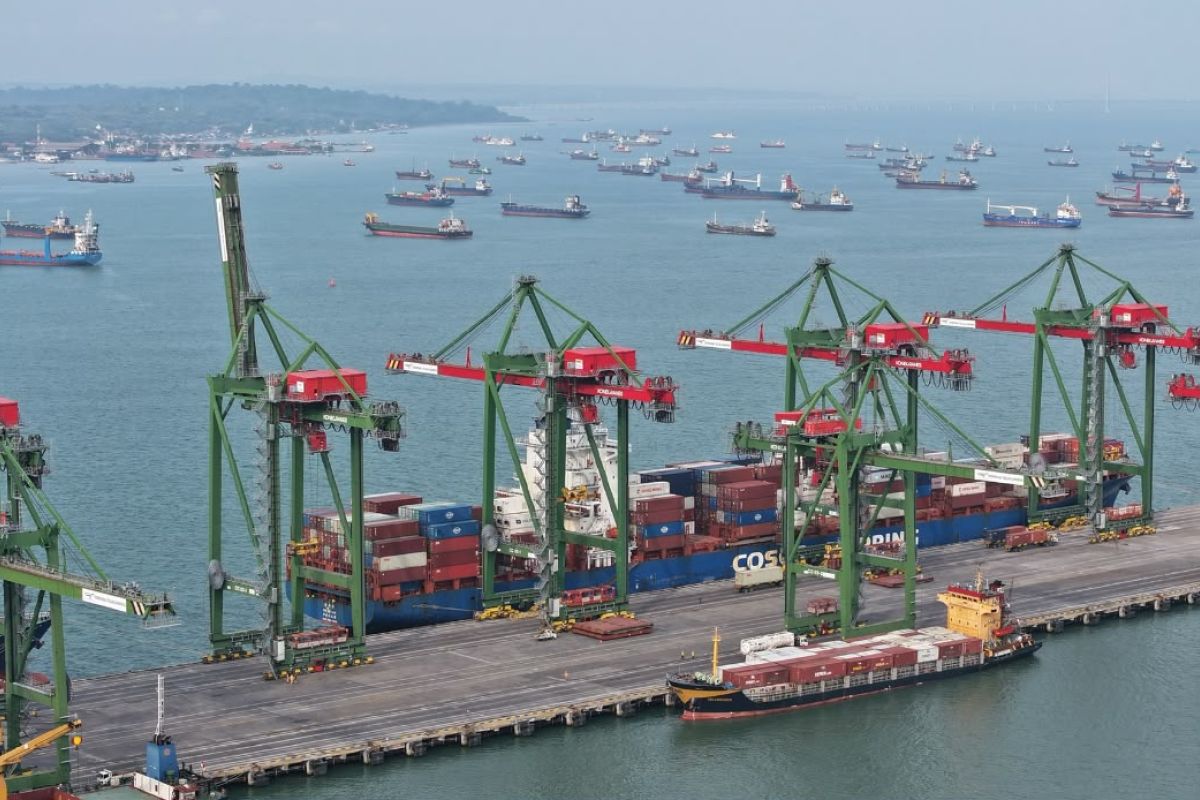
PT Pelindo Terminal Petikemas has stated that the expansion of shipping services through the opening of new routes, additional vessel calls (extra calls), and increased trading activity has succeeded in boosting national container flow.
Corporate Secretary of PT Pelindo Terminal Petikemas Widyaswendra said container throughput reached 6.63 million TEUs, growing 5.51 per cent compared to the same period last year.
“Growth occurred in both domestic and international containers,” he said in a statement in Surabaya, East Java, on Monday.
International container flow reached 2.27 million TEUs, growing 9.13 per cent, whilst domestic flow reached 4.36 million TEUs, growing 3.72 per cent.
In terms of international trade, import flow reached 1.11 million TEUs, growing 11.67 per cent, and exports reached 1.13 million TEUs, growing 6.7 per cent, indicating that Indonesia’s trading activity continues to grow positively amid global economic uncertainty.
Widyaswendra said the growth was driven by increased shipping activity, the opening of new services, additional vessel calls, international direct calls in the eastern Indonesian region, and rising logistics needs to support National Strategic Projects (PSN).
In addition, terminal modernisation, improved connectivity between ports, and strengthened services have been important factors in maintaining the smooth running of the national supply chain whilst enhancing the competitiveness of Indonesian logistics.
Vice Chairman for Maritime and Ports of the Central Board of the Indonesian Logistics and Forwarders Association (ALFI), Harry Sutanto, assessed that the growth in container flow is one of the important indicators for reading the state of the national economy.
“This growth demonstrates the resilience of the national economy amid global uncertainty,” said Harry.
Although exports declined compared to imports, he said, this condition remains positive because around 78 per cent of imports consist of raw materials and machinery needed by the manufacturing industry.
The increase in trading activity has also encouraged the opening of shipping services and additional vessel calls at several ports, such as Panjang Port in Bandarlampung, Lampung Province, which recorded container flow growth of 17.4 per cent.
On the other hand, Harry said shipping companies remain cautious in opening new routes, with services only launched after considering cargo availability to ensure operations remain sustainable.
“Shipping companies calculate carefully before opening new routes. They must ensure cargo is available and sustainable before deciding to launch regular services,” he said.
Harry also reminded that the international shipping sector still faces pressure due to geopolitical conflicts, such as changes in shipping routes that have caused maritime transport costs to rise, particularly on the Asia-Europe route, where freight rates have increased by around 30-70 per cent.