
Pelindo: Indonesia's Trade Moves Within Asia Amid Middle East Conflict
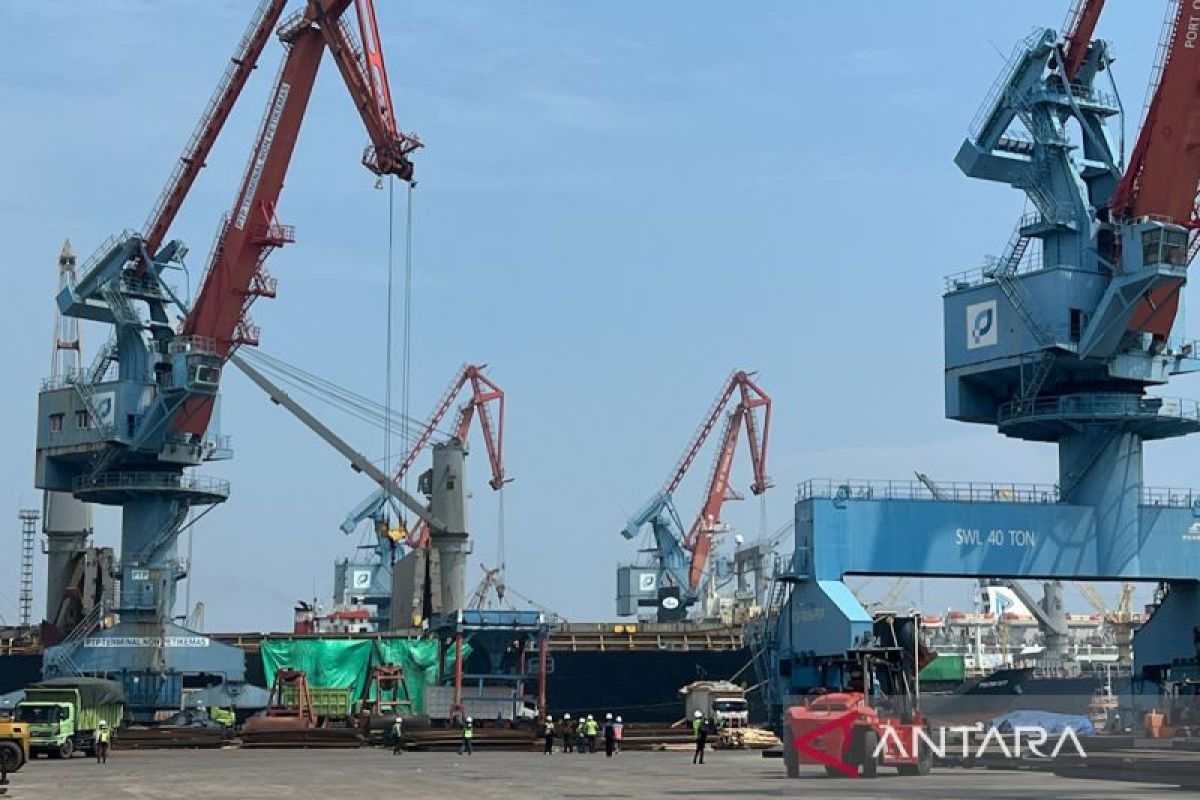
In national trade distribution, China and ASEAN regions account for approximately 46.2% of Indonesia’s exports and 56.5% of imports. PT Pelabuhan Indonesia (Persero), known as Pelindo, stated that Indonesia’s trade remains robust within Asia amid the Middle East conflict, with export-import activities dominated by trade relations with China and ASEAN countries. Pelindo’s CEO Achmad Muchtasyar said national export and import flows reflect Indonesia’s trade resilience amid global uncertainties, including geopolitical dynamics in the Middle East and economic slowdowns in several countries. ‘One of the supporting factors is Indonesia’s trade structure still heavily focused on intra-Asia, particularly China and ASEAN,’ Muchtasyar said in a statement in Jakarta on Saturday. According to him, national economic activity showed positive signals in early 2026, reflected in increased cargo movement through ports, particularly container flows, which are a key indicator of production, trade, consumption, investment, and national distribution activities. He noted container flows handled by Pelindo reached 6.42 million Twenty-foot Equivalent Units (TEUs) as of April 2026, a 7% increase from the same period last year’s 5.99 million TEUs. The growth indicates national logistics activity remains positive amid global economic dynamics. He said the increase in container flows is not only from export-import activities but also domestic distribution, supported by an 11% growth in the international segment, with exports up 10% and imports up 12%. Domestic container flows grew around 4%, with unloading activities rising 5% and loading up 4%. The situation shows Indonesia’s foreign trade remains robust, while inter-island distribution remains strong in supporting consumer demand and regional economic activities. ‘In national trade distribution, China and ASEAN regions account for approximately 46.2% of Indonesia’s exports and 56.5% of imports,’ he added. Furthermore, this trade structure provides a buffer for Indonesia as most cargo movements occur within a region with strong, stable, and integrated trade relations. According to data from Statistics Indonesia (BPS), several container-based export commodities also recorded positive growth, including animal and vegetable fats and oils up 7.95%, mechanical machinery 9.26%, electrical machinery 4.9%, and various chemical products 12.27%. On the import side, increases were mainly in mechanical machinery (22.1%), electrical machinery (17.91%), optical instruments (20.8%), and various chemical products (36.31%). The import structure indicates strong demand for capital goods, production machinery, industrial components, and manufacturing support materials, closely linked to investment activities, production capacity expansion, and the national industrialisation agenda. Growth in container flows was also observed at major ports handling national export-import activities, including Tanjung Priok in Jakarta, Tanjung Emas in Semarang, and Tanjung Perak in Surabaya. ‘Loading and unloading activities at these major ports indicate that the national supply chain and trade distribution remain active,’ he said. International throughput increases at key terminals also signal strengthened logistics and trade activities in Indonesia’s main industrial areas. In domestic flows, increased distribution to eastern Indonesia is a key signal that economic activity is not confined to western Indonesia. Tanjung Priok port recorded 8% domestic growth, driven by increased container shipments to eastern Indonesian ports. Tanjung Perak port grew around 2%, supported by services to Makassar, Kendari, and Berau. Makassar port also recorded 7% growth, supported by agricultural commodity movements such as rice, corn, and other staples amid rising economic activity in South Sulawesi and surrounding areas. ‘The growth in domestic flows aligns with strong household consumption and national manufacturing activity as the main pillars of the Indonesian economy,’ he explained. Continued growth in inter-island distribution shows national logistics connectivity is functioning well to support public needs, industrial activities, and regional economic equality. With this growth trend, strengthening port services is increasingly important. Terminal productivity, service digitalisation, equipment readiness, facility reliability, and national supply chain integration must be continuously improved to ensure smooth, efficient, and competitive cargo movement. He added that reliable logistics connectivity is crucial for supporting national economic growth, international trade, domestic distribution, investment, industrialisation, and balanced economic activities across regions.