
Pekalongan Prepares Biosaline Rice Seed Centre to Tackle Rob Impact on Central Java's North Coast
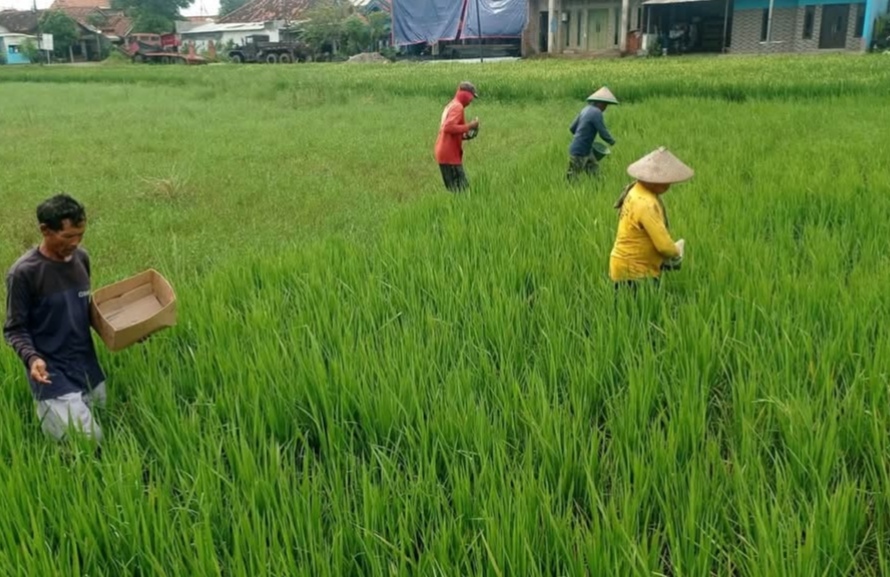
Following the successful rehabilitation of farmland previously inundated by tidal flooding (rob), the Pekalongan City Government is preparing to develop a biosaline rice seed centre to meet seed demand across the north coast of Central Java.
Thousands of hectares of agricultural land in several areas along Central Java’s north coast have been affected by tidal flooding for years, leaving them idle and unproductive. These areas are now beginning to return to productivity following the development of superior rice varieties that are salt-tolerant or resistant to high salinity, known as Biosaline rice.
Trials of Biosaline rice cultivation on former rob-affected land in several north coast areas, including Pekalongan, Batang, Kendal, Semarang and Demak, have shown satisfactory harvest results, offering new hope for farmers who previously struggled to rehabilitate land affected by tidal flooding.
“After the discovery of this Biosaline rice, we are somewhat relieved because paddy fields that were previously idle due to saltwater intrusion can now be planted again,” said Rianto, a farmer in Depok Village on the coast of Batang.
Purwanto, a farmer in Suwawal Village, Mlonggo District, Jepara Regency, said that after seeing the results of Biosaline rice cultivation in Semarang, at least 10 hectares of former rob-affected paddy fields belonging to farmer groups in his village will also begin planting the new variety.
Tamrin, a farmer in Mangunharjo Urban Village, Tugu District, Semarang City, expressed similar relief following the emergence of Biosaline rice varieties 1 and 2, as paddy fields that previously could not be utilised have now been planted again. “Several harvests have also been quite good, averaging 7 tonnes per hectare,” he added.
Lili Sulistyawati, Head of the Food and Agriculture Office of Pekalongan City, said that demand for Biosaline seeds in several areas along Central Java’s north coast is substantial, prompting the Pekalongan City Government to begin developing seed production capacity with assistance from the Central Java Seed Certification Centre.
To realise this, Lili Sulistyawati said, 5 tonnes of Biosaline rice seeds have been prepared for planting in rob-affected paddy fields, not only in Pekalongan City but also in other areas along Central Java’s north coast that have begun developing this new salt-tolerant rice variety.
In Pekalongan City itself, according to Lili Sulistyawati, at least 100 hectares of former rob-affected land will be planted with Biosaline rice, with 56 hectares already developed and producing excellent harvests. “This will strengthen food security in Central Java,” she added.
The seed centre in Pekalongan City, Lili Sulistyawati continued, is urgently needed because the current supply of Biosaline rice seeds still depends on production from outside the region, with Biosaline rice seed breeding so far concentrated in Bogor.