
Pearls from the Prophet's Maulid for a Wounded Flores
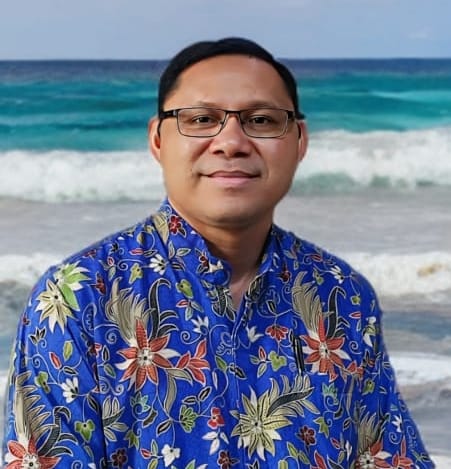
One of the most important pearls from the Prophet’s Maulid is the awareness that humanity must always be prioritised above identity differences. Post-earthquake Flores demonstrates that grief is universal, and therefore an authentic religious response is to bring rahmah (compassion), strengthen social solidarity, and care for the dignity of wounded human beings. In this perspective, religion is not merely a symbol of identity, but rather moral energy to rebuild shared hope.
One of the deepest messages of the commemoration of Prophet Muhammad’s Maulid is that compassion must not be limited by religious, ethnic, or social status barriers. The Prophet taught care for anyone in need, because in Islam, al-khalqu ’iyālullāh (all creatures are the family of God), and the human beings most loved by Him are those who are most beneficial to their fellow beings. Therefore, the essence of Maulid is not merely remembering the birth of the Messenger of Allah, but reviving the spirit of rahmah that honours the dignity of every human being.
The reality of compassion transcending identity barriers is clearly visible in various humanitarian movements that emerged following the Flores earthquake. The author’s experience with the Justice, Peace, and Integrity of Creation (JPIC) SVD Ende team in a humanitarian mission on Palue Island from 22-24 August 2026 presented a highly inspiring portrait. Amidst a community struggling to cope with the disaster’s impact, there was Mas Lalu, a Muslim born in Lombok, West Nusa Tenggara, who from the earliest days of the earthquake chose to remain and devote himself to the affected residents. He did not merely distribute aid, but also built social closeness with the community, listened to their stories of loss, and directly engaged in the community recovery process.
From the perspective of the sociology of religion, this phenomenon shows that religious identity does not always function as a marker of social boundaries, but can be a source of ethical motivation that drives altruistic action and humanitarian solidarity. Mas Lalu’s presence amidst the predominantly different religious background of Palue society shows that in crisis situations, humanitarian values often speak louder than identity differences.
There, religion finds its most authentic social meaning, namely as a moral force that moves a person to be present for fellow sufferers without first questioning their origins, beliefs, or affiliations. In other words, the solidarity shown by Mas Lalu is a concrete reflection that universal humanity is not merely a normative concept, but a living and working reality amidst a wounded society.
At the same time, waves of solidarity also emerged from spaces far from the disaster centre. Alumni friends and fellow students at UIN Syarif Hidayatullah Jakarta initiated a fundraising drive to help earthquake victims in Flores. Geographically they are thousands of kilometres from the disaster site, but morally they feel close to the suffering experienced by their brothers and sisters in Flores. This phenomenon shows what philosopher Emmanuel Levinas called the “ethics of responsibility for the other” - L’éthique est responsabilité pour autrui - namely the awareness that the suffering of others always summons a moral response from ourselves. In this context, solidarity is not merely an act of giving, but a recognition that our humanity becomes whole when we do not let others suffer alone.
The story of Mas Lalu in Palue and the fundraising initiative from the UIN Jakarta academic community truly present a concrete face of the rahmatan lil-’alamin message often proclaimed during Maulid Nabi commemorations. Rahmah is not a concept that stops at religious pulpits or normative texts. Compassion finds its most authentic form when it transforms into real action: accompanying the grieving, helping those who have lost, strengthening the fragile, and bringing hope amidst despair.
Amidst the busy distribution of aid for earthquake victims in Palue, Father Marsel Vande, SVD, Coordinator of the JPIC SVD Ende Team who led 24 volunteers in the humanitarian mission, offered a simple yet profound reflection upon meeting Mas Lalu: “Love does not adhere to a particular religion. Love is universal, the soul of all religions. In the name of love for fellow sufferers, we can collaborate with anyone, regardless of their religion.”
This statement indeed contains important philosophical and sociological depth. In disaster situations, particular identities that often mark differences lose their significance in the face of the universal reality of human suffering. Earthquakes do not discriminate by religion, ethnicity, or social status of their victims; likewise, fear, loss, and grief do not recognise identity boundaries. Human tears speak the same language wherever they fall. Therefore, one of the most valuable lessons repeatedly taught by various disasters in Indonesia is the birth of cross-identity solidarity as the deepest expression of humanity. It is in such moments that religion finds its most authentic social relevance, not as a symbol of distinction, but as a source of values that moves humans to transcend group boundaries in order to care for the dignity of their wounded fellow beings.
In a society increasingly vulnerable to identity polarisation, the Maulid of the Prophet truly teaches that the quality of religiousness is measured not by how strongly a person defends their group’s symbols, but by how much they are present for others.
Source: jawawa.id (https://jawawa.id/newsitem/pearls-from-the-prophets-maulid-for-a-wounded-flores-1787662298)
Originally published by Media Indonesia (https://mediaindonesia.com/opini/925814/mutiara-dari-syiar-maulid-nabi-untuk-flores-yang-terluka), translated from Indonesian