
Peak of Post-Holiday Travel Sees Railway Passengers Reach 189 Thousand
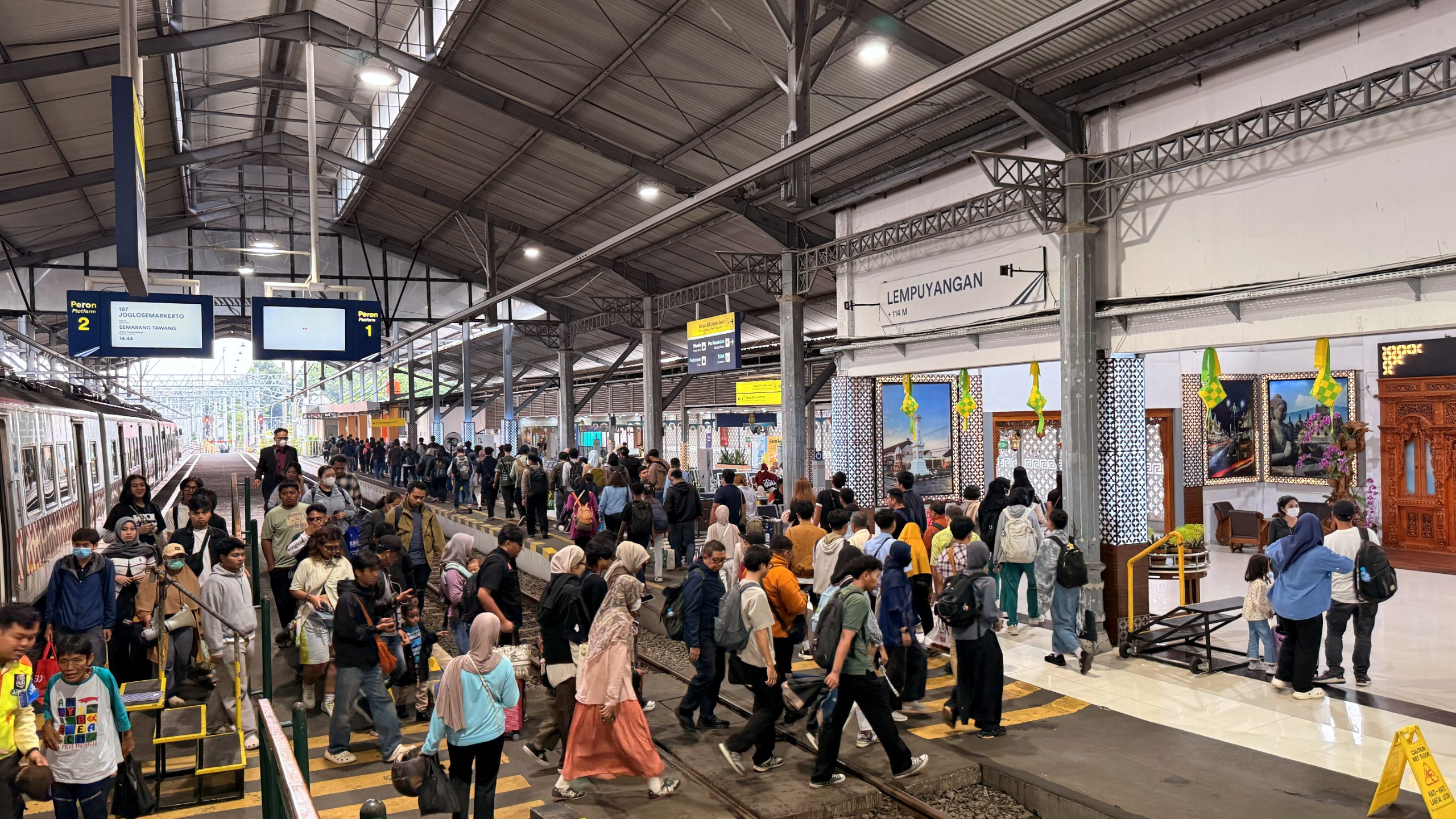
PT Kereta Api Indonesia (Persero) recorded a significant surge in passenger numbers during the peak of the long weekend return travel. As of Sunday, May 17th, approximately 189,734 tickets had been sold for departures that day, which is predicted to be the highest point in people’s return to their hometowns.
Cumulatively, KAI reported that 733,009 passengers had used long-distance and local train services on Java and Sumatra islands during the period of May 13th to 17th. Based on data up to Sunday at 10:00 AM, total ticket sales for the entire long weekend period reached 923,743 tickets.
Vice President of Corporate Communication at KAI, Anne Purba, explained that the return travel phase is a crucial period in managing public mobility. The movement towards major cities such as Jakarta, Bandung, Surabaya, and Semarang began to dominate from the weekend.
“Return travel always presents very high public mobility within a relatively short time. Travel back to activity centers is starting to increase sharply,” said Anne in her official statement on Sunday (May 17th).
In addition to the aspect of mobility, Anne emphasized that the high volume of passengers during return travel provides a positive stimulus for regional economies. Activities around stations, from onward transportation to the culinary sector, continue to be productive.
“Return travel helps maintain economic activity. Areas around stations, onward transportation, culinary centers, and local businesses are still experiencing high public activity until the end of the long weekend period,” she added.
During this long weekend period, Yogyakarta and Jakarta were the most popular departure and destination points for train passengers. Here is a list of the 10 stations with the highest passenger volume:
KAI advises all passengers to pay attention to departure schedules and arrive at the station earlier to avoid congestion in the boarding area, given the high volume of passengers on the last day of the long weekend. (E-4)
Cirebon Station is filled with train passengers who will return to their respective areas.
Based on cumulative data from Wednesday (May 13th) to Sunday (May 17th) at 07:00 AM, Tegal Station has served a total of 26,340 passengers.
A total of 554,407 passengers used long-distance and local train services on Java and Sumatra islands during the first three days of the Ascension of Jesus Christ long weekend.
The city of Bandung is predicted to experience an increase in tourist visits during the mid-May 2026 long weekend.
The Acting Manager of Public Relations for KAI Divre I North Sumatra, Anwar Yuli Prastyo, emphasized that adherence to work procedures is a non-negotiable requirement for every individual at KAI.
Cirebon Station is filled with train passengers who will return to their respective areas.
Based on cumulative data from Wednesday (May 13th) to Sunday (May 17th) at 07:00 AM, Tegal Station has served a total of 26,340 passengers.
The Eid al-Fitr return flow in 2026 is still high! More than 52 thousand train passengers arrived in Jakarta today (March 26th). See the data for the busiest stations and remaining seats here.
A total of 11,732 passengers arrived at Medan Station during the Eid al-Fitr return flow. KAI North Sumatra predicts that the peak congestion will occur on March 24th, 2026.
Eid train ticket sales in 2026 reached more than 4 million or 89.6%. KAI stated that there are still hundreds of thousands of seats available for the return flow.
Source: jawawa.id (https://jawawa.id/newsitem/peak-of-post-holiday-travel-sees-railway-passengers-reach-189-thousand-1780707790)
Originally published by Media Indonesia (https://mediaindonesia.com/ekonomi/891096/puncak-arus-balik-long-weekend-penumpang-kereta-api-tembus-189-ribu-orang), translated from Indonesian