
PDSI Leverages GRC to Drive Efficiency, Profitability, and Business Expansion
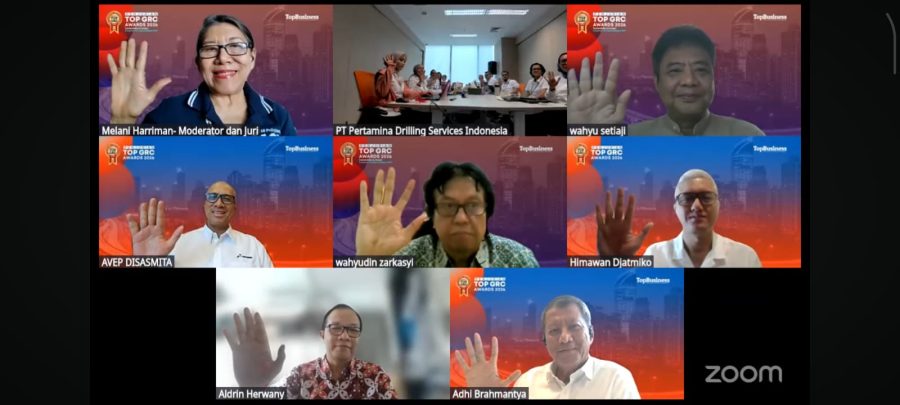
Jakarta, TopBusiness – PT Pertamina Drilling Services Indonesia (PDSI) has placed the implementation of Governance, Risk, and Compliance (GRC) at the heart of its business strategy to strengthen its competitiveness and sustain operations amid increasingly complex challenges in the energy industry.
The strategy has supported improved company performance, reflected in a 24 per cent rise in net profit to US$29.61 million in 2025, even though revenue slipped slightly to US$435.70 million from US$446.52 million the previous year.
President Director of PT Pertamina Drilling Services Indonesia, Avep Disasmita, said GRC is no longer positioned merely as an instrument of regulatory compliance or risk control.
For PDSI, good governance has become the foundation of every business decision, from drafting corporate strategy and developing investments to managing risk and creating added value for all stakeholders.
“As a drilling services company under Pertamina’s Upstream Subholding, we do not merely carry out a business function; we also want to be a sustainable company. That is why we continue to implement and improve GRC through the Plan-Do-Check-Act (PDCA) method, so that sustainability is maintained and becomes a solid foundation for steering the business forward,” Avep said during an online presentation for the TOP GRC Awards 2026 judging session on Monday (4/8/2028).
In his presentation, Avep explained that PDSI currently operates 58 rigs, comprising 53 land rigs, two offshore workover rigs, and three offshore jack-up rigs through strategic alliances.
In addition, the company is supported by more than 110 associated drilling services, ranging from directional drilling, mud logging, cementing, drilling fluid, and solid control. Another supporting service is the Indonesia Drilling Training Center (IDTC), which serves as a competence development hub for drilling personnel.
With these capabilities, PDSI continues to strengthen its position as a provider of integrated drilling and energy services through the end-to-end well construction concept, so that it does not only provide drilling services but also integrated services capable of improving customers’ operational efficiency.
According to Avep, the drilling services industry currently faces various challenges, ranging from fluctuating world oil prices, increasingly fierce competition, demands to apply Environmental, Social, and Governance (ESG) aspects, to the accelerating transition towards low-carbon energy. On the other hand, the company must also maintain operational efficiency without compromising asset reliability, improve human resource competence, and prepare new business models to remain relevant in the future.
“Amid very rapid changes in the energy industry, a company cannot rely on operational capability alone. We must ensure every business decision takes account of governance, risk, and compliance aspects so that the company can grow healthily and sustainably and be able to face various future challenges,” he said.
Therefore, PDSI is not only strengthening its core drilling services business but also diversifying into various lines of business with long-term growth prospects. The company is developing end-to-end well construction services, expanding support for offshore and deepwater projects, strengthening its competence in the geothermal sector, and preparing capabilities for Carbon Capture, Storage and Utilisation (CCS/CCUS) projects and unconventional oil and gas development.
“PDSI wants to become an integrated energy services company, not merely a rig provider. That is why the entire business strategy must be built on a strong governance foundation so that every expansion step remains measurable in terms of both risk and opportunity,” Avep said.
To support this strategy, the company has prepared an investment plan of around US$532 million for the 2025–2029 period, focused on developing integrated drilling services, strengthening the offshore, geothermal, and CCS/CCUS businesses, and increasing the capacity of various drilling operation support services. The expansion is also being pursued through a merger and acquisition strategy in the upstream oil and gas support services sector.
GRC Integrated Across All Business Processes
Avep explained that GRC implementation at PDSI does not stand alone as an oversight function but has been integrated into all company business processes. The preparation of the Corporate Work Plan and Budget (RKAP) and the Corporate Long-Term Plan (RJPP) applies a risk-based planning and budgeting approach, so that every investment or business development decision considers the risk profile comprehensively.
The company also applies the Three Lines Model, referring to ISO 31000:2018 and Minister of State-Owned Enterprises Regulation Number PER-2/MBU/03/2023. Under this approach, every work unit acts as a risk owner, supported by Enterprise Risk Management, Legal & Compliance, and HSSE & Quality functions as the second line, while Internal Audit carries out its assurance function independently.
In the 2024 financial year, PDSI recorded a Risk Maturity Index (RMI) of 2.4 on a five-point scale. The company has also drawn up a roadmap to raise risk management maturity to the Good Practice category by 2030.
“Risk management does not stand alone; it is part of everyday business processes. That is why we continue to build a risk culture through training, risk management forums, risk awareness, and the Risk Management Award,” Avep explained.
PDSI currently manages 151 corporate risks, consisting of 125 qualitative risks and 26 quantitative risks. These risks are monitored in a tiered manner through both top-down and bottom-up approaches, covering strategic, operational, financial, legal, compliance, cybersecurity, and reputational risks.
According to Avep, effective risk management can only work if it becomes part of the corporate culture. “Risk management is not the responsibility of one particular function. We want everyone at PDSI to be aware that every business activity always carries risks that must be identified, managed, and mitigated properly,” he said.
This commitment is realised through various risk culture strengthening programmes, including the Risk Management Forum, the Risk Management Broadcast Series, Certified Risk Professional (CRP) and Certified Risk Management Professional (CRMP) training, and the Risk Management Award to encourage risk management implementation across all work units.
PDSI also conducted an internal Good Corporate Governance assessment in 2025, scoring 99.72 (Very Good). This figure rose from the 2024 assessment score of 86.86 (Very Good).
Digitalisation and GRC Online
Governance strengthening is also being carried out through digital transformation. PDSI has now implemented GRC Online.
During the in-depth session, Avep asked Lina Pristiawati, Manager of Legal & Compliance at PT Pertamina Drilling Services Indonesia, to explain the implementation of GRC Online at the company.
Lina explained that this digitalisation enables governance, risk management, and compliance processes to be carried out in an integrated manner through a digital platform.
With the system, management can monitor risk profiles, regulatory compliance, and follow-up on various recommendations in real time, making decision-making faster, more transparent, and data-driven.
The GRC Online implementation is supported by several applications, including the Enterprise Risk Management System (ERMS) and the Dashboard Integrated Risk Management (DISKMan) for corporate risk management, the Regulatory Compliance System providing regular regulatory updates, and the Compliance Online System (COMPOLS), which integrates reporting on the Code of Conduct, Conflicts of Interest, gratuities, and mandatory wealth reports (LHKPN) into a single digital platform.
Avep considers this digitalisation an important part of the company’s transformation.
“GRC digitalisation is not simply about moving manual processes to an electronic system. What we are building is a system capable of providing information quickly, so that business decisions can be made based on data, taking risks into account, and remaining within the corridor of good governance,” he said.
Digital transformation has also been applied to operational aspects through the Digitalized Decision Support System (DPIPES) to support data-driven decision-making, Fuel Online Monitoring (FOMo) to monitor fuel consumption in real time, and the use of Artificial Intelligence (AI) technology through CCTV systems capable of detecting unsafe acts and unsafe conditions as part of strengthening HSSE aspects.
Driving Efficiency and Profitability
During the in-depth session with the judging panel, Avep stressed that the success of GRC implementation is determined not only by the existence of systems but also by the commitment of everyone in the company.
Therefore, strengthening corporate culture is one of the main priorities. Various leadership programmes, coaching, talent development, and internalisation of Living Core Values (LCV) continue to be carried out so that integrity values are embedded in every business activity.
PDSI has also developed the Indonesia Drilling Training Center (IDTC), which serves not only as a technical drilling training centre but also as a means of building a culture of safety, professionalism, and good governance for all workers.
“We want to ensure that business transformation always goes hand in hand with cultural transformation. In this way, GRC is not the responsibility of a particular function but becomes the working culture of everyone at PDSI,” Avep said.
This approach is considered one of the factors supporting the company’s performance throughout 2025. Amid pressure in the oil and gas industry, PDSI managed to increase net profit by 24 per cent to US$29.61 million, while EBITDA grew 20 per cent to US$101.20 million, despite a slight correction in revenue.
According to Avep, the increasingly mature GRC implementation has had a tangible impact on improving the company’s operational effectiveness and profitability. In addition to recording 24 per cent net profit growth to US$29.61 million, PDSI also increased EBITDA by 20 per cent to US$101.20 million in 2025.
The improvement was achieved through various efficiency measures, including optimisation of drilling equipment rental costs and the application of a 15 per cent budget capping policy to reinforce a culture of efficiency across the organisation.
On the operational side, project availability rose to 81.07 per cent, project utilisation climbed to 66.35 per cent, while project productivity reached 63.67 per cent, reflecting improved effectiveness in asset utilisation and project acquisition.
“For us, the success of GRC is not measured by the number of procedures or documents the company holds, but by its ability to support the achievement of business targets, increase productivity, sustain operations, and create added value for all stakeholders,” Avep said.
These achievements have been accompanied by a string of awards in the fields of workplace safety, quality, innovation, human capital, sustainability, and governance.
In 2025, PDSI won the TOP GRC Awards 2025 4 Star (Very Good) and The Most Committed GRC Leader 2025, presented to Avep Disasmita as President Director of PDSI. Meanwhile, Chief Commissioner Gema Iriandus Pahalawan received The High Performing Commissioner on GRC award.