
PDIP States Proposal for Presidential Candidates to be Supported by at Least Two Factions is Sensible
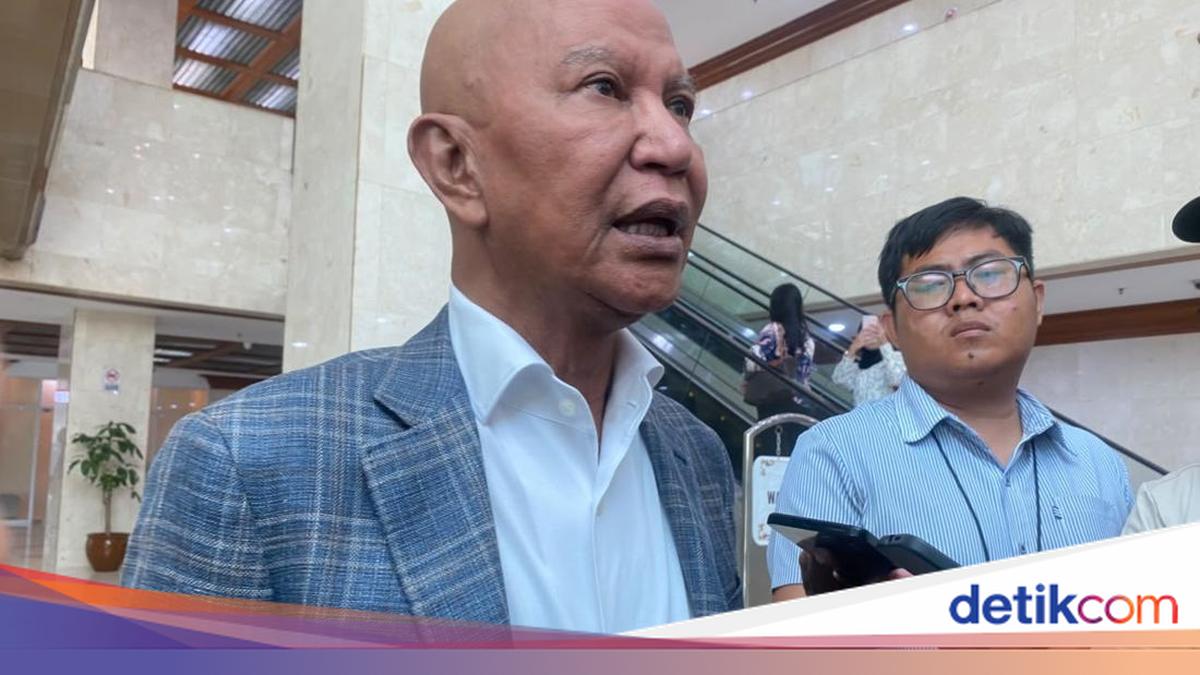
The Chairperson of the PDIP Central Executive Board, Said Abdullah, has responded to NasDem Party Chairman Surya Paloh regarding a proposal for a new presidential threshold model, which suggests that presidential candidates should be supported by a minimum of two factions in the House of Representatives (DLR). Said stated that the proposal could be considered if it possesses a logical basis and aligns with the Constitutional Court (MK) ruling.
“We are confident that we are critically observing the various ideas that have developed. Our position is that if the considerations are logical and parallel with the MK decision, perhaps a minimum of two factions still makes sense,” Said said at the parliamentary complex, Senayan, Jakarta, on Monday (21/9/2026).
He noted that the provision still needs clarification, particularly regarding whether the minimum requirement of two supports refers to factions in the DPR or political parties declared eligible by the General Elections Commission (KPU).
“Although, of course, it will later be detailed what the requirements for those two factions are. Whether the two factions intended are two political parties, rather than two factions, seems likely,” said Said.
“Whether the two political parties intended are parliamentary parties, or all political parties that pass the KPU can apply. We are still observing closely,” he added.
Nevertheless, Said emphasised that if there is a minimum requirement of two factions, there must also be a maximum limit. He proposed a maximum limit of four political parties to nominate a president.
“But our stance is that if there is a minimum, there should also be a maximum. Let’s say a minimum of two political parties and a maximum of four political parties, so that there is competition. We must not have a situation where there is no upper limit,” he said.
Said hoped that the presidential nomination requirements could be accepted by all parties and remain logical. He also supported the discussion of the presidential threshold involving political parties.
“If the presidential threshold approach is based on political parties, perhaps we agree,” said Said.
“We want the presidential election to be sensible, acceptable, and accepted by all candidates in the eyes of the public,” he added.
PDIP Proposes Maximum Limit of 25% of DPR Seats
PDIP Central Executive Board member Deddy Sitorus proposed the existence of a maximum limit for coalitions of political parties nominating presidential and vice-presidential pairs. He proposed that this maximum limit be set at 25% of DPR seats or 30% of valid votes.
“In my opinion, it is not enough to only regulate the lower limit with at least two parties supporting a candidate pair. An upper limit must also be regulated so that there are at least three to four pairs of candidates. Thus, the public will have more choices,” Deddy told reporters on Monday (21/9).
He argued that only regulating a minimum of two nominating parties could potentially result in only two pairs of candidates. He explained that an upper limit is necessary so that the public has more options in the presidential election.
“Regulating only a minimum of two nominating parties has the potential to produce only two pairs of candidates. For example, six parties supporting one pair and two other parties supporting another pair, while non-parliamentary parties are forced into one of the camps,” he said.
“Requiring a candidate pair to be supported by at least two political parties is acceptable because a winning presidential pair requires minimum support from parliament to function effectively,” he continued.
However, Deddy assessed that this requirement needs to be supplemented with an upper limit. He proposed that the coalition of nominating political parties be limited to a maximum of 25% of DPR seats or 30% of valid votes.
“In order for the presidential election to produce more than two pairs of candidates, an upper limit for political party coalitions must be regulated, for example, a maximum of 25% of DPR seats or 30% of valid votes,” he explained.
“If this is regulated, it will align with the MK ruling which desires multiple candidates and does not contradict the Law which states that election participants are political parties,” he added.
Furthermore, Deddy shared his views regarding the parliamentary threshold. He assessed that the threshold size is not solely determined by the number of votes that are not converted into seats.
“Whatever system is used in the world, there will always be votes that are not converted into seats. You can check all countries that use a proportional system,” he said.
In his view, the threshold figure needs to be adjusted to the objectives of the election, including democratic consolidation and parliamentary effectiveness. He stated that a threshold in the range of 4-7% is a figure that could be considered.
“The ideal figure for the threshold, in my opinion, cannot be determined by the amount of wasted votes, but by the purpose of the election itself. If the purpose is to achieve democratic consolidation and strengthen parliamentary effectiveness, then the higher the threshold, the better,” he explained.
“If the purpose of the election is those two things, then the ideal threshold range for a party to pass into parliament is between 4-7%. Thus, there will be a minimum to optimal number of parliamentary party factions in the DPR to fill representation in every Commission and Board Instrument (AKD),” he added.
Deddy said his party is still awaiting discussions and dialogues with political parties both within and outside parliament, including with experts and election observers, before determining a final stance.
“So, we are in a position of awaiting discussions and dialogues with all parties, both those in parliament and those outside, including experts and election observers, before determining our final stance,” he said.
It is known that Surya Paloh admitted to hearing input regarding the presidential threshold. Paloh mentioned the input he heard regarding the presidential threshold model, namely that presidential candidate pairs would be supported by a minimum of two parliamentary factions.
“I heard there is clear input, that the change in the model of support for the president is based on support from at least two factions,” Paloh told reporters at NasDem Tower, Gondangdia, Central Jakarta, on Saturday (19/9).
Source: jawawa.id (https://jawawa.id/newsitem/pdip-states-proposal-for-presidential-candidates-to-be-supported-by-at-least-two-factions-is-sensible-1789985067)
Originally published by detikcom (https://news.detik.com/berita/d-8672549/pdip-sebut-wacana-capres-didukung-minimal-2-fraksi-masuk-akal), translated from Indonesian